
1969 (date not available)- ILT, 02, (name unknown) Pilot, and an unidentified Co-Pilot and Crew Chief USAF, Ops 32, KIA-RR while in support of SOG Recon Operation.
Jan - May 69- Four Commandos KIA and Four Commandos MIA (Names and ranks unknown) Commando Team US Naval Advisory Det, Camp Fay, Da Nang, Ops 31/37 (Maritime Studies Branch) while performing operations along the North Vietnamese Shoreline.
1969 | 01 | 1 | E-6 SSG | Michael J. | McKibban | 11B4S | KIA | Laos; CCN, FOB4, RT Diamondback, at their PZ; w/ Hall & Hawes |
1969 | 01 | 1 | E-4 SP4 | Wayne L. | Hawes | 11B4S | KIA | Laos; CCN, FOB4, RT Diamondback, at their PZ; w/ Hall & McKibban |
1969 | 01 | 1 | E-6 SSG | James M. | Hall | 11B4S | KIA | Laos; CCN, FOB4, RT Diamondback, at their PZ; w/ Hawes & McKibban |
01 01 Jan 69- James M Hall, SSG E6; Wayne L Hawes, SP/4, and Michael J McKibban, SSG-E6,S-2/3 was a strap hanger on RT Diamondback, CCN-KIA. "The following is a bit fuzzy and could be wrong, but here's what I THINK happened. The helicopters were in the air, en route to the PZ. They were in radio contact with the team when they heard a scream, then silence. When they got there, they found the bodies of the Americans in the PZ and recovered them. A search of the area found the scattered, terrified SCU. The SCU said the Americans let their guard down at the last minute because the aircraft were inbound. The SCU said they tried to warn the Americans, but to no avail. Therefore, the SCU pulled back from the Americans to establish a defense, when the NVA (who had apparently been following them) popped up out of the grass/brush and opened fire, killing the Americans." An investigation was conducted because "the Americans were found dead in the PZ and the SCU were picked up from different locations in the vicinity of the PZ, We were suspicious of the SCU because none of them were hurt. The SCU were kept isolated from each other and interrogated at length. Their stories were pretty much the same. The following is what appears to happen as best as we could piece it together - The mission went well and the team was in the PZ. All the Americans were killed, An autopsy showed that the slugs were from AK47's-not M-16's like the SCU were carrying By Col. Randy Givens)--- [Filed by Maj. William "Bill" Shelton: The RT that was done in on 31 DEC 68 - 01 JAN 69, was in a DMZ target, not an MA series target. They were on the south side of the Song Ben Hai. Still waiting on Bob Parks to read my version for some clarifications. Slicks were dispatched only after Parks had tried to contact the team. The crew chief of the lead slick shinnied down a tree, saw the team was dead, and used his URC-10 to tell the chopper pilot. He then climbed back up the tree and re-entered the helicopter.] Additional Information: Hall and Hawes were hit by NVA sappers. It was the first time a C&C team was hit by sappers in the field. They were in either a MA target or a Golf target just below the MA targets.. ***We don't have to mention the fact that they were drinking on New Year's Eve. They were in either a MA target or a Golf target just below the MA targets. Spider Parks fly over the team at midnight and he could tell they were intoxicated. I knew Hawes from training group and FOB 4. What was distressing during the first reports was the fact that the indig came up first on the radio...because the sappers hit the team at first light, killing only the US. By John Meyers, CCN, (Recon Tm Ldr) One-Zero for ST/RT Idaho from 10/68 to 4/69 and 11/69 to 4/70.
***NOTE: It is difficult to mention errors, especially our errors, but from time to time, as men, we do make them. It is hoped that by being honest here and that is the purpose of this written record, is that someone in some future times may learn from these errors. Thus, the drinking episode is mentioned. It is my personal decision to do this and any future flack should be directed towards myself. These men are deceased and things can no longer hurt them, but the living must live on and learn. The revelation is predicated and necessary to give the background on the reason(s) why these Americans did so and is in no way meant to demean their integrity and bravery of these fine men and makes the events surrounding the incident more understandable as long as the complete context of the reasons for their actions is noted-Robert L. Noe, SFC, CCN “Hall and Hawes were assigned to FOB 4. On Dec. 31, 1968, FOB 4 may have been called CCN at that point in time. At FOB 1, was low on teams that were fully operational and the teams that were running were running their asses ragged during Dec. 68. Thus, Col. Warren shipped them to FOB 1. Thus, they were pissed about two things: 1.) Col. Warren shipping them north to FOB 1 for an FOB 1 target. 2.) And, for doing it near New Year's Eve, a time they wanted to spend with their FOB 4 buds. Their unhappiness was heightened when FOB 1 S-3 orders them into the target in New Year's Eve. One of them vowed to celebrate the new years and they weren't going to let a little thing like running a mission interfere with a good New Year's Eve party, even if it was in the Prairie Fire AO. The MA targets or Golf targets were very erratic in terms of NVA/Chinese strength and teams had been wiped out there in 68. “Tilt Meyer’s team got shot out of several MA targets and another team went in for six days with no enemy contact. Lynne Black and Doug "the Frenchman" La Tourneau ran into Chinese up there. Big, heavily-armed Chinese. At midnight, Cover rider extraordinaire Robert J. "Spider" Parks flew out to the AO and had a commo check with them. They reported that they were partying and that one of them had carried a bottle of scotch or whiskey to the field and they were imbibing. Spider warned them to be careful...I can get more details from now retired Sgt. Maj. Parks. Thus, at first light, NVA sappers hit the team, quickly and with deadly efficiency, killing all US personnel, leaving all indigenous troops alive. Originally, Covey had trouble making commo in the morning...reports came back that there were Vietnamese on the radio. Bottom line: our guys were dead from what I believe is one of the first -- if not the first -- attack by sappers on a C&C team in the field. John Plaster would know for sure. Sappers hit CCN on Aug. 23, 1968, but, as far as FOB 1 targets, this was a first. A tragic first. Then, there was the sad seen of Col Warren hugging the corpse, after pulling at least one out of a body bag. I didn't see it.
|
|
|

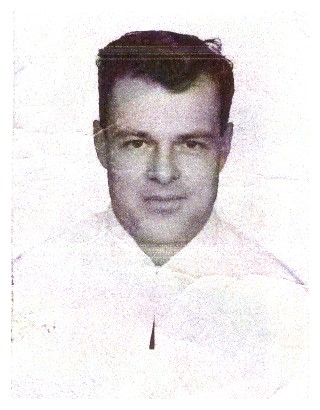
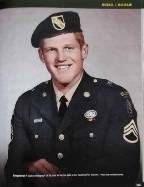
3 Jan 69 ZENGA, RONALD P SGT, USAF, 20th Special Operations Squadron, 14th SO Sing USAF.
 |
FINAL MISSION OF SGT RONALD P. ZENGA
1969 | 01 | 8 | E-7 SFC | Gerald F. | Apperson | 05B4S | KIA, helicopter shotdown | SVN; CCN, FOB2, w/ RT??, UH-1H #66-16323 shotup coming out; crashed enroute to Ben Het |
1969 | 01 | 8 | E-4 SP4 | Bill F. | Williams, Jr. | 11B2S | KIA, helicopter shotdown | SVN; CCN, FOB2, w/ RT??, UH-1H #66-16323 shotup coming out; crashed enroute to Ben Het |
08 Jan 69- Bill F William Jr, SP/4 and Gerald F Apperson, SFC E-7 USASF, CCN Recon, Alan C Giles, 1Lt, Air Craft Commander, Jon P Roche, WO1, Pilot, Robert D. Case, SP/4 Crewchief, and Steven D. Bartman, SP/4, Gunner, UH-1D, Tail #66-16323, 170th AHC -KIA (Filed by Gary Rousn: Story told by Michael P. Loyd, 170th AHC: " RR for all the above...I never found out what happened because my father died and I was sent home. The information I got was from other eyewitnesses that observed what happened that day." The two SOG soldiers, Williams and Apperson, had been picked up at a PZ. As the Helicopter was climbing out of the PZ it took several hits in the main transmission. The pilot (1Lt Giles) was advised to land, but refused and reported he was going to land at the Ben Het SF Camp. Smoke was pouring out of the hellhole. By the time the pilot decided to land, and started autorotation, and as he rolled off the throttle, the transmission seized [causing the helicopter to crash]) (Filed by Sgt Charles Berg) Apperson and I were on the same RT in 66 at Phu Bai [FOB 1] he was the 12 (one two), William T. (TEDDYBEAR) Copeland 10 (one zero) and I was the 11 (one one) , at the at time he was a E5, ran two insertions with him, one we launched out of Kontum, (Bad Weather at Khe Sahn), and Kontum RTs were wore out, having gotten run out so many times within the last thirty days (We set the record for the shortest time on ground (not our choice) and one in DEC 66 to do the recovery/Bright Light on the HU-1B that the B-52 Delta Team (Batts & Stark) were thought to be on when they were E & E out of the North West corner of the DMZ area and crossed over. Copeland died in Bad Tolz in training. The chase ship behind the chopper carrying the team returning from a search for Sgt. Robert Scherdin, their teammate who was MIA from their 12/29/68 mission, landed nearby as soon as it saw the ship go down. SOG FOB2 medic Joe Parnar, with other personnel from the chase ship raced to the scene of the crash and tried to do what they could in the middle of the intense fire and rounds cooking off. A patrol from the nearby SF camp at Ben Het also soon arrived on the scene and Parnar was told by SFC Bobby J. Dunham that there were enemy nearby and had been firing at the patrol sporadically. Rather than wait for the cook off's to die down, Parnar and Dunham moved one body away from the burning wreckage and returned to retrieve another. When they lifted the body there was a large explosion next to them, knocking them both down and wounding them. It is not known if the explosion was a cook off from the chopper or a RPG/B40 fired by the nearby enemy. Dunham was medevaced but shortly died from his wounds. Filed by: Frank Greco.
|
|
|
|
|


|
Attached is a map of the location of a Huey, tail # 66-16323, coordinates YB 835233, that crashed on 1-8-1969 about 4-5 clicks SSW of the SF camp at Ben Het. I'm quite certain of the coordinates as 1LT Frank Longaker recorded the location of the crash in his after action report he submitted back on 1-9-1969. He went in the day after the crash with SGT Bryon Loucks, SGT Peter Tandy, and SGT Jones to police up the area. I'm also going to offer the map for use by the 170th AHC website. Joe Parnar
|

1969 | 01 | 29 | E-5 SGT | Larry A. | Stephens | 05B4S | KIA, DWM | Laos; CCC, RT New Mexico, w/ Bullard & Simmons |
1969 | 01 | 29 | E-5 SGT | Billy J. | Simmons | 05B4S | KIA, DWM | Laos; CCC, RT New Mexico, w/ Bullard & Stephens |
1969 | 01 | 29 | E-6 SSG | Charles D. | Bullard | 11B4S | KIA, DWM | Laos; CCC, RT New Mexico,w/ Simmons & Stephens |
29 Jan 69- Larry A Stephens, SGT E-5; Billy J Simmons, SGT E-5, - Charles D Bullard, SSG E-6, USASF and Four Special Commandos, CCC, Kontum, Ops 35 lost in Laos on a recon mission KIA-RR (Inserted on 28 Jan 69, made radio contact at dusk. Failed to come upon radio to FAC, Bright light was infiltrated near the last known location. A location was discovered where evidence of eating was strewn about the area, cigarette butts and food wrappers. A short distance further revealed an area where blood and expended rounds indication a possible ambush site. Tracking the blood trails, the remains of the entire team was discovered).
**I find it odd that there was evidence of eating strewn about and cigarette butts and food wrappers---we were taught never, never to leave anything behind, everything must be picked up and the area cleaned as if no one had been in the area, something went amiss here as it appears this mission was being performed haphazardly. If you want to tell the enemy where you are at, light up an American cigarette which has a distinct odor in the middle of the jungle that the enemy will detect immediately and follow it to your location. Anyone want to comment on this? I was trained to not use aftershave or any other substance that gives off an odor not endemic (belonging or native to a particular people or country) to the area of operation. I had one recon man tell me that he would take out marijuana and smoke while on a mission. I was totally shocked and told him that if he was on a mission with me and I learned of him smoking I would have shot his ass! inexcusable! rln
|
|
|
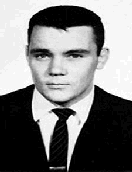
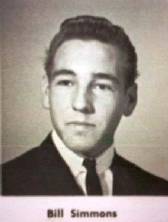
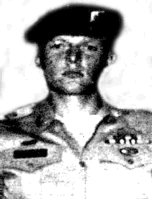
1969 | 01 | 30 | E-4 SP4 | Jerrald J. | Bulin | 11B4S | KIA | SVN; CCC, RT New Mexico, during local security patrol near Kontum |
30 Jan 69- Jerrald J Bulin, PFC E-3, USASF, CCC, Kontum, Ops 35, While performing security of the compound was shot by a lone Viet Cong, KIA-RR
|
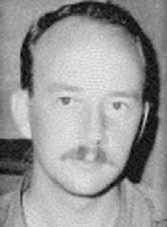
1969 | 02 | 11 | O-2 1LT | Harold W. | Kroske, Jr. | 31542 | MIA-PFD | Cam; CCS, RT Hammer, XU697258, 19k NNW of A-331, Loc Ninh (old) & approx 12 mi W of Bu Dop |
11 Feb 69- Harold "Harry" William Kroske Jr 1LT 02 of Trenton, NJ, USASF, CCS, RT Hammer, Ban Me Thout, Ops 35 MIA-Presumptive finding of death. (Version 1: As the platoon leader, of a Recon element with two other Americans in Cambodia they moved away from the LZ when they heard an enemy force in their area. A lone enemy soldier walked pass their position and Lt Kroske decided to take the soldier prisoner. He stepped out onto the trail behind the enemy soldier; the enemy soldier turned and saw Lt Krosek and took off running. Lt Kroske started to chase him yelling "Chieu Hoi." The enemy soldier stopped, turned and fired point blank at Lt Kroske hitting him several times in the chest. Immediately other enemy forces converged upon the area and engaged the remaining recon element, forcing the other two Americans to withdraw unable to recover Lt Kroske. Version 2: Lt Kroske with Sp/4 Bryan Stockdale and four Nungs were inserted onto an open grassland, hustled for cover of a thick patch of jungle a quarter mile away; once there, Lt Kroske and the Nung point man crept forward to examine a major trail they'd spotted from the air as they landed, leaving Stockdale to make radio contact. Suddenly, there was a quick burst of automatic fire, then another, then a hail of fire, all 50 yards from Stockdale. The Nung point had returned reporting Kroske was dead. Stockdale investigated, finding Kroske, getting close enough to almost touch him, but due to the heavy enemy fire aimed at him, he could only shout at him to no avail. Stockdale returned to where he had left the Nungs, but they were no longer there and Stockdale was stocked the remainder of that day and night before being extracted to learn, Kroske and the Nung had walked upon three NVA, one of whom Kroske wanted to take prisoner. Kroske shot two of the NVA and waved the third over, but the last NVA jumped into the grass, fired a wildly and hit Kroske three times in the stomach and chest). NOTE: Version 2 fits the official version. --On your website you have two versions for Harold "Bill" Kroske. John Morley and I were the Brightlite team for that mission. The second version is the most accurate. Jim Day
|

31 Jul 2005
1LT Kroske came to us from the Americal Division's 75th Rangers. He had aboutsix months of recon operations experience with the Rangers/LRRP's when he volunteered for SOG. Kroske was initially assigned to First Company, Det B-50, "Project Omega" as Executive Officer under 1LT Frank Lambert, who was the Commanding Officer. After one operation 1LT Kroske was assigned to recon. Harold was quite a combat trooper, and; he had been on a number of operations into Cambodia prior to his demise. He was always calm, cool, and very deliberate on all recon operations. In fact, after any combat OP, he usually read a book and drank a coke, as opposed to going to the club and having a drink. 1LT Kroske was quite a soldier. He was fearless in combat, and he loved recon. He extended his tour and took his leave. Once back, he formed a new team from Nungs he got in Cholon/Saigon. I am not writing to second guess anyone. I know Harold was a fine SF RT 10. The day before his fateful OP he gave me his beret to wear on R&R. The moment I stepped off the R&R plane at Cam Ranh Bay, our XO, Major Imes, told me Harold was missing in action. I wish I had the beret to give his family. I was shot several months later. I shall not forget 1LT Kroske. From a fellow Omega and CCS Officer and friend.,Jon C. Potter Nashville, TN alright4u@aol.com
1969 | 03 | 2 | E-5 SP5 | Michael F. | May | 11F4S | KIA, BNR | Cam; CCS, RT Plumb, XT415935 9k NE of A-322, Katum (Fishhook area), w/ Evans |
1969 | 03 | 2 | E-5 SGT | William A. | Evans | 11B2S | KIA, BNR | Cam; CCS, RT Plumb, XT415935 9k NE of A-322, Katum (Fishhook area), w/ May |
02 Mar 69- William Anthony Evans, SGT E-5 of Milwaukee, WI and Michael Frederic May, SP/5 of Vassar, Mich USASF and three Special Commandos, CCS, Ban Mc Thout, (Previously: 5th Special Forces Group, B 50 Project Omega, Recon Team 1) Ops 35, MIA, Presumptive finding of Death. A team of two Americans and four SCU were inserted into the "Fish Hook" in Cambodia where the team was overran by large enemy force. The surviving SCU related he had snap-linked the bodies of Evans and May together in hopes they could be extracted later. The SCU was forced to evade the enemy and a subsequent fly over the following day no bodies could be seen. Enemy activities in the area prevented any further search - a recollection by Bob Head (SOA# 894GA) according to Harve Saal. AS OF JANUARY 2023, THESE TWO MEN ARE SILL CLASSIFIED MIA/BNR. The Defense POW/Missing Personnel Office is seeking to locate anyone assigned to CCS in February/March 1969 and/or who knew Michael May and William Evans or recalls their loss in Cambodia on March 2, 1969. May may have participated in the capture of an NVA on a previous mission. Please contact Jack Kull (703/699-1187) or john.kull@osd.mil
|
|
A Note from The Virtual Wall
Team leader Sergeant William Evans and SP4 Michael May were part of an eleven man team conducting a mission inside Cambodia. They were operating as an element of MACV-SOG, B-50 ("Project Omega"). Working with the 11-man American team was an unspecified number of ARVN troops. After insertion by helicopter, the team proceeded toward its objective. As they approached a tree line, they came under heavy fire from their front and left flank. The team fell back 60 meters to higher ground and formed a defensive perimeter. The enemy force, estimated to be battalion-sized, followed. Gunships were called in to repel the enemy advance, but were forced to depart as afternoon drew to a close. The enemy continued to attack the Special Forces team. A projectile, possibly a B-40 rocket, exploded directly over the team's position resulting in wounds to 8 of the 11 Americans. Evans sustained a lethal head wound and died shortly thereafter. May received multiple wounds to the head and chest and died 30 minutes later. The surviving members of the team moved about 60 meters from the area, leaving behind the remains of Evans, May, and three ARVN team members. Although the remainder of the SF/RVN force was evacuated, recovery of the dead was not practical. Evans and May were classified Killed in Action/Body Not Recovered. As of 21 March 2002, their remains have not been repatriated.
Michael was an outstanding athlete in high school He excelled in basketball, football, and track. Breaking many school records and state records. He pole vaulted 13'3" and maintained the school record until it was broken in the early 80's. He won the state championship in class B twice, once as a sophomore in 1963 and again during his senior year. He placed third in the state his junior year. He was also an all-conference end on the football team his senior year. He lettered in basketball, football, and track. Upon his graduation in 1965, he attended college at Michigan Western University, for two years before entering into the Army September 14, 1967. He received a scholarship from ROTC and some others that I cannot remember. Michael also loved the game of golf, which was brought to my attention by another veteran, Nick Katzenstein, just one of Michael's SF Friends. He received basic training in Fort Knox, Kentucky, and went on to Green Beret training at Fort Bragg, North Carolina. Michael arrived in Vietnam in Jan. 1969. He was assigned to Ban Me Thuot, Vietnam. On his first recon mission, his team had captured a prisoner, which gave Michael some R&R time to do what he pleased with. He traveled to Qui Nhon to visit Jim Atwood (my husband now). They had three fun-filled days together, recalling old times of back home. Michael was reported missing soon after. He volunteered to go on another recon mission with Sgt Evans. The area that they were into was a Rest and Relaxation Center for the NVA. It was an early Sunday evening when they were infiltrated into the area. I have been in contact with the doorgunner on that mission and Major Head, who was Michael's first recon leader. Our family has remained in contact with the medic, John "BUFF" Costello that was there. You can find the doorgunner's picture and the medic's picture on my second page called Memories of Michael. Both of these individuals are like family to my family. Without them ... we would be lost in our own fears. Michael always said that when he came back home, he would continue his college education. His dream was to become a lawyer. I know deep in my heart that he would of made a damn good one. Michael has touched so many people in his life and still today he is not forgotten. His hometown has a 5k Race named after him and all the monies go the High School athletic association. The Special Forces Association of Michigan has honored him by naming their chapter after him - Michigan Michael May Memorial Chapter LV. Mike was a gentle, caring person, he had many friends and loved this country. He excelled in everything that he set out to accomplish. He was my hero, my best friend, and my guardian. With the help of the internet, I can now tell the world about my brother and I know he will never be forgotten We must make sure this fate never happens again to any soldier fighting for our country. The truth will someday be known about Michael and all his comrades that are still missing. The POW/MIA families need America's support to find out the truth about their loved ones, that the US Government still keeps classified. We, the POW/MIA families, need your support by writing and calling our government to make this issue "NATIONAL PRIORITY" like they have vowed to do so many, many times and have failed to do so many, many times. Veterans of the Vietnam War should contact the families of the missing, even if it's just to say what a great soldier they were. I have had many vets contact me about Michael and it has made a big difference in my life. Just knowing someone who knew him and to be able to talk with them about him has made me understand and accept many unanswered questions The government will never tell us anything, the veterans have the knowledge and the answers to our questions. I pray that many families will be as fortunate as I have been. Thank you for visiting my brother's page and never forget the Veteran for his faithful, honorable duty to keep us free. Part of the complete memorial for Michael Frederic May placed by his sister, Cindi Atwood gonwaki2@tds.net
1969 | 03 | 4 | E-7 SFC | David J. | Warczak | 11F4S | DNH | SVN; B-50, RT 5, somewhere in IV Corps, ??where??, Phong Dinh Prov. |
04 Mar 69- David J. Warczak, SFC E-7, USASF, B-50, Recon Team Leader-KIA served his country during the Korean War before being deployed to Vietnam. Some reports state he was killed in action in Phong Dinh, South Vietnam. Others that his death was due to a non-hostile self-inflicted injury. The Vietnam Virtual wall lists his death "Non-hostile, died of other causes" which supports the version of Self-inflicted injury.
Non-hostile, died of other causes"
|
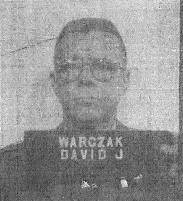
David Warczak Silver Star Citation for a previous operation:
The President of the United States of America, authorized by Act of Congress, July 8, 1918 (amended by act of July 25, 1963), takes pleasure in presenting the Silver Star to Sergeant First Class David J. Warczak, United States Army, for exceptionally valorous actions on 3 October 1966 as team leader of a four-man Special Forces reconnaissance patrol that had penetrated deep into hostile territory. Having made contact with two squads of Viet Cong, Sergeant Warczak and his patrol were engaged in an intense firefight when his assistant team leader was seriously wounded. Without thought for his personal safety, he ran through devastating hostile fire to the wounded man, dragged him into a position of relative safety, and administered first aid. When the extraction aircraft arrived overhead, he realized that it would be unable to help the team at its present location due to the impenetrable vegetation. Sergeant Warczak lifted the wounded man and carried him through the thick brush toward a clear landing zone. Constantly subjected to intense hostile fire, he moved over one hundred meters to the landing zone, waited until his teammates had been extracted then boarded the helicopter. His courage against a numerically superior enemy force turned the tide in what could have been a fatal situation.
05 Mar 69-Six SCU were killed in Operation Spindown. These men were members of a Hatchet Company, Company A, Kontum, CCS, Ops 35. Accidentally killed when a US F-4 dropped napalm on the Hatchet Force's position, dug in along Highway 110 in Laos, acting as a blocking force against the enemy preventing reinforcements and supplies from reaching the NVA who were waging a major battle on the Special Forces Camp at Ben Het.
1969 | 03 | 5 | E-4 SP4 | Sanderfierd A. | Jones | 11B4S | KIA | Laos; CCN, MLT1, Hatchet Force, w/ SGT Himes in A Shau area AS-4 |
1969 | 03 | 5 | E-5 SGT | Earl W. | Himes | 11B4S | KIA, DWM | Laos; CCN, MLT1, Hatchet Force, w/ SP4 S Jones in A Shau area AS-4 |
05 Mar 69 Sanderfield A Jones and Earl W Himes, SGT E-5 Recon and SP/4, MLT-1, CCN-KIA, RR Both of these men were killed in Operation Dewy Canyon, the circumstances of their deaths are described in Chapter III, next to the last paragraph. Operation Dewy Canyon was a hell of an operation and can be read by clicking on Operation Dewy Canyon, From Op Dewy Canyon:
It began with a burst of fire, and confusion. Captain Miller was on the radio trying to contact Bobby to see what was happening, but couldn’t raise him. Bobby’s platoon sergeant, SFC Hall, answered Captain Miller that another cache had been found and that Bobby was probably destroying it. I knew better. That burst of fire had come from an RPD. I recognized that sound now with a certainty. Then up ahead the jungle exploded in the crescendo of a full-fledged firefight. Where I was, the ridge had narrowed somewhat and to my right it dropped off into a small heavily wooded gully. Up ahead I could see that the ridge widened out again and seemed to level off a little. We were in mature forest with relatively thick underbrush. The Nung in front of me suddenly pointed his M-16 into the gully to our right and fired a burst on automatic. There was nothing there. This was the fourteen year old that I kept near me and he had simply fired his weapon out of excitement and because he hadn’t had the opportunity to shoot prior to then. Then everything became a blur, with stark images interspaced that have stayed with me to this day.
Noise! Bobby on the radio. Recon Team ambushed. Noise! Bobby…”I’m flanking right, send Burns left”. Hawkins with me. I shout at him…”Two squads left on line, one follow”. Noise! Crashing through brush. Running. Can’t see my squads. Noise! Movement to my right…it’s Bobby’s people. Running. In the open now. Noise! There’s Bobby. Waving his arms at me, what’s he saying? He has a grenade in his hand. Pointing ahead. Noise! Scattered trees. Open grassy forest floor. Things scattered on the ground. They are bodies. Not moving. Noise! Somewhere to my left shooting..my people. Running. Big tree down about fifty meters ahead. Bobby’s pointing. Noise! He’s pointing at the log up front. Holds up the grenade. I rip at the tape securing the grenade on my left web gear strap. It’s in my hand I yank on the pin. Running. Noise! Bodies on the ground. They our ours. Please don’t shoot our own men!! Noise! A figure to my right. It’s Sandy Jones. Why is he sitting there? Legs sprawled. Arms flailed. Hands on the ground. Palms up. Brownish splotches etched up his right leg…right side…right chest…lip split to his nose. He’s propped against his backpack. Dirty blond hair whisping from under his boonie hat. Staring at me. Left eye wide-open…surprised…right eyelid drooping over half open eye. He doesn’t see me. He doesn’t see anything. A Nung on the ground to my left. Not moving. Head looks funny. Where is it? Half gone. White stuff bulging out…its his brain…no blood. Another shape to my left. It’s Himes. He’s on the recon team. Prone position. Car 15 aimed to the front…finger on the trigger. Why doesn’t he shoot? Why doesn’t he move? He’ll never move again. Running. NO NOISE!! Just ragged breathing..gasping really..mine. A blur on my right. It’s Bobby. We are both falling. Not falling. jumping. My chest hits earth. I slide up to the log. Bobby slides up beside me. I do not throw my grenade.
It was over. I was completely numb, and thirsty. Very, very thirsty, but I had no water. On the other side of the log there lay an NVA pith helmet and an AK-47 assault rifle. There was no other evidence that the enemy had been there. Except for the bodies, ours. I can’t remember exactly how many men were killed and wounded, but Sandy Jones and Earl Himes were dead and some of the SCU. Every man on the recon team was killed or wounded. From Bobby’s platoon Sandy was dead and one of the Nungs in his squad was seriously wounded. Sandy had gone to the sound of the guns. He had led his squad in a headlong charge straight down the ridge. The RPD had stopped him about thirty meters short of the big log. That charge probably saved the lives of those on the Recon Team who survived. Surprisingly, the Nung with his skull blown off would live. He would come back to CCN at Marble Mountain with a flap of skin sewn over his brain and continue to serve on the payroll as a houseboy or some such. That was the way things were, we kept the faith with those who fought with us. By: Rod Burns, Col, US Army (Ret)
|
|
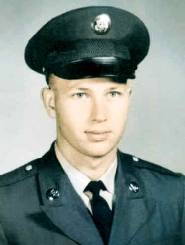
1969 | 03 | 9 | E-6 SSG | Tim L. | Walters | 11F4S | KIA, DWM (recovered 02/16/99) | Laos; CCN, Ops-32, XD524658, shotdown aboard O-2A 67-21425 40k NW west of A-101 (old) Lang Vei |
09 09 Mar 69 - Tim L. Walters SSG E-6 Air Ops,ALO-CCN USASF, Remains Recovered & Robert (Bob) F. Rex, Cpt, 23RD TAC AIR SPT SQDN, 504TH TAC AIR SPT GROUP, 7TH AF, Pilot, Ops 32,-KIA Remains not recovered.. Killed in action while flying FAC in an Air Force 02A MIA (#67-21425) 5 miles inside Laos, west of the DMZ with Cpt Rex, Air Force Pilot. They were trying to locate and extract a team of soldiers when their plane was shot down. Date: Nov 8, 1999, Central Identification Lab, Hawaii has just completed the positive identification of Tim's remains. Tim was not SF qualified, he went to Vietnam with the 101st and transferred to MACV at the end of his tour, later transferring to SOG and was working out of NKP at the time he was killed. Tim had been "In Country" almost four years. (Houston Chronicle, 21 Nov 99) See http://www.asde.com/~pownet/bio/w/w/360.htm [see John Plaster's SOG A Photo History of the Secret War, pg 134]
|
|

Notes from The Virtual Wall
Staff Sergeant Tim Walters was assigned to the Air Operations Division, Command and Control North, MACV-SOG. As a part of his duties he routinely flew as an "observer" with Forward Air Controllers operating in support of MACV-SOG operations in Military Region 1 (the northern 5 provinces of South Vietnam and the adjacent areas of Laos). Before his last mission, SSG Walters had received several decorations - the Silver Star, two Distinguished Flying Crosses, and six Air Medals - for previous operations.
As noted above, on 09 March 1969 Walters was aboard an O-2A (tail number 67-21425) of the 23rd Tactical Air Support Squadron, flown by Captain Robert F. Rex of Odebolt, Iowa, when the aircraft went down just inside Laos. Although a ground force was inserted and confirmed that both men died in the crash, SSG Walters was classed Missing in Action while the Air Force classed Captain Rex as Killed in Action/Body not Recovered. In this context, one should note that SSG Walters was not assigned to an Army unit but rather to a Joint Command unit, a fact that might explain the difference in the way the two men were handled (MACV reported SSG Walters' loss, while 23rd TASS reported on Captain Rex). The Commanding General, Seventh Air Force, approved posthumous Silver Star awards for both men (Walters' second award), reflecting the Air Force's acceptance that both men had died in the crash. According to the Army's TAGCEN database, a Presumptive Finding of Death was approved by the Secretary of the Army on 07 August 1973.
Although the location of the wreckage was known, post-war arrangements with the Laotian government precluded any examination of the site until the late 1990s. When the site was visited, human remains were located, recovered, and repatriated on 16 Feb 1999. Fragmentary remains could be positively identified as those of Staff Sergeant Walters, but the government has not yet made any announcement regarding Captain Rex.
In 1943 fighter pilot Captain Harry Leroy Walters, SSG Walters' uncle, had been killed in action near Choiseul in the Solomon Islands, South Pacific; his body was not recovered. A memorial stone was placed in Silverbrook Cemetery, Niles, Michigan, in memory of Captain Walters. When SSG Walters' remains were recovered the family decided to bury him in Niles next to his uncle's memorial stone.
? Mar 69- Vietnamese Kingbee Pilot, Co-pilot, and door gunner, 219th Vietnamese CH-34 "Kingbee" KIA-RR. Helicopter Aircrew crashed due to enemy fire while performing an attempted re-supply mission for SOG's Sledge Hammer.s Radio Relay Site, being defended by RT Arkansas. (A Cobra gunship of the 361st AHC, whose pilot reports he had called Kingbee leader for the CH-34 to assist in the attempt to resupply the road cutting Hatchet team which had been inserted which had reported some incoming but needed resupply and evacuation of some wounded. The Cobra pilot instructed the CH-34 to stay low and to keep out of the line of fire; however, he came in too high and too fast and ignored the pleas of the Cobra pilot. The Kingbee ballooned over the LZ and came to a high over the hole in the trees. He was making erratic movements, but never said anything, a little while later it was reported the CH-34 veering off to the south and was in trouble and the Cobra pilot witnessed the CH-34 fly into the side of a hill and explode [Info by Jim Williams, 361st AHC])
1969 | 03 | 14 | O-2 1LT | James L. | Ripanti | 31542 | KIA | Laos; CCC, RT New Hampshire, in Juliet 9, SSW of Leghorn Radio Relay Site |
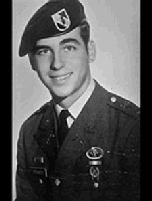
14 Mar 69- James L Ripanti, ILT 0-2, USASF, CCC-KIA. Lt Ripanti's team had been hit SSW of Leghorn. He was seriously wounded and couldn't be moved to an LZ. They had to use the McGuire rig to get him out. I decided to take him to Leghorn first so they could get him on board the ship. The RTO said he didn't think Ripanti would survive the long haul back to the ropes. The RTO had gone out with him, taking the radio. The 361st had difficulty finding the "little people" Special Commando's; however, they used those day-glo panels and the Gladiator slicks were willing to go down and pick them up separately (Info by Jim Williams, 361 AHC). The following submitted by tom waskovich: Lt James Ripanti is listed on the virtual wall as Rt Hawaii. When he was killed on 14 March 1969 he was the one zero of RT New York (I had been his room mate and was on the ground not far from him at the time w/ RT So. Carolina).
|
POSTED ON 3.15.2018
POSTED BY: WKILLIAN@SMJUHSD.ORG
FINAL MISSION OF 1LT JAMES L. RIPANTI
1LT James L. Ripanti was a Special Forces-qualified Infantry Commander. A Green Beret, he was the One-Zero (Team Leader) of Reconnaissance Team New York. On March 14, 1969, after leading RT New York for three days outmaneuvering enemy tracker teams and a platoon of searchers while on a mission in Laos, 1LT Ripanti’s recon team came in contact with the enemy. After a quick exchange of fire, Ripanti was mortally wounded in the chest by AK-47 fire. Ripanti reportedly refused first aid and attempted to direct the defense of his team while on the verge of death. A Bright Light reaction force, code name for those sent to rescue recon teams in contact, was able to retrieve Ripanti, but he arrived at Dak To on the floor of the rescue aircraft in a fetal position, his jungle shirt dark with blood. He was dead on arrival. In a most daring act of valor, the Bright Light team was able to extract the other members of RT New York without further loss of life. [Taken from coffeltdatabase.org and the book “Secret Commandos: Behind Enemy Lines with the Elite Warriors of SOG” by John L. Plaster]
|
1969 03 18 | Barry D. | Murphy | 12B4S | KIA, BNR | Cam; CCS, w/ RT??, XT441912, during BDA 11km due East of A-322, Katum; w/ M. Fernandez |
18 Mar 69- Barry Daniel Murphy, SGT E-5 and Four Special Commandos KIA CCS; Ban Me Thout, Ops 35 in Cambodia performing a Bomb damage Assessment Remains not recovered. Killed in the "Fish Hook" area in support of Operation Breakfast when the team became engaged with a superior enemy force. The book Who's Who from MACVSOG and Vol III, SOG, MACV Studies and Observations
FROM A FRIEND,
BETTY BELL HOMBURGER
FINAL MISSION OF SP4 BARRY D. MURPHY
Group has Marganito Fernandez as being assigned to SOG when he was KIA'ed. This is in error, Fernandez was assigned to DET B-41 CO D 5TH SFG.)
**** Error regarding Margariot Fernandez, Jr., CCS. sfahq has him listed as being KIA'ed with Murphy; however, on page 3 if the July 1969 issue of the Green Beret Magazine, he is listed as "Died of Wounds" as opposed to "Killed Hostile Action" thus, he was wounded at an earlier time and died of his injuries so he might have been wounded days before the 18th. He was assigned to Co D, Det B-41 KIA Moc Hoa,Chau Doc Province,South Vietnam and not SOG. Further: the below statement indicates 3 men were killed and left behind because of enemy action, "During the ensuing fire fight, Murphy was hit several times from small arms fire and died. Three other team members were killed before the helicopter could extract the survivors." this validates that Fernandez was not involved because he died of wound at a later date and members of this mission bodies have not been recovered.
| Idea Of A Young Soldierby - Barry D. Murphy - Sword and cannon rattle far away Though I've never seen the water
I must go, though it may mean My love, and friends, and family cannot hear Sword and cannon rattle far away |
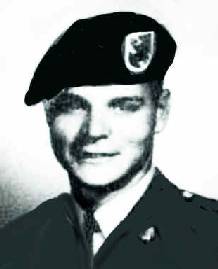
1969 | 03 | 20 | E-7 SFC | Ricardo G. | Davis | 91B4S | MIA-PFD | Laos; CCN, RT Copperhead, YC409110, 59k west of A-105, Kham Duc |
20 Mar 69- Ricardo Gonzales Davis, SFC E-7, USASF, RT Copperhead CCN, Da Nang, Ops 35, KIA Remains not recovered. Team leader of a 6 man team operating west of Kham Duc, eleven miles inside of Laos when Davis was hit by rifle fire in the upper chest and face saying "Jim, Jim!" then falling to the ground. He was observed by a team member (Sgt Jame C. Motte) two feet away, another team member recovered Davis's weapon and ammo, reported Davis was covered with blood. The Assistant Patrol Leader arrived some seven minutes later and checked for a pulse and respiration, but could find no signs of life. Due to an advancing enemy, the patrol was forced to leave the area. Davis was not seen again and no further search was made because of air strikes and the area was held by enemy forces from that day forward.
|

A Note from The Virtual Wall
On 20 March 1969, a six-man reconnaissance team - RT COPPERHEAD - was attacked while operating in Saravanne Province, Laos, about 11 miles west of Kham Duc. SFC Davis, a medic and the team leader, was was hit by rifle fire in the upper chest and face. Before being forced to withdraw under fire, the assistant team leader, Sgt James C. LaMotte, and one other team member checked SFC Davis but found no signs of life. Circumstances precluded bringing SFC Davis' body out with them, and the enemy presence in the area precluded insertion of another team to search for his body. Given the absence of absolute knowledge, the Army classed SFC Davis as Missing in Action, and he was carried in that status until the Secretary of the Army approved a Presumptive Finding of Death on 11 July 1974. His remains have not been repatriated.

1969 | 03 | 26 | O-2 1LT | Robert E. | Sheridan | 31542 | KIA | Laos; CCC, Hatchet Force, Co B; small arms fire |
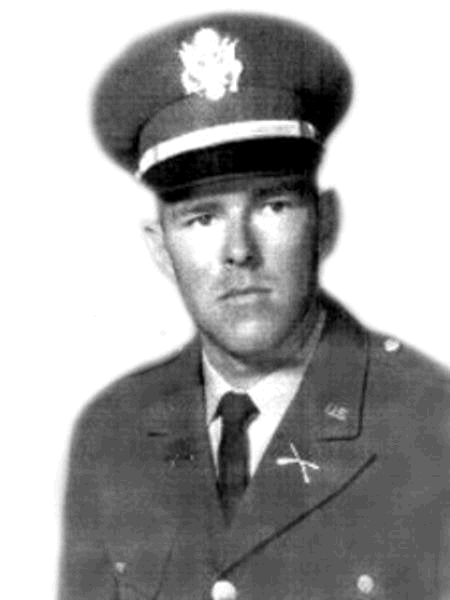
26 Mar 69- Robert E Sheridan, 1LT 0-2, CCN Reaction element USASF, Special Operations Augmentation (SOA), Ops 35, KIA-RR. Lt Sheridan--great great grandson of General Sheridan of the US Cav and Indian wars circa 1870's-buried next to each other in Arlington. Information not 100% verified. Eldon Bargewell, Maj Gen (Ret)
 |
Robert E Seridan
Story: Robert E Sheridan CCC RVN SOG Vietnam War

Things left behind lead us to discover a story.
As a child, I was always fascinated with the military and its history. As a young boy, I started collecting things as a result of my own grandparents and generations before them serving in many wars.
Many years ago, I was at an antique shop. I saw this tomahawk in olive drab with a person’s name on the handle. I saw 69-70 CCC RVN on the head of the blade. And looking again at the handle was Paratrooper Wings, a lieutenant(1LT) bar and Green Beret badges struck in tin. I thought wow and I purchased it! The person’s name on the handle is spelled RESHERIDAN. In the past, the spelling elongated looked like something else to me. For many years I thought the person’s name was Resher – Dan. I thought last name first. Recently my friend Clete was visiting and saw this tomahawk in my display cabinet of historical items and things of my childhood. He said where did you get that? I told him the story and said I can’t seem to find this person Dan who owned it. Clete said, “his name is R.E. Sheridan”. I said what? Sheridan what? So, I got on the internet and I found a few things... But not really much. I was very busy and Clete had to go.
A couple weeks later, on Memorial Day weekend, I was visiting my parents in California. At the time, I was taking a break from catching up with my parents and I got back on the internet because I felt compelled to dig deeper into this person! I found many things out and I broke down. He was part of a team of the hatchets and in the 60’s resided in Orange County California. As a child so did I. In about 1966 – 1968 My Uncle Jean Thenot went to Vietnam and served those years in the US Army. So, I knew what was happening. Later on, Sheridan Served too. In the middle of 1969, Sheridan’s life was lost at the attack of an LZ base in Vietnam. His tomahawk reflects his projected service was not fulfilled into 1970 as anticipated.
I look back on the effects of Vietnam. Many people died and for what cause? Both the people of this country and those of Vietnam. At the time there was a thing called communism as known as the Red Scare. A war of instilling Freedom at the time of political agendas. The survival of people’s need to spread ideology as a “gear” to their own means of some control due to Western expansionism. But stepping on culture and imposing another’s way is at times the demise of the greedy with hidden agendas.
I witnessed many things during this time. The Space Program, Martin Luther King assassination, Vietnam War, the Counter Culture, movement of freedom for people of other skin color known as Civil Rights, heard great music, Watergate to President Ford getting us out of the Vietnam War. Days of encouragement, hope, fear, change and war. What a mixed up time. And then came Disco. What an experience for a child to see. My dad worked on the Space Program and my Uncle served in Vietnam. I saw hippies and strange things in public. What scared me the most was the hippies and the Vietnam War. Another thing that scared me was the notion if you "speak out" you might get shot. As a child growing up during this time it seemed very conflicting and unstable.
Going back to Sheridan, I cried as an adult with the experience of the time for this man in his twenties as I shared my discovery with my dad that day. As a father, I was horrified. It all "came together" like Come Together that Beatles song grooving up slowly as you realize oh my God. This experience of many things all at once affirmed an array of emotions for me. Just one artifact from history is a story within itself. What else do we know of this man? There is more to this than meets the eye and more to this person that stems from his own ancestry? Is this a primary source? Does this story stop here? Robert E Sheridan thank you for serving our country and rest in peace. by Roland Thenot https://sites.google.com/site/rolandthenot/home/story-robert-e-sheridan-ccc-rvn-sog-vietnam-war
1 Apr 69 Morehouse, Michael J FOB 1, CCN, Mike was critically injured in explosion of claymore mine on the PSP LZ helo pad in Danang in 1969. He didn't pass until 14 Aug 2004 per VVMF per Coffelt Database of Vietnam Casualties. "Mike spent the majority of his adult life in VA hospitals trying to recover from the massive internal injuries he received. He died in 2005 in a VA hospital in Albany, NY. In 2008 the Army Casualty Review Board determined he (and 4 other VN vets) died as a direct result from wounds received in VN. His name was added to the VN Memorial Wall in 2009. His death was recorded as Non combat casualty. Mike was in Recon company with me and he ran one mission with me, and Don Shepard, in April 1969. If I recall correctly he spent several months on RT Kansas and then was on Hatchet Force for awhile. I could be mistaken about the Hatchett Force time. I have written a letter to the CG USASOC requesting Mikes name be added to the the Memorial Wall at Meadows Plaza and it will be added." v/r EldonEldon Bargewell, Maj Gen (Ret)
The date of actual injury being recorded as 1 April 69 then we see MG Bargewell stating Michel ran a mission with him and Shepard in April, then he spend several months on RT Kansas, then on Hatchet Force for awhild....that would put his injury happening much later in the year of 69. Since Eldon says he is not sure of the Hatchet Force, but sure of the Recon RT Hatchet, we'll go that he was with Recon when the injury happened.
|
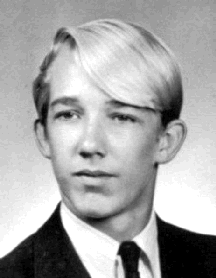
1969 | 04 | 8 | E-7 SFC | Christian G. | Girard | 11F4S | KIA, helicopter crash | Cam; CCS, RT Pick?? |
08 Apr 69- Christian G. Frenchy" Girard, SFC E-7, USASF, SOA, CCS, Ban Me Thout, Reconnaissance mission Ops-35. During extraction, the helicopter rotor blade struck a tree causing the helicopter to fall to the ground throwing Girard out of the aircraft at which time the helicopter rolled over and crushed him.
|

1969 | 04 | 24 | E-7 SFC | Jerry M. | Shriver | 11B5S | MIA-PFD | Cam; CCS, Hatchet Force, XT441913 11k East of A-322 Katum, w/ Harrigan & Jamison |
1969 | 04 | 24 | E-5 SGT | Ernest C. | Jamison | 91B4S | KIA, DWM | Cam; CCS, Hatchet Force, XT441913 11k East of A-322 Katum, w/ Shriver & Harrigan |
1969 | 04 | 24 | O-2 1LT | Gregory M. | Harrigan | 31542 | KIA | Cam; CCS, Hatchet Force, XT441913 11k East of A-322 Katum, w/ Shriver & Jamison |
24 Apr 69- Jerry "Mad-dog"Michael Shriver, SFC E-7 of Sacramento, CA, Plt SGT Exploitation Force, Gregory M Harrigan, lLT, Asst Exploitation Force Plt Ldr; Ernest C. Jamison, SGT, USASF and An unknown number of Special Commando Scouts (names and ranks unknown) CCS, Bam Me Thout, Ops 35. Shriver MIA-presumed dead and Harrigan and Jamison KIA-RR. The nickname "Mad-dog" was given to Shriver by radio Hanoi. A 25 man exploitation force on a reinforcing mission became engaged immediately upon being inserted into enemy held territory 1 miles inside Laos west of the DMZ's southern boarder by an entrenched superior company sized enemy force with fortified machine gun positions . Fighting from bomb craters, the force called for air strikes and as fighter aircraft dropped napalm around their positions, Shriver and one SCU was last observed by Cpt Paul D. Cahill attempting to move behind a machine gun position and were last seen moving into a tree line. Shriver maintained radio contact for four hours at which time transmissions ceased. It is known Shriver had been wounded three or four times during the fighting. An enemy soldier was observed to be in possession of the same type weapon Shriver had been using. The commander of the force was wounded in the right eye resulting in total blindness for 30 minutes. The enemy fired at everything and bodies of the exposed dead force members were machine gunned repeatedly. By this time, over half of the force was either killed or wounded. Approximately forty five minutes later, 1Lt Harrigan, the assistant force team leader was killed. A1-E "Sky Raiders" bombed and rocketed the area while the NVA applied heavy ground fire wounding one door gunner. Several attempted extractions had to be aborted. With the force commander and assistant commander wounded or dead, the third in command called for napalm to be dropped ten yards from his position resulting in him and nine SCU in his bomb crater being burned by the napalm. The fight raged on for seven hours in an intense battle then finally three helicopters were able to drop in and extract fifteen wounded members of the force. With movement noted in another crater, a fourth chopper came in with a Lieutenant aboard from CCS who retrieved the badly wounded radio operators and a body from the crater. The helicopters were receiving fire the entire time and lifted off immediately after the individuals were aboard. Ten air strikes and 1,500 rockets were required to extract the few survivors of the team. No further insertion could be made into the enemy stronghold. Jun 12th, 1970, a search recover team was inserted into the battle area and human remains were recovered and identified; however, the remains of SFC Shriver was not recovered. One of many stories about Mad-dog is the report where he and his team was surrounded by the enemy and as air support arrived to provide support, inquired as to his situation, Mad-dog is credited as reporting something to the effect, "we have them right where we want them, surrounded from the inside out!" (This quote may not be exact, it's something I heard when I was at CCN and seen elsewhere in writing, which is characteristic of a SOG soldier and marks Shriver as one of SOG's many legends). NOTE: Page 234, of John Plaster's book, The Secret Wars of America's Commandos in Vietnam contains the following: "It was Mad Dog Shriver who'd spoken the most famous rejoinder in SOG history: His team surrounded and the CCS staff concerned he might be overran, a FAC told Shriver, "It sounds pretty bad." And Shriver replied, "No, no. I've got I've got them right where I want them-surrounded from the inside." -- See Dedication Page also see "Mad Dog Shriver"
Maybe a myth because the story about it is Mad Dog Schriver. I cant remember his name but a guy at our last years SOAR said his best friend saw Schriver in a bar in Bangkok circa late 80's. One of the stories about JS was that he carried NVA surrender chits and joked with people that if he was about to be captured he would surrender and live. Maybe all BS but you never know especially about a guy like Schriver who we all know had gone native at least by the time I got to VN in 1968. In 1973 I was assigned to B Co LRRPs 75th Ranger at Ft. Lewis as a Lt. I and other SF guys in company (Lynn Thompson, Donal Bruce and others,) were tasked to be on burial detail for a Jerry Schriver. We conducted burial detail at FT. Lawton (Seattle). Several family members including his parents were in attendance. The service was conducted around his headstone since their was no coffin and I have pictures of the service. His parents and family were not what I expected. They were upper upper middle class at least and lived in Belvue, Wash which is a very high class area outside of Seattle. Not 100% verified, Eldon Bargewell, Maj Gen (Ret) {Note: Eldon states he will try and find the SOA member who related this information during the upcoming SOAR, 2011).
|
|
|


Notes from The Virtual Wall
SFC Jerry M. Shriver was part of a mixed US Special Forces/Montagnard (Hatchet)force inserted into the immediate vicinity of a North Vietnamese Army headquarters located just across the Cambodian border in the Fishhook area. The platoon was taken under heavy fire by NVA troops immediately after the insertion, leading to an all-day battle before suppressive fires finally reduced the enemy opposition to the point that the platoon (and a small supporting force separately inserted) could be extracted. A total of 24 men had been inserted; 17 were recovered, and of those 17 ten were wounded and one was dead (1LT Gregory M. Harrigan). Two Americans and five Montagnards were not recovered; one of the seven, medic SGT Ernest C. Jamison, was known dead, while the other six were listed as Missing in Action. The remains of SGT Jamison and one of the Montagnards were recovered in 1970. According to the Task Force Omega site, a Radio Hanoi broadcast indicated that Shriver had been killed in the fighting. However, he was carried as MIA until 10 June 1974, when the Secretary of the Army approved a Presumptive Finding of Death. During this time he was promoted from E-7 to E-8. As of 04 June 2004 his remains have not been repatriated. There is a marker for Master Sergeant Jerry M. Shriver in the Fort Lawton Federal Cemetery in Seattle, Washington (Plot 4-235, placed 08/22/1974). Unofficial information indicates that Master Sergeant Shriver was on his third tour of duty in Vietnam and received two Silver Stars, the Soldier's Medal, seven Bronze Stars, the Purple Heart, the Air Medal, and three Army Commendation Medals for valor - a total of 15 decorations.
Call From 1LT Gregory Harrigan's (CCS KIA) Mom.
Date: 7/13/07 6:11:14 AM Central Daylight Time
From: Alright4u
Robert: I had the pleasure of Mrs. Harrigan calling yesterday. She is 86. She was very pleasant to talk to , and; I was glad I could tell her how well her son had done when he had a platoon in the company. I only had Greg for about a month as I went to the launch site in late Jan 69, so; I did not work with him as long as SFC Willman did. What impressed me the most about Greg initially, was his desire to learn his job and to learn from the NCO's and yards in the bush. She was most appreciative of some local SFA or SF types who had honored her son's grave site some years ago. I do not have any photo of Greg to send her, as I lost/misplaced the few photos I had from Omega/CCS. If by chance anyone has a photo of Greg, she would love a copy. Thanks, Jon Potter
SHRIVER, JERRY MICHAEL |
NEW INFORMATION: LETTER FROM JEFFERY F. TOM, Co C, 2nd SF Battalion, 10th Special Forces Group (ABN) 1st Special Forces, Fort Devens, MA. dated 5 July 1978, to Commander, Joint Causality Resolution Center (JCRC); Reference: Request for information Case #1431-0-01 (MIA Jerry Shriver) furnished by bobbyoller82@gmail.com aka Gator. "REFNO 1431 LETTER FROM CPT TOM WITH PICS.pdf"
https://acrobat.adobe.com/id/urn:aaidVA6C2:1a063da5-af31-411c-afbd-4a444a7a2459
1969 | 05 | 6 | E-7 SFC | Kenneth L. | Dulley | 11B4F | KIA | Cam; CCS, RT Hammer; small arms fire |
06 May 69- Kenneth L. Dulley, SFC E-7, USASF, CCS-KIA in Cambodia, Small Arms Fire. "
SFC Kenneth Lawrence Dulley, RT Hammer (CCS), who was KIA on May 6, 1969. SFC Dulley left behind a widow and small daughter. He was on his third tour in Vietnam and is buried in Arlington National Cemetery.SFC Kenneth Dulley Bronze Star Citation: For heroism in connection with ground operations against a hostile force in the Republic of Vietnam: Sergeant First Class Dulley distinguished himself by exceptionally valorous actions on 6 May 1969, while serving as an assistant team leader of a special operations team on a classified mission deep within enemy held territory. Heavy enemy contact was considered predictable due to the nature of the mission. The team was compromised within an hour after landing, and a numerically superior enemy force pushed them into a narrow outcrop of woods, leaving them with no alternative other than defending in place. This the team did, initiating contact at less than thirty meters. As soon as contact was initiated, Sergeant Dulley began moving from position to position, exposing himself to enemy fire with utter disregard for his own safety, in order to better direct the fire of the Special Commando Unit members of the team. Although this was Sergeant Dulley’s first combat operation since his arrival in country, his courage and calmness were an inspiration to the rest of the team. As the team leader began to direct the gunships in making their runs, Sergeant Dulley continued to direct the team as the enemy were flushed out. When the evacuation helicopter started into the landing zone, Sergeant Dulley spotted troops moving into position in the southern wood line which would have given them a clear field of fire on the exposed helicopter. Sergeant Dulley immediately began placing effective fire on the enemy positions, giving the aircraft time to pull off. Sergeant Dulley continued to direct and inspire his troops until a machinegun burst mortally wounded him. His courage and selfless devotion to duty played a major role in the successful exfiltration of his team. Sergeant Dulley’s performance and dedication to duty are in keeping with the highest traditions of the military service and reflect great credit upon himself, Special Forces, and the United States Army. https://sogsite.com/kenneth-lawrence-dulley/
|

1969 | 05 | 9 | E-5 SGT | Frederick J. | Magsamen | 11B4S | DNH, helicopter crash | SVN; CCN, w/ ??, ??where??, Quang Nam Prov. |
09 May 69- Frederick J Magsamen, SGT E-5 USASF, CCN, Ops 35, KIA-RR. He was on an RT and he and Ken Van Arsdel was tasked to assist in the extraction of a RT that has some illness and could not walk to the PZ. As the mission required 2 H34 helicopters, Fred was on the first chopper and when the chopper was in position to drop the ropes to be used to extract, the H34 rolled over and crashed. and Fred survived this crash. Another helicopter from Med Evac came in and dropped their extraction equipment. Fred who made it out of the first crash. and nobody on the ground had been injured. These were Dustoff Hueys from the 236th Med Det in Danang. In the first Huey on station a guy named John Seebeth was the Dustoff medic. As the pilot hovered his dustoff bird over the team, Seebeth lowered a winched "jungle penetrator" to Fred and the other guy from the H-34. The bird was hovering in a very small space in triple canopy jungle. When Seebeth began to lift the winch and the chopper took on the weight of two patients, the bird began to drift. The main rotor chopped a tree top, the bird began to rotate, the rear rotor smacked into trees and the tail boom snapped off. The chopper rotated out of control, whipping Fred and the other guy around into trees and/or rocks, snapping the winch cable. This is what killed Fred. The chopper crashed, and the entire crew survived. See complete narrative below:
|
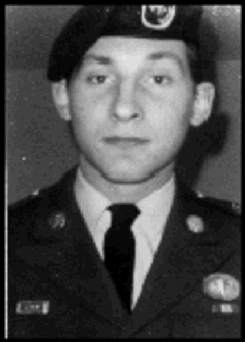
Fred and I went Jump School and Training Group together. We graduated and went to the same Company in 6th Group. We both volunteered for the 5th Group through Mrs. Alexander on the same pay phone together. Fred and I spend the last two weeks in the States at my parents house in Torrance, Calif. Taught him how to surf and we raised a little hell before getting to Nha Thrang. At the 5th Group Repo we both volunteered for Project Delta, B-52. Fred had a last minutes got the urge to do CCN, I had already committed to Delta. so we split up and kept in contact. We had met up in Nha Thang on a few stand downs in the early part of 69. Delta was working up north in Apr-May 69 out of Phu Bai and An Hoa, I had a chance to get into CCN in Danang. When I got in the compound I met up with some friends, I was looking for Fred, I was told Mags had been killed a few days earlier. I was told he got wrapped around a tree upon extraction and was crushed. That's all the detail I got and I remember. I went back to the Delta FOB, a few days later got got pulled off the operation. I had the honor of escorting my friend Fred home to his family. One of the hardest things I ever had to do. He's is buried at the Gettysburg National Cemetery. I always regretted not getting more information. When I joined SOA one of my goals was to find his other team members or anyone with the whole story, good or bad. I would appreciate any information I could get in the future. Thank You, Richard Knapp SOA GL2815 knapp9326@sbcglobal.net
My name is Ken Van Arsdel. I served with SOG from 11/67 -- 6/69. I was a leg initially assigned to the NKP launch site, where I was the commo guy. After almost a year at NKP, I extended my tour for assignment to a recon team. When I got back from my 30-day extension leave just after Christmas 1968, I was sent to FOB 1 at Phu Bai just in time for it to close, then on to FOB 4 where I remained until DEROS. I was assigned as the 1-2 on RT Louisiana. Dave Badger was the 1-0, Dave Maurer was the 1-1. Badger got reassigned, and Maurer took over as team leader and took on Jerry Plank as our 1-1. I rotated back to the States in June '69.
I was looking at your website (a truly wonderful site, by the way) and read the story of the death of Fred Magsamen, KIA 09May69. I witnessed/participated in the events leading up to Fred's death; my account is in the email below. I hope this helps clarify the events surrounding Freddie's death.
The following is what I remember, through the filter of almost 42 years. On the morning of May 9, 1969, Fred and I were just hanging out around Recon Co. in Dananag. I had about 30 days remaining on my tour; Fred had considerably more time left. Either the Recon Co. CO (Dick Meadows) or the Sgt. Major (I can't remember which) snagged us for a quick op. There was a RT on a training mission in Elephant Valley that needed an extraction. I don't remember the name of the RT, but I remember the two Americans on the team were Dave Peters and Bill Phillips. They had some team members sick, maybe with food poisoning, or maybe dehydration, or some other ailment. But the upshot was, they were too sick to walk to a decent LZ so they called in for an extraction on ropes. The plan was to send a couple of Kingbees and pull out the team on the ends of ropes. I was tasked to take the lead bird, with Fred in the 2nd one. But before we left, Fred insisted on swapping with me, claiming I was too short to take the risk. Neither one of us seriously thought anything would go wrong that day--hell, we joked about it--but even so Fred was adamant that he and I trade places. I gave in to him. I've regretted that decision ever since.
The H-34s flew us out to the AO. Fred made contact with the team on the ground. I watched from above as his bird began to hover over the jungle. Almost immediately, the chopper nosed over and dropped through the canopy, bursting into flames. That much is what I witnessed. I learned everything that follows from talking to Dave and Bill later that day, and from a book I'll mention later, below.
I had no way to contact the team on the ground to find out what was going on. Because we expected this to be a milk run, we hadn't taken the precaution of having redundant commo. Fred had a PRC-25 that he used to talk with the team, and the plan was that once Fred's bird had picked up the first 4 team members, he would maintain commo with the guys left on the ground and communicate with the Vietnamese pilot in my bird through the VN pilot of his bird, as my bird went in to pick up the other 4 guys. But with Murphy's law in full effect, I was left with no way to contact the team when the other chopper burned up. Unable to make contact with the men on the ground, my bird returned to Danang.
Fred survived that crash. If I recall correctly, there were one or two killed (pilot and door gunner?) and one besides Fred who made it out of that crash. Nobody on the ground had been injured. Eventually, the team managed to contact the TOC in Danang and get Medevac choppers out to the team. These were Dustoff Hueys from the 236th Med Det in Danang. In the first Huey on station a guy named John Seebeth was the Dustoff medic. As the pilot hovered his dustoff bird over the team, Seebeth lowered a winched "jungle penetrator" to Fred and the other guy from the H-34. The bird was hovering in a very small space in triple canopy jungle. When Seebeth began to lift the winch and the chopper took on the weight of two patients, the bird began to drift. The main rotor chopped a tree top, the bird began to rotate, the rear rotor smacked into trees and the tail boom snapped off. The chopper rotated out of control, whipping Fred and the other guy around into trees and/or rocks, snapping the winch cable. This is what killed Fred. The chopper crashed, and the entire crew survived. Other choppers came in and extracted 3 of the Dustoff crew, then the weather closed in. After several hours of rain, the weather cleared and the rest of the Dustoff crew and the CCN patrol were extracted. I understand someone from CCN rappelled into the jungle next to the crashed H-34 and enlarged the hole in the canopy by blowing down some trees with C-4. Seebeth recently published his memoirs of being a Dustoff medic. The book, An Introduction to War, was written by his wife, Linda Seebeth. Seebeth recounts his memories of that day in Chapter 8.
I don't remember whether it was that night or the next day, I went to the morgue to officially identify Fred's body. That moment has stuck with me all my life. I can still remember in detail Fred's lifeless form lying there. I can still remember thinking how unfair it was, as the guilt came flooding in. I remember a few days later finding out that a friend of Fred's was in camp, and was going to accompany Fred's body back to the States. I guess that was you, Rich. I counted Fred as a good friend although I knew him for only a few short months. The intensity of life as a soldier in Recon Company, CCN, seemed to distill daily experiences into moments that were both potent and poignant. Great friendships were formed quickly in the maelstrom of the events we lived. Sadly, they were often brought up short, as the odds caught up with us.
Regards,
Ken Van Arsdel
SOA 410GA
"U.S. Army Sgt. Frederick J. Magsamen, 21, of Westminster, MD, died May 9, 1969 in an aircraft accident in Vietnam. After the military aircraft he was riding in as a passenger crashed, Sergeant Magsamen was being airlifted via extraction line from a helicopter when the line snapped and he fell to the ground. He was born in Baltimore, MD, January 26, 1948, but lived most of his life in Westminster, Maryland, where he graduated from Westminster High School in 1966. He played on the varsity football team and belonged to the school's music organizations. His high school yearbook description includes his nickname "Toole", california dreamer.. No 11.. Fords forever.. Champ's.. co-captain.. organized riots.. "whip it on me".. broad-jumper.. snowman. After high school, Fred worked for Random House Publishing Co. before enlisting in the Army in July 1967. He took basic training at Fort Bragg, NC, jump school training at Fort Benning, GA, and military police school at Fort Gordon, GA. Sergeant Magsamen joined the Green Berets after taking additional special training at Fort Bragg. In December 1968, he went to Vietnam, where he earned two Bronze Stars and two Purple Hearts. He was the son of Mr. and Mrs. Frederick J. Magsamen of Westminster, MD, and the maternal grandson of Mr. and Mrs. Wilmer T. Butler of Baltimore, MD." Taken from the Carroll County (MD) Times Memorial Day edition of 1989. |
1969 | 05 | 13 | E-7 SFC | Mike J. | Scott | 11B4S | MIA-PFD, O1-E shotdown | Laos; CCN, YC787037, aboard 219th Avn Co #51-16959 shot down by 37mm west of Kham Duc |
13 May 69- Bruce Carleton Bessor, 1LT 02, of Fairfax, VA, USA Aviation Pilot FAC of the 219th Aviation Company, Ops 32 and Mike John Scott SFC E-7 of Newark, NJ, USASF, Covey Rider FAC, CCN, Da Nang, Ops 35 MIA-Presumptive finding of death. In a O-1G aircraft flying (FAC) radio relay for a recon team in the Vietnam/Laos border west of Kham Duc. The team had radio contact with the aircraft and could hear 15 rounds of 37mm anti-aircraft fire from their position and the sputtering of the engine then all contact with the aircraft was lost. When a search aircraft attempted to enter the suspected crash area, they had to retreat due heavy enemy fire. An aerial search conducted on the 18th failed to reveal anything. [Photo of Lt Bessor featured in John Plaster's SOG A Photo History of the Secret War, page 121] Both Bessor and Scott's remains not recovered.
|
|
Source: Compiled from one or more of the following: raw data from U.S. Government agency sources, correspondence with POW/MIA families,
published sources, interviews. Updated by the P.O.W. NETWORK in 2020.
REMARKS:
SYNOPSIS: On May 13, 1969, 1Lt. Bruce Bessor, pilot, and SFC Mike J. Scott,observer were flying on an O1G aircraft (serial #51-16959) on a radio relay
mission for a Special Forces reconnaissance team in the area of the Vietnam/Laos border. SFC Scott was assigned to Command and Control Central,
MACV-SOG (Military Assistance Command, Vietnam Studies and Observation
Source: Compiled from one or more of the following: raw data from U.S.Government agency sources, correspondence with POW/MIA families,
published sources, interviews. Updated by the P.O.W. NETWORK in 2020.
Other Personnel in Incident: Bruce C. Bessor (missing)
REMARKS:
SYNOPSIS: On May 13, 1969, 1Lt. Bruce Bessor, pilot, and SFC Mike J. Scott, observer were flying on an O1G aircraft (serial #51-16959) on a radio relay
mission for a Special Forces reconnaissance team in the area of the Vietnam/Laos border. SFC Scott was assigned to Command and Control Central,
MACV-SOG (Military Assistance Command, Vietnam Studies and Observation Group). MACV-SOG was a joint service high command unconventional warfare task force engaged in highly classified operations throughout Southeast Asia. The 5th Special Forces channeled personnel into MACV-SOG (although it was not a Special Forces group) through Special Operations Augmentation (SOA), which provided their "cover" while under secret orders to MACV-SOG. The teams performed deep penetration missions of strategic reconnaissance and interdiction which were called, depending on the time frame, "Shining Brass" or "Prairie Fire" missions.
At about 0800 hours, when the recon team had radio contact with 1Lt. Bessor's aircraft, they heard aircraft engine noise southwest of their
position followed by 15 rounds of 37mm fire and engine sputtering but no sound of crash, then a large volume of rifle fire from the same direction.
The reconnaissance team then lost radio contact with the aircraft.
Search aircraft attempted to enter into the suspected crash control site, but cloud cover and enemy fire prevented them from doing so. On May 18, the
area was visually searched, but nothing was found. Bessor and Scott were declared Missing in Action. They are among nearly 600 Americans still
missing in Laos.
In the early 1970's the Pathet Lao stated on a number of occasions that they held "tens of tens" of American prisoners and that those captured in Laos
would also be released from Laos. Unfortunately, that release never occurred, because the U.S. did not include Laos in the negotiations which
brought American involvement in the war to an end. The country of Laos was bombed by U.S. forces for several months following the Peace Accords in
January 1973, and Laos steadfastly refused to talk about releasing our POWs until we discontinued bombing in their country.
Consequently, no American held in Laos was ever returned. By 1989, these "tens of tens" apparently have been forgotten. The U.S. has negotiated with
the same government entity which declared it held American POWs and has agreed to build clinics and help improve relations with Laos. If, as
thousands of reports indicate, Americans are still alive in Indochina as captives, then the U.S. is collaborating in signing their death warrants.
Group). MACV-SOG was a joint service high command unconventional warfare task force engaged in highly classified operations throughout Southeast
Asia. The 5th Special Forces channeled personnel into MACV-SOG (although it was not a Special Forces group) through Special Operations Augmentation
(SOA), which provided their "cover" while under secret orders to MACV-SOG. The teams performed deep penetration missions of strategic reconnaissance
and interdiction which were called, depending on the time frame, "Shining Brass" or "Prairie Fire" missions.
At about 0800 hours, when the recon team had radio contact with 1Lt. Bessor's aircraft, they heard aircraft engine noise southwest of their
position followed by 15 rounds of 37mm fire and engine sputtering but no sound of crash, then a large volume of rifle fire from the same direction.
The reconnaissance team then lost radio contact with the aircraft.
Search aircraft attempted to enter into the suspected crash control site, but cloud cover and enemy fire prevented them from doing so. On May 18, the
area was visually searched, but nothing was found. Bessor and Scott were declared Missing in Action. They are among nearly 600 Americans still
missing in Laos.
In the early 1970's the Pathet Lao stated on a number of occasions that they held "tens of tens" of American prisoners and that those captured in Laos
would also be released from Laos. Unfortunately, that release never occurred, because the U.S. did not include Laos in the negotiations which
brought American involvement in the war to an end. The country of Laos was bombed by U.S. forces for several months following the Peace Accords in
January 1973, and Laos steadfastly refused to talk about releasing our POWs until we discontinued bombing in their country.
Consequently, no American held in Laos was ever returned. By 1989, these "tens of tens" apparently have been forgotten. The U.S. has negotiated with
the same government entity which declared it held American POWs and has agreed to build clinics and help improve relations with Laos. If, as
thousands of reports indicate, Americans are still alive in Indochina as captives, then the U.S. is collaborating in signing their death warrants.
1969 | 05 | 23 | E-5 SGT | Howard S. | Hill | 91B4S | KIA, helicopter crash | Cam; CCS, MLS-S Chase Medic, going after RT Saw; 155 AHC #68-15392 75 miles inside Cambodia |
1969 | 05 | 23 | E-4 SP4 | Phillip W. | Strout | 12B3S | KIA, helicopter crash | Cam; CCS, RT Saw, w/ Hill & Machata; 155 AHC #68-15392 75 miles inside Cambodia near Route 13 |
23 May 69- Howard S. Hill, SGT E-5, Medic; Phillip W. Strout, SP/4, USASF,- RT SAW, CCS, Ops 35-KIA and Santiago V.E, Quintana, Door Gunner, and Armando Ramirez, Crew Chief of the 155th AHC -(Note: Rudolph Machata was not with SOG, he was with A-244, B Co, 5th SFGA and killed on another mission) Killed as a result of a helicopter crash.
|
|
|
|
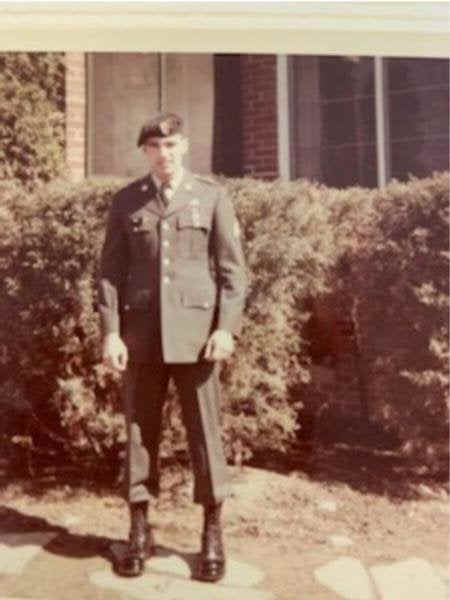
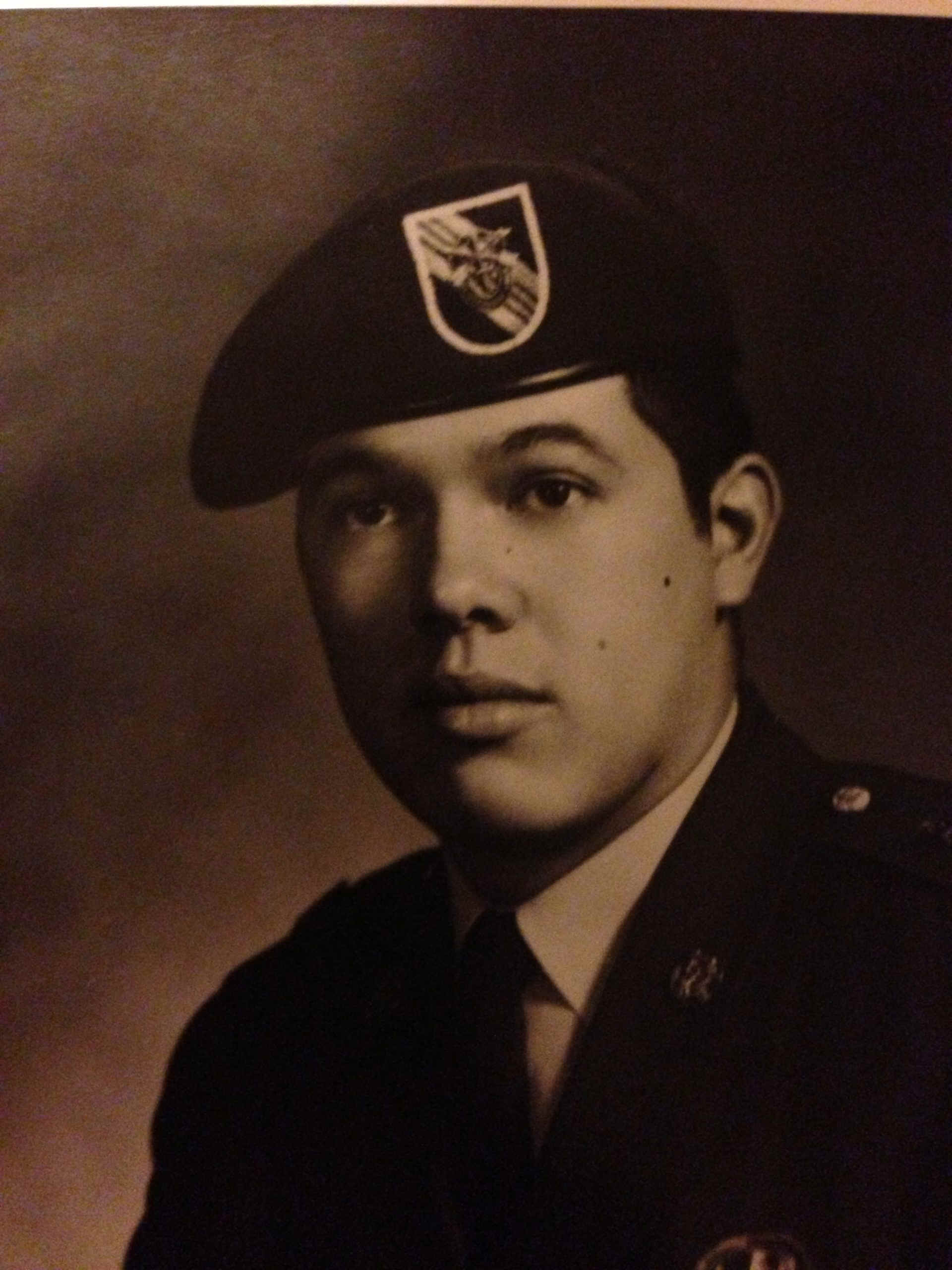

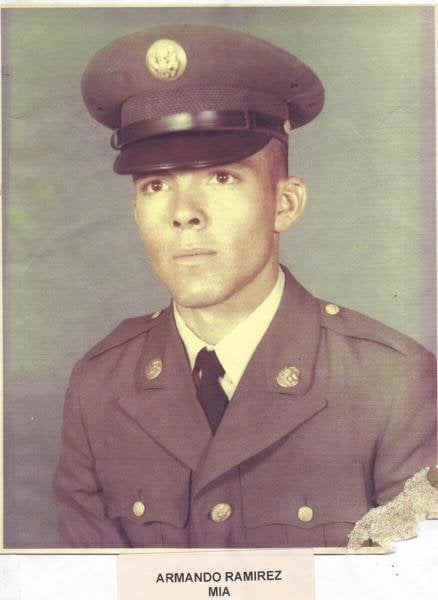
Ken Donovan submitted the following on Mar 10, 06: "In looking over your website, in the KIA/MIA section you have listed two SF individuals a Howard Hill and Phillip Strout as KIA on 23 May 69. These are the two SF guys that were killed on A/C 392. The team had called in and requested to be extracted, as they had captured two POWs. The first A/C to go in was #392 who tried to get the team out on ladders, the co-pilot indicates as they were clearing the trees, they lost all engine oil pressure, (this would indicate the A/C was hit). The backup slick then tried to make a pickup but was badly shot up due to the large number of bad guys in the area, before they left the area, the crew chief went down a ladder with an M60 to assist in getting the remaining team and crew members out, he was awarded the Silver Star for this action, I think he should have gotten the MOH. (of the aircraft crew, the aircraft commander was badly injured, and both the crew chief and door gunner were KIA, with only the co-pilot able to move, all of the American team members were either KIA or badly injured) The second slick was badly shot up to include loosing his transmission oil pressure, they were able to get out of the immediate area before they went down. I was at Duc Lap with the backup team of 20th SOS guns. We got word to scramble and headed west the crash site was about 75 miles inside Cambodia. (I have some MIA recovery team data, as the crew chief was pinned under the A/C and his body was never recovered, of any that happened to me in Viet Nam, not being able to get his body out still bothers me more than any thing else). When I got there, I hovered in about 100 ft tall trees to try and get a ladder down, but got shot up, and pulled out, and came around for another try, and that was when my crew chief got hit, that is when we went back to Duc Lap, and Sgt Winters got behind the crew chief's gun. We then went back, and were able to make a pick up on our third try. I had just turned 21, and this was and remains the single hardest day of my life. Looking back on this after almost 40 years, I am glad I flew with the 155th, and if I had to go to war again, I would want to fly with the SF guys again, as I consider them to be the best soldiers I have ever seen. (I do not know if the teams knew this, but in the 155th the crews took personal responsibility for the teams they put in, and were willing to do whatever it took to get them out.) The two individuals KIA from the 155th on May 23, 1969 are as follows: Door Gunner: Santiago V.E, Quintana Crew Chief: Armando Ramirez (listed as MIA, body was pinned under A/C, I believe has status was changed some years ago) There was an attempt to recover Ramirez on May 24, but a road had been cut to the crash site and the entire helicopter and Ramirez had been removed. Some where around the house, I have copies of newspaper articles that indicate the Cambodian Gov't filed a protest at the UN for invasion of their airspace. It is my understanding that the rules of engagement in Cambodia were different than Laos, we were not allowed to call in additional air support because the we were not supposed to be there, but we were conducting open operations in Laos. I did not pay much attention to most of this stuff, for most of the crews it was just another mission. The only time I was really surprised was about a week after the incident I was assigned a C&C mission for 5th SF HQ in Na Trang. When I reported to the CPT in operations, he looked at my name tag, and said to come with him. I was then introduced to the 5th SF commander, (do not remember his name) and the CPT told him I was the pilot that got everyone out on the 23rd. I was really surprised that 5th SF HQ were tracking 21 year old WO's. (was this normal procedure?) According to the MIA report I have, crash site was in Kracheh Province near Highway 13 approx 75 miles inside Cambodia, grid YU693870. The report lists SF Strout and Hill as KIA, and an Arthur Dolp and Mark Schneider as injured. My Crew Chief who was badly wounded was Dan Wiedner, and the Crew Chief who went down on the ladder to help get the crew/team out was Ernie Plummer, who pasted away about 10 years ago".
Received the following from Moira K. O'Regan on Mar 19, 2007: Phil was a dear friend of mine...one of 10 classmates killed from South Portland, ME. and one of my three best friends killed in 3 months (April, May and July 1969). I honor him every day. He was also one of the many featured in: One week's dead in Life Magazine on June 27, 1969... http://members.aol.com/mraffin/memday69.htm here's the alleged actual story...as told in a bio of Armando Ramirez...
Name: Armando Ramirez
Rank/Branch: E5/US Army
Unit: 155th Assault Helicopter Company, 10th Aviation Battalion, 17th
Aviation
Group, 1st Aviation Brigade
Date of Birth: 01 February 1949 (Benson AZ)
Home City of Record: Willcox AZ
Date of Loss: 23 May 1969
Country of Loss: Cambodia
Loss Coordinates: 122419N 106163E (YU693870)
Status (in 1973): Killed/Body Not Recovered
Category: 2
Aircraft/Vehicle/Ground: UH1H
Other Personnel in Incident: Crew of UH1H: Richard Menzel; Jerome Green (both survived); Santiago V.E. Quintana (died of injuries/wounds); 5th Special Forces Group team: Philip W. Strout; Howard S. Hill (both died of injuries/wounds); Arthur Dolph; Mark Schneider (both survived) Source: Compiled by Homecoming II Project 15 April 1990 from one or more of the following: raw data from U.S. Government agency sources, correspondence with POW/MIA families, published sources, interviews. REMARKS:
SYNOPSIS: SP5 Armando Ramirez was stationed at Ban Me Thuot in South Vietnam as a member of the 155th Assault Helicopter company. He was crew chief on board a UH1H helicopter -- the Huey -- that performed a wide variety of duties in Vietnam. When the word "Huey" was mentioned, it always meant "move." On May 23, 1969, Ramirez' helicopter crew was called on to insert a 5th Special Forces team into Cambodia for a classified mission. The chopper was hit by ground fire and crashed near Highway 13 in Kracheh Province, some 75 miles into Cambodia. Ramirez was trapped beneath the wreckage. The rest of the crew and passengers were pinned down by continuous heavy enemy fire and could not reach the wreckage to help or extract Ramirez. Quintana, Strout and Hill were mortally wounded in the fire fight that ensued. A rescue team of Vietnamese commanded by an American was inserted a short distance away from the trapped men, and arrived at the site just before dusk. there was still gunfire heard, but the men were no longer under direct fire. It was decided to evacuate the surviving crew and team members and the bodies of the dead. The helicopter could not be moved to extract Ramirez' body without heavy equipment, so the men were forced to leave him behind. Two days later, a search and recovery team arrived at the site to find that not only was there no sign of Ramirez, but also that a road had been cleared and the chopper was gone. Ramirez is one of nearly 2500 Americans who did not return from Vietnam. All the survivors of the crash on May 23, 1969 were certain Ramirez was dead, and that his body had been taken by an enemy that would have little regard for who or what he was. There can be no
question, however, that the enemy could tell us what happened to Armando Ramirez. The same is true for a very high percentage of the missing. Tragically, thousands of reports have been received that indicate Americans are still being captive in Southeast Asia. While Ramirez may not be one of them, the evidence suggests that hundreds of his comrades are alive, waiting for their country to free them. One can imagine that Ramirez would be there if he could, ready to help bring them to freedom. Warmest regards,
1969 | 07 | 17 | E-4 SP4 | Dennis W. | Bingham | 11B4S | KIA | Laos; CCC, RT New Hampshire, in Juliet 9, SSW of Leghorn RR Site; while accompanying RT Hawaii |
17 Jul 69- Dennis W Bingham, SP/4 USASF, CCC-KIA RT HAWAII during a mission in Loas.
|
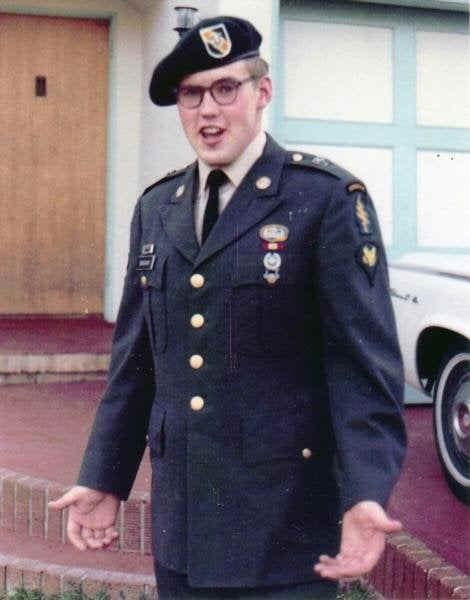
POSTED ON 7.16.2018
POSTED BY: WKILLIAN@SMJUHSD.ORG
FINAL MISSION OF SP4 DENNIS W. BINGHAM
SP4 Dennis W. Bingham was a Special Forces infantryman assigned to Reconnaissance Team New Hampshire, Command and Control Central (CCC), Military Assistance Command, Vietnam – Studies and Observations Group (MACV-SOG), 5th Special Forces Group at Kontum. Late in the afternoon of June 16, 1969 , RT Hawaii was inserted in Laos on a mission to gather intelligence on North Vietnamese Army movement in the area. SP4 Bingham had volunteered to participate in the mission and carried the radio for the team. After spending the night in a bamboo thicket, they moved out and soon bumped into a NVA patrol. A firefight ensued and RT Hawaii broke contact, requesting immediate extraction. It would be four hours before air assets became available to remove the team. When they left the cover of the jungle to move to the pick-up zone, enemy soldiers who had massed in the area opened fire, mortally wounding Bingham and another indigenous soldier on the team. Air strikes drove the enemy back enough for rescue helicopters to come in and remove the team, and although under heavy fire, Bingham’s and the other dead man’s body were put on the second helicopter and made it out. [Taken from coffeltdatabase.org and the book “Secret Commandos: Behind Enemy Lines with the Elite Warriors of SOG” by John L. Plaster
1969 | 07 | 25 | O-2 1LT | Vincent F. | Sabatinelli | 31542 | KIA, helicopter crash | Laos; CCN, FOB4, on the ground and was struck by a rotor blade of a crashing CH-34 |
25 Jul 69- Vencent F Sabatinelli, 1LT 0-2, USASF, Expoitation Force, CCN, Da Nang, Ops 35 DNH BURNS/FIRE Aircraft accident, crashed into mountain.
|
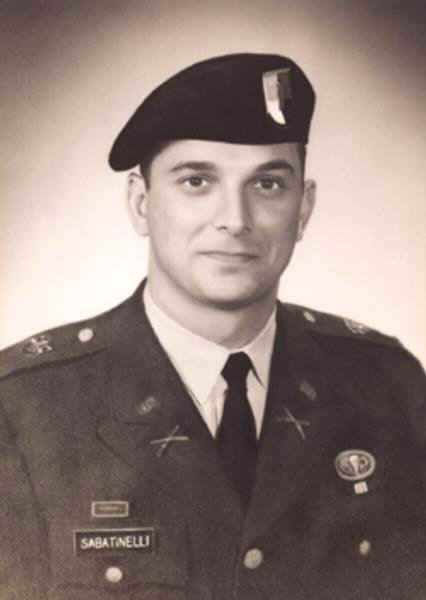
UH-1H 67-17533. This was owned by 525th MI, and they were doing a run from Saigon up to Pleiku.
Crew Members:
AC CW2 GOLDBERG STEWART B KIA
P W1 TF DEVEREUX
CE E5 R MUNKVOLD
G SP4 VALDEZ DAVID MEDINA KIA
Passengers and/or other participants:
CPT SABATINELLI VINCENT F, AR, PX, KIA
CPT PEELE ELVERNON, AR, PX, KIA
SFC EVERETT JAY LEROY, AR, PX, KIA
SP4 DYCKS RONALD KING, AR, PX, KIA
SGT DU BEAU GERALD EUGENE, NOT, KIA
CPT PFEFER ARTHUR THOMAS, AR, PX, KIA
Official version:
POSTED ON 2.17.2017
POSTED BY: WKILLIAN@SMJUHSD.ORG
FINAL MISSION OF CPT VINCENT F. SABATINELLI
On 25, 1969, a U.S. Army helicopter UH-1H (tail number 67-17533) from the 525th Military Intelligence Group was on a flight from Ban Me Thuot City Field to Pleiku when it crashed into Dragon Mountain due to deteriorating weather conditions resulting in the loss of two of the four crewmen and all six passengers. The lost crewmen included aircraft commander CW2 Stewart B. Goldberg and gunner SP4 David M. Valdez. The six lost passengers were CPT Vincent F. Sabatinelli, CPT Elvernon Peele, SFC Jay L. Everett, SP4 Ronald K. Dycks, SGT Gerald E. DuBeau, and CPT Arthur T. Pfefer. The following is a description of the accident by the crash investigating board: Aircraft #67-17533 had flown approximately four hours and fifteen minutes prior to the accident. All flight conditions were normal with the exception that low ceilings necessitated low level flight from Ban Me Thout to Pleiku. The cloud ceiling was approximately 450 feet AGL (above ground level) at the time of departure from Ban Me Thout City Field. Since the ceiling wouldn't permit VFR (visual flight rules) flight at 1000' AGL as required by 525th M.I. SOP, the Aircraft Commander elected to fly VFR low level. According to the pilot, clouds forced the aircraft down from approximately 400 feet AGL to approximately 50 feet AGL as the weather deteriorated. From Ban Me Thout they utilized dead reckoning navigation to intercept Highway 14, and followed it north towards Pleiku. Due to the additional strain encountered by low level flight, the Aircraft Commander and co-pilot exchanged control of the aircraft several times. As they approached Dragon Mountain, visibility rapidly deteriorated. At this time the Aircraft Commander took control and instructed the co-pilot to monitor the instruments. He slowed the aircraft from approximately 110 knots to 80 knots and initiated a right turn, presumably to complete a 180 degree turn and regain VFR flight conditions. There is a distinct possibility that the Aircraft Commander went into vertigo at this time. The attitude indicator on the left side of the aircraft was inoperative. Another indication of vertigo is a tape recorded by Peacock Control, Pleiku. Approximately 2 seconds after the co-pilot Rogered a weather report, he told the Aircraft Commander that he was in a steep bank. The aircraft was heading into the side of Dragon Mountain at this time. The tape also indicates that the mountain was seen just prior to impact. The Aircraft Commander apparently initiated an extremely steep flare as is evidenced by the fact that the tail rotor blades struck the ground first. He must have also applied collective pitch in an effort to cushion the impact as is evidenced by the fact that the aircraft slid approximately 60 meters up a 50- to 60-degree slope before the main rotor made contact with the ground and broke away from the aircraft. The aircraft flipped end over end when the main rotor broke away and then rolled approximately 30 meters back down the mountain where it came to rest, upside
In referance to 2LT Vince Sabatinelli who is listed as KIA/DNH, I can tell you this with a great deal of certainty; Vince was a platoon leader, A CO Hatchet Force out of CCN in DaNang. His platoon was on a mission (I dont know where) A CH34 Kingbee Crashed from a fairly low altitude, Vince and others were on the ground at the time. The Kingbee tipped over, the rotor hitting Vince in the Head. There was also an SFC named Sager who was on the mission. Sager sustained some broken/cracked ribs, and remained with CCN for the rest of his tour in a non combat capacity. I arrived at CCN DaNang 3 days after these events. A Company Hatchet was reconstituted, and I wound up being a squad Leader. My first job was to go up to Mai Loc and get all the Yards back that others had sent on leave. I got em all back to DaNang, but than for some reason most of A Company Hatchet wound up being Muongs and Cambodes Mike Chwatek | m_chwatek@yahoo.com | Colchester Ct. USA Sunday, January 28, 2007 at 08:09:14 AM PST (NOTE: THIS INCIDENT CLOSELY RESEMBLES THAT OF LT PETER MURRAY, WHO WAS KILLED ON 27 AUGUST 1969; BOTH FROM COMPANY A, CCN'S HATCHET COMPANY), I STRONGLY SUSPECT MIKE CHAWATEK IS MISTAKEN AS WE HAVE THE FOLLOWING FROM GARY ROUSH OF THE VHPA: "Our information came from an accident report that is on file at Ft. Rucker, AL and it list SABATINELLI as one of the passengers. This Huey burned so the TAGCEN complimentary cause of death to BURNS/FIRE fits this Huey. rln
1969 | 07 | 27 | E-6 SSG | Steven | Nagy | 11B4S | KIA | Laos; CCN, RT Crusader |
27 Jul 69- Steven Nagy, SSG E-6, USASF, CCN, RT Crusader, One Zero, Laos,KIA, Body Recovered-Died of Multiple fragmentation wounds aboard the Hospital Ship REPOSIE, I believe or the other ship that worked off the coast of DaNang-Charles Gray. Note "Laos" means he was on a recon mission at the time he was wounded by friendly fire.
Vietnam Virtual Wall has this:
Casualty Type: | Hostile, died of wounds |
Casualty Detail: | Misadventure (Friendly Fire) |
|
1969 | 07 | 30 | E-4 SP4 | Samuel W. | Walthour, Jr. | 91B2S | KIA | SVN; CCS, killed at 1-0 school while waiting for extraction; multiple frag wounds |
30 Jul 69- Samuel W Walthour, SP/4, USASF, Camp Long Thanh, 0ps34/38 was killed while at the 'One-Zero/Team Leader's School" KIA-RR Casualty details: Multiple fragmentation wounds. Newspaper article: "... lost his life while holding off a large enemy force from his small recon team. His actions permitted his reconnaissance team successfully to complete a withdrawal to a nearby landing zone for extraction by a helicopter. He made this possible by holding his position and by bringing automatic fire on the larger enemy force causing the enemy to halt and seek cover"
|
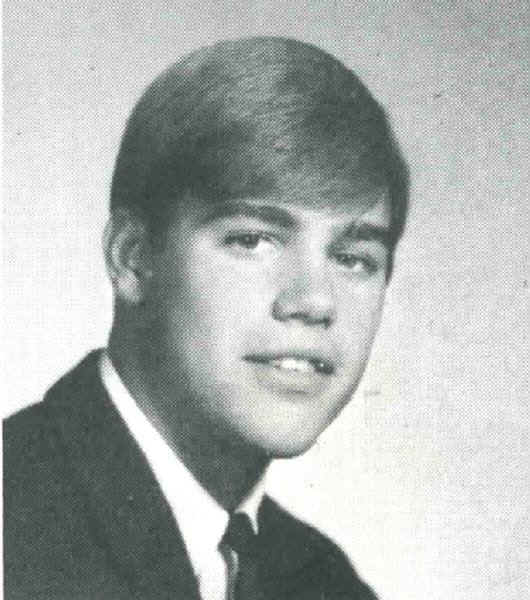
1969 | 07 | 31 | E-6 SSG | Michael P. | Burns | 11F4S | MIA-PFD | Laos; CCN, w/ RT Kentucky, YD003191 (or YD025198??), w/ 1LT Neal near Hwy 921 |
1969 | 07 | 31 | O-2 1LT | Dennis P. | Neal | 31542 | MIA-PFD | Laos; CCN, w/ RT Kentucky, YD003191 (or YD025198??), w/ SSG Burns near Nwy 921 |
31 Jul 69 - Dennis Paul Neal, 1LT 0-2 of Tarpin Springs Fl Remains not recovered; Michael Paul Burns, SP/4 of El Paso, TX, CCN Remains not Recovered, and Two Special Commandos CCN, Da Nang, Ops 35 MIA-Presumptive finding of death. Two Americans and two SCU were severely wounded during an initial attack and overran by an unknown size enemy force 1-1.2 miles inside Laos west of Hue. The surviving team members had been split from the team and they were able to evade the enemy and extracted. The surviving member reported that they believed their seriously wounded comrades had been killed; However, when last heard, a radio transmission was heard "help, help, help, for God?s sake help!" Two wounded team members had to be left behind due to heavy enemy activity encountered. An immediate aerial search was conduct without success. Another search was conducted two later without success. Due to heavy enemy activity and concentration in the area, no further search was made. NOTE: Surviving Commando reported Burns was lying on his back with severe head wounds, possibly dead, after incurring blast of a B-40 rocket and Neal was severely wounded in the chest by the B-40 blast.
|
|
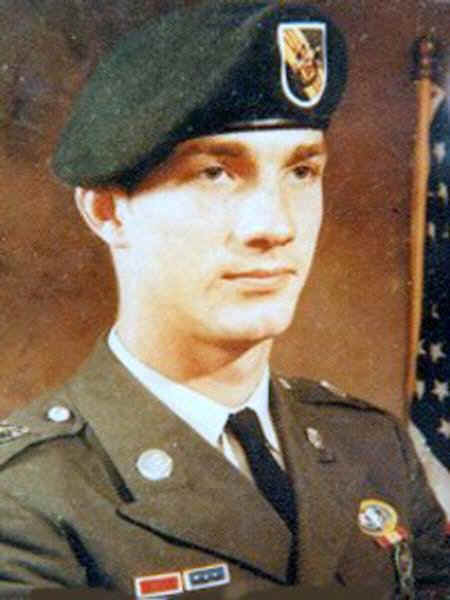
POSTED ON 6.29.2014
POSTED BY: WKILLIAN@SMJUHSD.ORG
FINAL MISSION OF CAPT DENNIS P. NEAL
In Vietnam, SP4 Michael P. Burns and CAPT Dennis P. Neal were assigned through the 5th Special Forces to MACV-SOG (Military Assistance Command, Vietnam Studies and Observation Group). MACV-SOG was a joint service high command unconventional warfare task force engaged in highly classified operations throughout Southeast Asia. The 5th Special Forces channeled personnel into MACV-SOG (although it was not a Special Forces group) through Special Operations Augmentation (SOA), which provided their "cover" while under secret orders to MACV-SOG. The teams performed deep penetration missions of strategic reconnaissance and interdiction which were called, depending on the time frame, "Shining Brass" or "Prairie Fire" missions. On July 31, 1969, Capt. Neal was the team leader on a reconnaissance mission with a six-man patrol just inside Laos due west of the South Vietnam city of Hue. The team had completed its mission and was awaiting extraction along with 4 indigenous team members. It was at this time that one of the indigenous opened fire on 5 enemy personnel trying to crawl up to their position. The enemy signaled and the result was heavy enemy fire, including B-40 rocket and machine gun fire. A B-40 rocket hit their position, killing CAPT Neal and SP4 Burns and two of the four indigenous. The other two indigenous team members were slightly wounded. Neal had been wounded in the chest. Burns was also severely wounded in the head by the same B-40 rocket blast, and was last seen lying on his back, possibly dead, by Pan and Comen, the surviving commandos. When Pan and Comen turned Neal over to take off one of his emergency UHF radios prior to retreating because of wounds and intense fire, forward air control aircraft heard an emergency radio transmit, "Help, help, help, for God's sake, help." The two commandos were ultimately extracted, and search teams were later dispatched to the area, but no trace was found of Neal and Burns. When all details were compared, both from the surviving commandos and the FAC aircraft, it could not be determined that Burns and Neal had, in fact, died. The two were classified Missing in Action. For every insertion like Neal and Burns' that were detected and stopped, dozens of other commando teams safely slipped past NVA lines to strike a wide range of targets and collect vital information. The number of MACV-SOG missions conducted with Special Forces reconnaissance teams into Laos and Cambodia was 452 in 1969. It was the most sustained American campaign of raiding, sabotage and intelligence-gathering waged on foreign soil in U.S. military history. MACV-SOG's teams earned a global reputation as one of the most combat effective deep-penetration forces ever raised. The missions Neal, Burns and others were assigned were exceedingly dangerous and of strategic importance. The men who were put into such situations knew the chances of their recovery if captured was slim to none. They quite naturally assumed that their freedom would come by the end of the war. For 591 Americans, freedom did come at the end of the war. For another 2500, however, freedom is taking longer to achieve. [Taken from pownetwork.org]
Notes from The Virtual Wall
Captain Dennis P. Neal, SP4 Michael P. Burns, and four indigenous troops were conducting a reconnaissance patrol in Laos. After completing their mission, the team successfully moved to a pre-briefed location in the rugged jungle covered mountains near Highway 912, just west of the Lao/South Vietnamese border. They set up a security perimeter and waited for extraction helicopters to arrive. Before the extraction, the patrol was attacked by North Vietnamese forces. A B-40 rocket explosion killed two of the indigenous troops, severely wounded both Neal (chest) and Burns (head), and inflicted lesser injuries on the other two troops. Believing Neal and Burns to be dead or near death, the two survivors took an emergency radio and moved out to escape the area. The two were successfully extracted and search forces inserted. Although the search forces located the site of the firefight, no sign of Neal or Burns was found. Since there was no positive evidence of their deaths, both men were placed in MIA status. On 6 Sep 1978, the Secretary of the Army approved a Presumptive Finding of Death for now-Major Dennis Neal. As of 01 Feb 2005 neither Neal's nor Burns' remains have been repatriated.
09 Aug 69 - Janousek, Ronald, 1Lt, BNR and Bruce E Kane, Cpl, USMC Helicopter Crew providing support in Laos-both KIA Remains not recoverd. The Helicopter was hit by enemy fire, burst into flames and crashed into a Laotian River. Two members of the crew survived. [Photo on page 98, SOG A Photo History of the Secret Wars by John Plaster] BNR for both men
|
|


The following filed by Mark Byrd, USMC: On August 9 of 1969 a flight of Scarface two gunships flying under the call sign “Eagle Claw” led a combined force of Marine, Army and AFVN (Vietnamese Air Force) helicopters on a Prairie Fire Emergency across the Laotian border. The lead Marine aircraft was flown by Major Tom Hill with 1st Lt. Ronald J. Janousek as his copilot and Corporal J. J. Dean and Corporal Bruce E. Kane as flight crew. Their mission was to command the extraction of a SOG reconnaissance platoon which was being chased by a large North Vietnamese Army force. The mission aircraft included Major Hill’s two UH1E Huey gunships, 4 Army Cobras , several Army Huey slicks, and several VNAF H-34's. When Major Hill arrived in the vicinity of the reconnaissance team with his flight of two UH1E gunships he learned that just a few minutes earlier a Army Cobra, piloted by Captain Mike Brokovick, had taken heavy fire from a ridge line near the team's position. Major Hill exposed his aircraft to the same gun positions as he maneuvered to over fly the recon team. His aircraft was hit by ground fire and lost power. The aircraft was streaming fuel which burst into flames as Major Hill maneuvered to land near the Xepon River. The aircraft became a fireball as it autorotated towards the river. At 75 feet above the ground the tail boom fell off and the Huey abruptly fell into the river. The aircraft came to rest inverted and almost fully submerged in the swiftly flowing water. The other pilots acted swiftly to investigate the wreckage for signs of survivors despite continued heavy enemy fire. The four Cobras led by Captain Mike Brokovick made repeated gun runs to suppress enemy fire while an AFVN H-34, call sign Kingbee, hovered along the river looking for survivors. Kingbee found Major Hill and Corporal Dean alive on the opposite bank of the river, about 100 meters down stream from the crash site. One of the Army Huey slicks subsequently lifted them out on strings. Meanwhile the Kingbee drew continuous enemy fire as he air taxied back upstream to the crash site and looked for the other two crew members. He hovered close to the sunken wreckage and pushed the main landing gear wheel of his H-34 through the cockpit window. Then he lifted the wreckage up so that his crew chief could see the interior of the cabin. No survivors were seen. Throughout this time the Kingbee was under continuous enemy fire as he performed an extremely dangerous maneuver which risked trapping his aircraft in the wreckage of the Huey. The mission leader then turned his attention to the rescue of the SOG platoon which remained under enemy pressure beyond the river. After returning to base to refuel and rearm the mission aircraft successfully extracted the SOG platoon. Captain Frank Cuddy, also from HML 367, led a relief flight of gunships to the crash site on the evening of the crash and again on the following morning. These efforts to search the site were driven away by intense enemy fire, and enemy activity at the crash site involving numerous boats was observed. No further missions to search the site were mounted by HML 367 as the survivors were presumed dead or captured. Bruce Kane’s mother was informed that her son had died in Vietnam. She was told that her son survived the crash and made it safely ashore but returned to the aircraft in an heroic attempt to rescue the copilot from which he did not return. For this valor Bruce Kane was awarded the Distinguished Flying Cross The bodies of Cpl. Kane and Lt. Janousek have never been recovered. In 1994 the DOD took the position that Cpl. Kane should be classified as “Last Known Alive”, which includes cases in which the crew members are believed to have successfully exited their aircraft and to have been alive on the ground.
A note from The Virtual Wall
Four men of Marine Light Helicopter Squadron 367 went down when their UH-1E (BuNo 155339) was hit by enemy fire in the vicinity of the SVN/Laotian border northwest of the Rockpile:
· MAJ Thomas B Hill, pilot
· 1ST LT Ronald James Janousek, copilot
· CPL Bruce Edward Kane, gunner
· LCPL John O Dean, crew chief
Major Hill was flight lead for several helicopters conducting an emergency extraction mission in Laos. The aircraft was making an approach to a 3,400 foot ridge when it received intense automatic weapons fire. With the engine failing, the pilot commenced autorotation for a valley floor. Passing thru about 1500 feet, a severe explosion occurred and the cabin and cockpit were immediately engulfed in flames. Major Hill headed the aircraft for a pool in a mountain river, landing in water estimated to be twelve feet deep with a current so swift that the aircraft was immediately pulled backwards and rolled inverted in the water. MAJ Hill exited the aircraft and made it ashore. CPL Kane had jumped from the aircraft just prior to water impact and made it ashore. However, as Hill came to surface the first time, he saw CPL Kane re-enter the water to assist the remaining crew members. MAJ Hill and LCPL Dean were rescued by a "Kingbee" H-34 piloted by Captain Ahn (AFVN 219 Squadron). Captain Ahn air taxied 100 yards in an attempt to recover of the bodies of the apparently dead crewmembers but was forced from the area by enemy small arms fire.
From VHPA and USMC Vietnam Helicopter Association data
1969 | 08 | 26 | E-6 SSG | Kenneth W. | Worthley | 11B4S | KIA, DWM | Cam; CCC, RT Florida, just prior to being lifted out on a string |
26 Aug 69 - Kenneth W. Worthley, SSG E-6, USASF, CCC, Recon Tm Flordia, Team Leader-KIA-RR Worthley, One-Zero, Bob Garcia, One-One, and a new man, Dale Hanson, One-Two, inserted into Northern Cambodia. Inserting uneventful, however, shortly thereafter, two trackers had picked up their trail, Garzia fired, killing one and then taking an M-79, he killed another NVA. Brush started to break around them; apparently, they were being followed by a company size element. The team was now on the run when Hanson's left middle finger was shot off. It was now getting dark, the team hid in a narrow gully for the night. At dawn, the team moved into the jungle where the team encountered two NVA who were killed by Worthley. One of the NVA was identified as probable Chinese Colonel intelligence officer. Again, the team was on the run as more NVA arrived and was hot on their trail. The team worked themselves to a bamboo grove, adequate for a STABO rig extraction. Garcia calling in air strikes to hold the enemy at bay. The first Huey arrived and dropped four ropes, Three SCU and Worthley?s body were extracted. Worthely had been shot through the neck and died at the LZ. A second helicopter arrived and extracted the remainder of the team. (Note: The documents captured from the intelligence officer contained the name of double agents in South Vietnam, including the name of the double agent that was executed by 5th SFGA. Col Rheault was the Group commander and had been charged with murder and imprisoned for several months. He was released shortly after the death of Worthley). Frank Greco submitted the quoted portion to be fair to Col Rheault. Kenneth W. Worthley. Pic furnished by Joe Parnar, Kenneth was roommate with Joe and Ralph Rodd.
|

POSTED ON 7.17.2018
POSTED BY: WKILLIAN@SMJUHSD.ORG
FINAL MISSION OF SSG KENNETH W. WORTHLEY
SSG Kenneth W. Worthley was a Special Forces-qualified infantryman assigned to Reconnaissance Team Florida, Command and Control Central (CCC), Military Assistance Command, Vietnam – Studies and Observations Group (MACV-SOG), 5th Special Forces Group at Kontum. On August 26, 1969, SSG Worthley was with RT Florida on a mission in Cambodia in which the team successfully ambushed a senior North Vietnamese Army intelligence officer and captured his satchel, which contained several top secret documents about enemy spies in South Vietnam. The team fought their way clear, evading many pursuing enemy troops, and were being lifted out on ropes when a rifle shot hit Worthley, killing him instantly. [Taken from coffeltdatabase.org and the book “Secret Commandos: Behind Enemy Lines with the Elite Warriors of SOG” by John L. Plaster]
1969 | 08 | 27 | O-2 1LT | Peter H. | McMurray | 31542 | DNH, helicopter crash | Laos; CCN, Nung Company, during extraction off Co Roc Mountain; struck by rotor blade |
27 Aug 69 - Peter Hinchman McMurray, (Age: 24 years 0 months and 6 days) 1LT 0-2, USASF SOA, CCN, 1st Plt Ldr, Co A, Da Nang, Ops 35, of Duxbury, MA., Killed In Action, Not As A Result Of Hostile Fire (Note the official government classification of "Non-Hostile Death" is in error) - Remains Recovered, and Two Special Commando of CCC, Kontom-KIA. SOG had directed CCN to put a CCC platoon onto Co Roc Mountain; in addition, a Support Platoon from CCN and a Recon Team from CCN were to be inserted. The Support Platoon was commanded by Lt McMurray. As a Kingbee (H34) helicopter made its approach to the LZ, its rotor blade hit the hillside and the aircraft crashed into the LZ. McMurray was killed either by a blade or a rock sent spinning by the blade. A short time later, SOG notified CCN that enemy intercepts indicated the enemy knew of the insertion and that the CCC platoon was moving south off of Co-Roc to their (enemy's) area of operation (AO). The enemy planned to attack that night. BG (then Major) George "Speedy" Gaspard flew to Co-Roc where he coordinated activities, toe poppers and obstacles were already set around the perimeter. The CCC platoon was notified of the impending attack and was hit about 4 am by a B40 rocket attack with two Commando Killed and four Wounded. After daylight, that platoon was picked up. The Recon Team continued to move toward the river bottom and continued its mission. Gen Gaspard and the support personnel were picked up-(Information furnished by BG Gaspard). Col (then Cpt). Randy Givens reports Lt. McMurray was his roommate and Lt McMurray was a Platoon Leaders in Company A and not in Company B and confirms the information furnished by BG Gaspard. THERE IS A DIFFERENT, INTENTIONAL MISREPRESENTATION OF EVENTS INVOLVING THE DEATH OF LT McMURRAY RECORDED IN THE BOOK, 15 Months in SOG, A Warrior's Tour, although the book is written as non- fiction it is essentially fiction with no historical value: General Gaspard writes that Lt McMurray was a fine young officer and deserves a better fate.. Col. Nicholson states he was the Company Commander of Co B and Lt McMurray as his Executive Officer. A Recon Team had found and reported a 6-8" pipeline which had been constructed in the Mu Gia Pass area where the Route 911 of the Ho Chi Minh trail comes out of North Vietnam and enters Laos. Two Platoons form Company B were inserted into the location where the pipeline was discovered with the mission to destroy and disrupt the oil supply going to Vietnam and during the extraction of the element, the last chopper was loaded with the two Americans and two SCU. As the helicopter began its ascent, it was engaged by frontal enemy machine gun which killed the Pilot and Co pilot resulting in the helicopter crashing. One of the SCU had been thrown from the helicopter and was dead, then the body of McMurray was located, he also had been thrown out of the helicopter as it was spinning to the ground when the helicopter blade hit him in the chest killing him. ADDED: Aug 29, 05. The picture furnished. "You will have to forgive me on some of the details since it has been so long. Also, I don’t remember all the names. We inserted from a marine base near the DMZ on Kingbee choppers flown by VN pilots. As we were approaching I took a few pictures of the area and of Co Roc just prior to landing. I was in the final chopper coming in to land with ammunition and another American and a couple of ‘yards. As we were coming in to land I stood in the door ready to offload the ammunition to Lt. McMurray, who was standing at the edge of the LZ. The VN pilots appeared to be a little anxious and came in too fast and could not slow enough. The left tire of the chopper hit and caused the chopper to start wobbling and the pilot lost control. One of the blades hit the ground and threw the angle of the chopper toward Lt. McMurray. Even though he had originally been standing out of the wash of the blades the bounce threw the chopper toward him as it tilted. The blade caught the Lt. in the head and killed him instantly. I don’t think he ever knew what hit him. After that the chopper continued to roll over and the blades beat the ground until they all broke off or bent. As the chopper went over I fell out the door with the case I was holding. The remaining cases fell on me and the chopper slid down the hill about five or six feet. The fuel lines broke and started spraying all over the ground underneath. I think there was one other death in the crash but I can’t remember if it was a yard or one of the VN. The remaining passengers were able to make it out but the ammo cases had wedged between me and the chopper and I couldn’t move my legs. I just knew that there was going to be a fire at any minute. About when I was ready to die from fear, the chopper slid a little further down the hill and relieved the pressure enough so I was able to work my way free and crawl out from under on the side of the wheel. All I got out of the whole ordeal was skinned legs and a very sore leg. We shot a few M-79’s into the chopper to make sure it burned,… and did it burn! I guess the whole thing was made of magnesium because when it finished there was hardly anything left but white ash. My unit was a hatchet force from CCS, not CCC. After so long I don’t even remember which company. However, the events I have accounted were traumatic enough for me to remember them, somewhat. We went in to support the CCC detachment and to search for and destroy some gun emplacements in the mountain. We RON’d on top of Co Roc that night and proceeded down the South side the next morning. On the way we could hear signal shots. Since it appeared we were being followed our next RON was on a small hill next to Co Roc. During the night a small force of NVA managed to creep up to about 15 feet of our perimeter on the side of the hill we had come up. They initiated contact early in the morning with a B-40 rocket that hit the opposite side of a tree near where I was sleeping and started a continuous spray from a machine gun emplacement. This lasted a few minutes and then they were gone. We had about 7 wounded, and 2 of them were brothers (yards) from my platoon. One of them was hit in the forehead and lost the skull, revealing the brain. A couple of hours after the ambush a typhoon rolled across the area and we were socked in with strong winds and rain. This lasted through the next day and night and precluded any extraction until the following day. All during this time we had to listen to the wails of the wounded without being able to do anything but try and relieve the pain for them. The brothers both died the next day. Michael C. Moore, Sgt. CCS 1969 – 1970 ADDITIONAL INFORMATION IS PROVIDED AT MURRAY
|


1969 | 08 | 28 | E-4 SP4 | Richard K. | Joecken | 11B2S | KIA, DWM | Laos; CCC, Hatchet Force; small arms fire |
28 Aug 69- Richard K. Joecken, SP/4, USASF, CCC, Sqd Ldr-KIA. The virtual wall has him as being assigned to SF Training Group, Co C, 5th SFGA. Note, there was no training group within 5th SFGA per se and certainly not Co C, as it was an operational element. Operations in Laos was the domain of SOG; thus his assignment was Command and Control Central, Studies and Observation Group and not a Training Group alleged to be in Vietnam, which there was no such unit. The US Army Special Forces Training Group was and has been in Fort Bragg, NC to Train Special Forces Candidates, after sucessful qualification, the Special Forces Qualified personnel are then sent around the world to Special Forces Assignments in North Carolina USA. USASF Training Group was not an operational unit and the 5th SFGA was an operational unit. SF members assigned to the 5th then could volunteer for SOG duty.
|
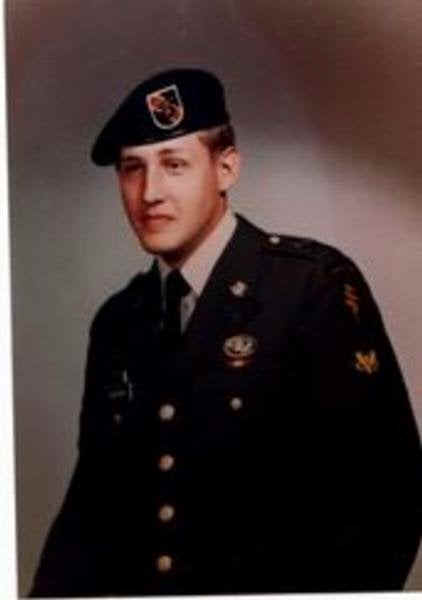
POSTED ON 7.17.2018
POSTED BY: WKILLIAN@SMJUHSD.ORG
FINAL MISSION OF SP4 RICHARD K. JOECKEN
SP4 Richard K. Joecken was a Special Forces-qualified infantryman assigned to Special Forces Training Group, C Company, 5th Special Forces Group. On August 28, 1969, SP4 Joecken was a member of a company-sized Hatchet Force mission of 100 Montagnard (“Yards”) indigenous fighters and a dozen Americans on an operation in Laos where they came up against an especially aggressive North Vietnamese Army force. During an engagement, several Yards plus six Americans were wounded, including Joecken. The American medic present did his best to attend the injured, but heavy ground fire drove away extraction helicopters. They were forced to stay the night, the medic spending the whole time treating the wounded, but he was unable to save Joecken, who died before dawn. The rest of the force was able to get out alive. Joecken was posthumously promoted to Sergeant. [Taken from coffeltdatabase.org and the book “Secret Commandos: Behind Enemy Lines with the Elite Warriors of SOG” by John L. Plaster]
1969 | 09 | 21 | E-5 SP5 | Alan B. | Cecil | 11F2S | KIA, BNR | Laos; CCN, RT Moccasin, XD414634, 48k NW of Khe Sanh |
21 Sep 69- Alan Bruce Cecil, SP/5 of Holdenville, OK USASF and Commando Scout Command and Control North, Ops 35, Recon in Laos KIA due to enemy fire, MIA-Presumptive finding of death. The team was engaged by the enemy and in the initial burst, two team members were killed, including Cecil. He was shot in the head above the right eye with the other team members reporting that he was not breathing. The remaining team was able to evade the enemy; however, they had to leave the dead behind. Enemy activity in the area precluded infiltration into the area to conduct a search. BNR
|
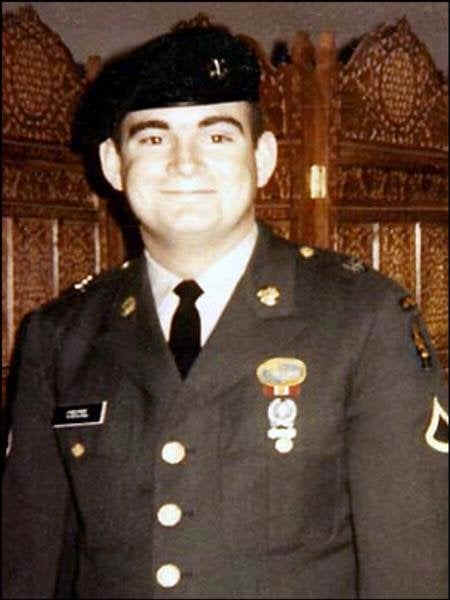
j
A Note from The Virtual Wall
Recon Team MOCASSIN was inserted into Laos on 21 Sep 1969 in order to conduct surveillance operations against North Vietnamese forces moving down the Ho Chi Minh Trail. Shortly after insertion the team, which consisted of two US and two ARVN soldiers, was engaged by an NVA security force. SP5 Cecil and one of the ARVN troops were killed by gunshot and the US team leader was wounded. The two survivors were able to evade the NVA and were extracted after sundown, but it was not possible to recover the bodies of the two men lost. SP5 Cecil's remains have not been recovered.
1969 | 09 | 23 | O-3 CPT | Stephen J. | Chaney | 31542 | KIA | Laos; CCN, RT Missouri |
23 Sep 69- Stephen J Chaney, CPT 0-3, USASF SOA, RT MISSOURI, CCN. (S-3) Misadventure (Friendly Fire). NOTE: HE had served in both CCS and CCN. RR
Captain Stephen John Chaney died as a result of shrapnel wounds received from an errant rocket fired from U.S. helicopter gunships during a reconnaissance patrol when his team encountered communist forces and he radioed for air strikes. CPT Chaney requested the Forward Air Controller call for extraction. During the recovery of his team, CPT Chaney died before he could be medevaced to a U.S. hospital.
|
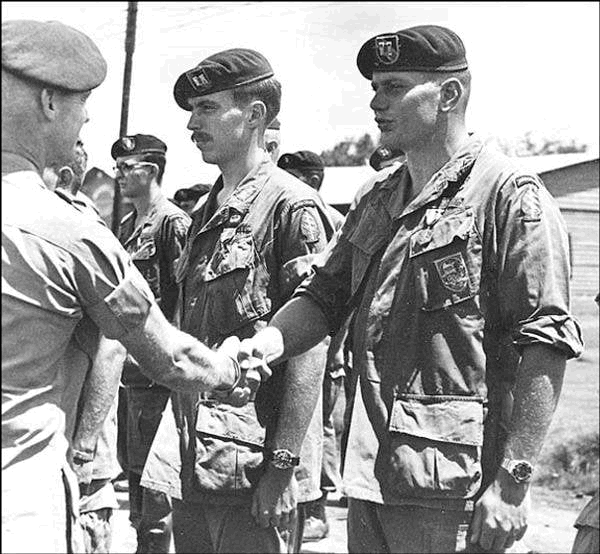
1969 | 09 | 26 | O-3 CPT | Ronald M. | Goulet | 31542 | KIA, DWM | Laos; CCC, Hatchet Force, mult frag wounds |
26 Sep 69- Ronald Marcel Goulet, CPT 0-3, Ops 35, Killed-RR CPT Ron Goulet was my company commander, same hatchet force, Co A. I was there (on a hilltop in Laos) when he was killed. He died on the chopper reroute to Pleiku. He was injured on the hilltop, an RPG rocket detonated almost at his feet. VERY badly injured, severe hand and face injury, entire side of chest caved in, conscious for a few minutes only. I was first on the scene (within 10 seconds of the explosion), and our SF medic arrived just a minute or so later. Nothing we could do, really. One of the other platoon sergeants, a platoon leader, and a squad leader were in the immediate area (the company CP, such as it was; we'd just arrived on the hilltop and were just getting positioned for the night, digging in, etc.). All three were wounded by the same explosion. (It was quite a scene, to say the least, when I came running in to that little bushy area.) Plt Sgt (another SFC, name forgotten) hit in the throat but not that bad. But out of action. LT Plt Leader (nice little guy, great sense of humor, forget his name too) had classic sucking chest wound (in his back, but it bubbled anyway). (I got to treat it, my first!) Squad leader blown upside down into an old NVA trench, dozens of small shrapnel wounds, bad case of shock and bleeding. All survived. The company XO (an unpopular 1LT whose name I forget) got on the radio and called for medevac. The SF medic and I carried Ron out to the nearest clear area (the edge of a 500 pound crater on the top of the hill, about 30 meters away from the CP in my platoon's sector of the perimeter). When the Huey came in, it couldn't touch down (not enough room), but hovered maybe chest high. Medic and I started to lift Ron up to the hands reaching down from the Huey .. and the medic promptly slipped and fell down into the crater, leaving me with Ron in my arms! I'm no weight lifter, weighed maybe 160 pounds then (skinny for a 6 footer), but sucked it up, went into berserker mode, got both hands under Ron's body (somehow) and lifted him overhead to where the guys in the chopper could grab him. (My back's never been the same either.) I was told later that Ron was DOA at the Pleiku Army Hospital. I suspect he was probably dead when I lifted him up into the chopper. No signs of life, dead limp. No matter; we tried anyway. I can't remember how the other wounded got out. I presume in that same chopper (we didn't have that many medevac ships 60 KM inside Laos, as you can imagine) .. but I have no memories of them getting on board. XO was still talking with higher HQ (probably through LEGHORN radio relay site), they decided to go ahead and pull us out rather than have us spend the night on that hill and maybe have to be taken out under fire the next day. Reports of small contacts on the north side of the perimeter, maybe some enemy fire (unknown, suspect just nervous 'yards). Someone saw something to the NE, and an A1E came in and shot up the area at the base of our hill (beautiful sight, that). Then the slicks and kingbees came in and pulled us out. XO stayed in the bottom of the bomb crater handling the radio. The few NCOs I could find helped pull in the perimeter and get people out. Yards were nervous at first when the first slick came in, but after I got pissed and threatened to hammer a couple of them with Goulet's damaged CAR-15 for a club, they settled down. Big eyes, but they stayed in their holes until I waved them out to board a ship. There was a pause for a few minutes, so I went around the old perimeter to ensure nothing valuable had been abandoned, policed up a few Claymore mines left behind, all looked okay. But it was a nervous situation, not sure if NVA were snooping around, so I didn't spend much time at that. I came out in the next to last chopper, XO insisted on waiting for the last bird with the last few 'yards. No further contact, extracted without incident. By David Kirschbaum, SGM, USA SF (Ret), Recon 10, RTs KENTUCKY and MAINE, Plt Sgt, Co A SOA (CCC). (Note: David request he not be contacted regarding this incident, he has nothing more to add).
|

POSTED ON 9.3.2018
POSTED BY: WKILLIAN@SMJUHSD.ORG
FINAL MISSION OF CPT RONALD M GOULET
CPT Ronald M Goulet was a Special Forces-qualified infantryman unit commander assigned to Command and Control Central (CCC), Military Assistance Command, Vietnam–Studies and Observations Group (MACV-SOG), 5th Special Forces Group. On September 26, 1969, CPT Goulet was the leader of a Hatchet Force mission of Montagnard (“Yards”) indigenous fighters and Americans on an operation in Cambodia. The force landed under fire during which Goulet rescued one of the Americans from a burning H-34 Kingbee helicopter which was downed during the insertion. Goulet’s men mounted an aggressive assault, forcing the attacking North Vietnamese Army (NVA) to retreat. For two days the Hatchet Force skirmished with NVA squads. Then they stumbled upon a major ammunition stockpile, capturing it after a short fight. Realizing that the enemy would mount a counterattack, Goulet hastily redeployed his men. Shortly thereafter, a rocket-propelled grenade exploded near his location, mortally wounding him. Goulet died on the medivac helicopter on the way back to Dak To. [Taken from coffeltdatabase.org and the book “Secret Commandos: Behind Enemy Lines with the Elite Warriors of SOG” by John L. Plaster]
1969 | 09 | 27 | E-4 SP4 | Mark L. | Brown | 11B4S | KIA | Cam; CCS, RT Hatchet; small arms fire |
27 Sep 69- Mark L. Brown, SP/4, USASF, CCS, Radio Operator-KIA RT Hatchet with Alex Saunders as One Zero and Ronald "Gus" Atwell as One One.-Charles Gray Initially Brown wasn’t with the team. Two or three days after launch the point man became ill and the decision was made to replace him instead of pulling the team. Brown was inserted with the point man. Shortly after the change of personnel Brown was KIA and Atwell was WIA. Jim Day Mark Brown was new to recon team hatchet but the bravery, tenacity and willingness to give his life so that others could live is an example to all of us for then, and now. BY: RONALD GUS ATWELL
|
This is a photo taken right before Hatchet launched on the mission on which Mark Brown was KIA. From the left, Ronald “Gus” Atwell, Alex Saunders and Jim Day. We are discussing possible LZ’s. |
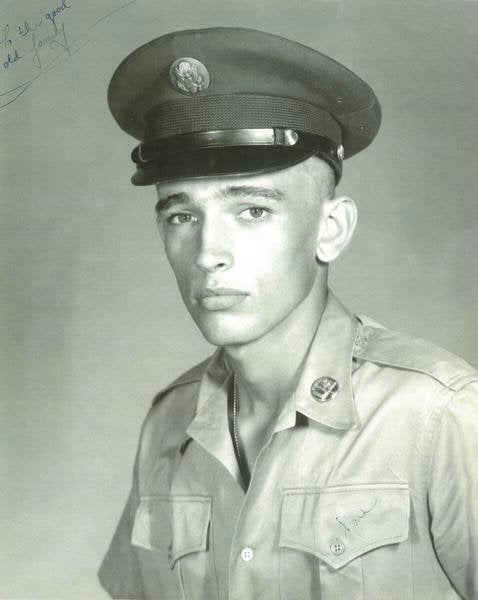
1969 | 09 | 28 | E-6 SSG | Michael A. | Piacentino | 05B4S | KIA, DOW | Laos; CCN, w/ RT?? |
28 Sep 69- Michael A Piacentino, SSG E-6 USASF CCN, -KIA in Laos Died of multiple fragmentation wounds
|

QUITE HERO
POSTED ON 12.13.2013 THE WALL OF FACES
POSTED BY: BRETT FRANCIS, LTC, USASF, RET.
MIKE "PASTY" PIACENTINO
Mike and I trained in SF together in the early 60's. We deployed together to Okinawa together in1962. We deployed w the 1 st GP in late 62 and maintained radio contact during our early deployment. His senior Radop (Pat Cotter)was the close friend or extended family member of my senior Bob Hain .As both our tours were tough ( I lost my Sr. Radop ), we drifted out of contact. We did in fact reconnect in 1969 When both assigned to CCN, SOA, 5th GP.. We had a brief contact prior to his opn'l deployment, and I followed his mission. As previously wounded, I was flying Covey insert / extract over watch for CCN opns but unfortunately not on cycle for his mission. I became aware of his loss, but returned CONUS before his Teams casualties were recovered. Mike told me he had studied Chinese and married a Chinese wife. I think he had also referenced children. I was broken hearted to hear of his loss, as he was a brother of my youth, and remains as such. If his family finds this , please contact me at. panamaouthouse@yahoo.com
From: Bilbrot@aol.com - My name is Mary Bilbro and I am the daughter of SSGT Michal Allen Piacentino who died in Vietnam in September of 1969. I was four years old at the time of his death. I am wondering if anyone can lead me to any information in regards to his military service. My mother still does not want to speak of what happened. I do have memories of my father, but would like to get to know what kind of person he was from those that might have remembered him. Thank you for your time, Mary Bilbro RN, USAT level II, USAC level II, USAT&F, MES, ACE
1969 | 10 | 8 | E-5 SGT | James L. | Gasseling | 11B4S | KIA | SVN; CCS, Exploitation (Hatchet) Force, ??where??, Darlac Prov. |
08 Oct 69- James L. Gasseling, SGT E-5, USASF, (Exploitation Hatchet Force) CCS-KIA small arms fire, Darlac Province, South Vietnam. SGT James Lee Gasseling, 2nd Exploitation Company (CCS) who was KIA on October 8, 1969 in Darlac, VN. Also on the mission was SGT Robert S. Cedars. There are few details on this tragic mission. The exploitation platoon was inserted on 7 Oct to conduct a search and destroy operation. SGT Cedars received a Purple Heart and SGT Gasseling was awarded a Bronze Star with “V” device. From Bonnie Cooper of the SOA award Bronze Star with V, Army Commendation Medal See below
Extracted from page 386, Secret Green Berets Commando's in Cambodia by LTC Fred Linsey, USA (ret)
"Because our After Action Reports were destroyed, we do not have the written details of this tragic event, except an entry that shows Cedars was inserted on 10/07 and got his PH the next day when Gasseling is shown as KIA. Testimony from several of our CCS veterans confirm that this was a local search and destroy operation by a platoon, with 1LT in charge.......(Ed. Note--initially we thought this was a recon mission with Cedars and that Gasseling was leading a BrightLight rescue mission. Our conclusion was based on fact that Cedars was listed in Recon by Sherman's book. CPT Carl Vencill confirmed that this was a platoon operation from his company and that both men were in his company at the time of the operation. The mission ws run while Vencill was on R&R. SGT James Gasseling had many good friends at CCS and he was highly regarded. One of these men was SGT Ernie Acre, who went to training group with him, and both were assigned to CCS at the same time. Ernie got further assignment within CCS to it's Recon Co and James did not--and "protested mightily," and "was heart-broken about it." We believe he would have achieved his goal to get into Recon, as many others did from Exploit duties).
|

"Bronze star citation: For heroism in connection with ground operations against a hostile force in the Republic of Vietnam: Sergeant Gasseling distinguished himself by heroism on 8 October 1969 while acting as squad leader and US Army Special Forces advisor to a SCU squad on a search and destroy mission deep within enemy-held territory. The platoon was moving through the dense jungle when they made contact with an unknown size enemy force. In the ensuing firefight, the squad attempted to withdraw and break contact. Sergeant Gasseling, with complete disregard for his own personal safety, continuously exposed himself to the intense enemy fire in order to better control and direct the members of his squad while bringing covering fire into the enemy positions. As the squad was successfully breaking contract, Sergeant Gasseling, again covering the withdrawal of his squad, was mortally wounded. Sergeant Gasseling’s courageous actions and devotion to duty were in keeping with the highest traditions of the military service and reflects great credit upon himself, Special Forces and the United States Army."
POSTED ON 2.9.2006
POSTED BY: ARNOLD M. HUSKINS
IN MEMORIAM
Taken from the website:
http://www.facesfromthewall.com/1969oct.html
"... Sgt. Gasseling, 21, had been in the U.S. Army 18 months, the last six overseas as a member of the Green Berets branch of Special Force."
Note: SF honor roll has him as being 31 years old; however, he was born Mar 10, 1948 and died Oct 8, 1969; thus, he was 21 years old
1969 | 10 | 9 | O-3 CPT | William H. | Morris, Jr. | 31542 | KIA, helicopter crash | SVN; CCS, MLSS, Binh Long Prov., Ass't Launch Site Cdr, w/ Acre & Miller; 195 AHC #66-01106 |
1969 | 10 | 9 | O-4 MAJ | Lawrence D. | Acre | 31542 | KIA, helicopter crash | SVN; CCS, MLSS, Binh Long Prov., Launch Site Cdr, w/ Morris & Miller; 195 AHC #66-01106 |
1969 | 10 | 9 | E-7 SFC | Robert R. | Miller | 11F4S | KIA, helicopter crash | SVN; CCS, MLSS, Binh Long Prov., Launch Site NCOIC, w/ Acre & Morris; 195 AHC #66-01106 |
09 Oct 69- Lawrence D. Acre, MAJ 0-4, Launch Site Cmdr; William H. Morris, Jr., CPT 0-3, Asst Launch Site Cmdr and Robert R. Miller, SFC E-7, Launch Site NCOIC, MLSS, USASF, CCS.-KIA The commander was taking SFC Miller who was a replacement along with other staff on a fly over of the Area of Operation to familiarize them to the operational area. The 195th AHC Helicopter, a UH-1D, SN: 66-01106, crashed in the Quan Loi area in support of this mission, KIA were Pilots CPT John Patrick Brennan & CPT Charles David Jageler, Crew Chief SP4 Richard Allen Smith, Sr., and Gunner SP4 Tony Maria Vasquez. [filed by Tyler Furbish, 195th AHC historian].
|
|
|
|
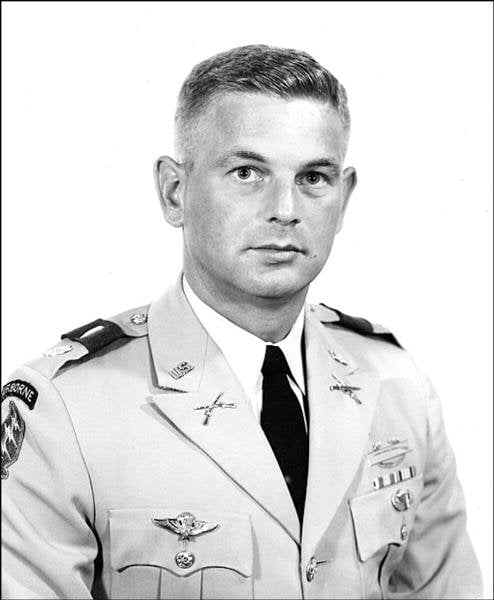

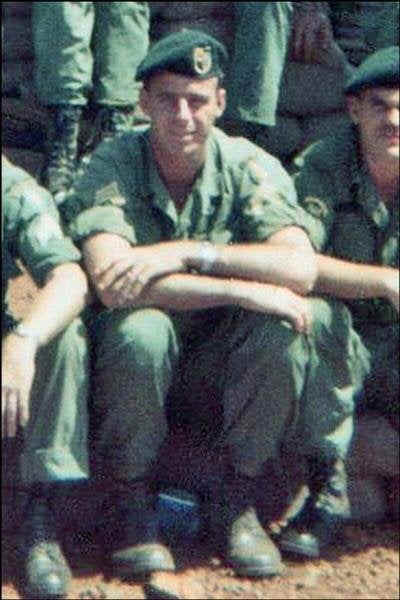

|
|
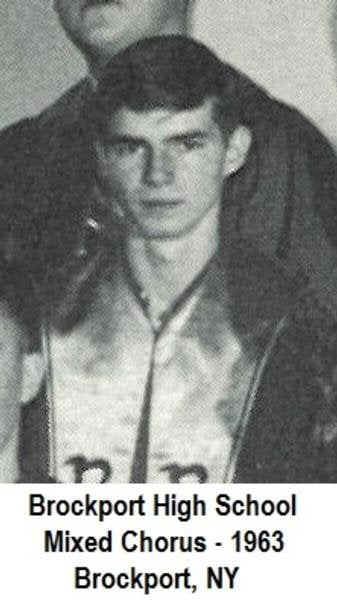

Bob, Miller was killed on a mission out of Quan Loi (CCS South Launch Site) he was going to take over as the Site's senior NCO. He and Major Acre were just taking over the site during a normal rotation of officers and NCO's. They were in the C & C slick observing a classified infiltration into Cambodia when the chopper was shot down. Morris was the site XO. (Jon Ross was the CO. I was assigned to run the site until Bruce Koch came on board. Ross was on re-assignment orders when the incident occurred. There were no survivors. Bob Bost (Note: Cpt Jon Ross later became the commander of Detachment A, 105, Co A, 1st SFGA on Okinawa, I was the XO when Jon became the commander of Co A, I took over as the team commander-RLNoe)
I am very familiar with a crash on 09 Oct 1969, just out side of Bu Dop SF camp. There were seven aboard including the crew. It was helo 395 and was carrying Maj Acre, my replacement; Msg Miller, new team Sgt.; Cpt Bill Morris, my XO; Cpt C Jaegler, Air Mission CO; Sp4 Smith, Door gunner; Sgt Vasquez, Crew Chief; and last name slips me, he was the left seat and was very young. . They are all located on the wall at 58, 18 W. It was my C&C. I was standing strip alert that morning and was pulled out for a meeting with MACSOG, and Bill came out and took my place. Probably the worst day of my life. The recovery of all remains was complete to include identification. Lt. Bost with the hatchet team assisted. Please have them contact me if further information is needed. The unit in direct support was the 195th Light Helo Co. out of Bin Hoa and the name escaping me was one of the new pilots assigned. I can answer one point for sure. There were no survivors, all were still in the helo, burned and still sitting in the seats with exception of Vasquez. He was laying next to the A/C, but close and burned. Both pilots were still strapped in their seats. I helped remove all into body bags and slung them back out to Bu Dop which was very close, just across the border. Don Mckiver was the chase medic and took it from there and they were brought them back to MLS Quan Loi for further travel to grave registration. I still have some very difficult times with this, so bear with me. I will recover that name. Dark, dark, day, never to leave me.-Jon Ross
Received: Dec 17. 2008:
Hello Mr. Noe
My name is Candace Smith Raybon. My grandfather served two tours in Vietnam and was KIA 10-09-1969. From your site, I received more information about what exactly happened to my grandfather that awful day thanks to Bob Bost and Jon Ross. I was wondering if you could possibly give me any contact information you may have for these men. Email addresses would be wonderful. Thank you so much for any help you can provide. And thank you for your service to our country and to the memory of all these great men. Thanks again, Candace Smith Raybon ccsmith@shrp.umsmed.edu
A Note from The Virtual Wall
On 09 Oct 1969 the command ship overseeing an insertion was shot down just south of Srak Karan (1), just by the Cambodian border in the northeasternmost corner of Binh Long Province. The seven men aboard UH-1D tail number 66-01106, four aircrew and three Special Forces personnel, were killed in the incident:
· Aircrew, 195th AHC, 222nd Avn Bn
o CPT Charles D. Jageler, Gatesville, TX, pilot
o CPT John P. Brennan, Union, NJ, copilot
o SP4 Richard A. Smith, Hollywood, FL
o SP4 Tony M. Vasquez, Kenilworth, UT
· CCS, MACV-SOG
o MAJ Lawrence D. Acre, Spokane, WA
o CPT William H. Morris, Mechanicsburg, PA
o SFC Robert R. Miller, New Orleans, LA
1969 | 10 | 20 | E-6 SSG | William W. W. | Stubbs | 11B4S | MIA-PFD | Laos; CCC, RT California, YB705987, in Laos east of Nakhon Phanom |
20 Oct 69- William W. Stubbs SSG E6 of Newport, WA, USASF and Four Special Commandos RT California, CCC, Kontum, Ops 35 MIA-Presumptive finding of Death Remains not Recovered. The team was performing a recon mission 20 miles inside of Laos northeast of Nakhon Phanom and had stopped for a break. As the team stared to move away, Stubbs was with the team's point element when the team was attacked by a numerically superior enemy force. During the initial burst, Stubbs was observed being shot several times in the head at close range by automatic weapons fire. Three hand grenades were thrown at Stubbs position. Due to enemy fire, the team was unable to move to his position and retrieve Stubbs. The team was forced to withdraw leaving Stubbs behind. A search was conducted on the 21st without success. (The distance was corrected from 20 miles inside Laos to less than 10km. Correction by Frank Greco). He was Born: 6 August 1946; and Home of Record: Newport, Washington. During the Vietnam War, he served with the Special Operations Augmentation-Command and Control Central (SOA-CCC), 5th Special Forces Group (Airborne), and was stationed at its Forward Operational Base (FOB) # 2 at Kontum City in the Republic of Vietnam (RVN, a.k.a. South Vietnam). He was assigned to the Reconnaissance Company on Reconnaissance Team (RT) "California." On the 19th of October 1969, RT California, consisting of three American Special Forces soldiers and six Vietnamese Montagnards (Special Commando Unit [SCU, pronounced Sioux], volunteers) was launched from the Special Forces A-Team border camp at Dak Pek and inserted into eastern-central Laos by a Vietnamese Air Force (VNAF) CH-34 helicopter assigned to the "King Bees," a special operations air support unit. On the second day of an eight-day reconnaissance mission in target area S-7, the RT was ambushed by a North Vietnam Army (NVA) unit, which was estimated to be of platoon size. The ambush took place at approximately 1130 hours, local time, in a thickly wooded area on a steeply inclined mountainside in the vicinity of the Ho Chi Minh Trail. As a result of the encounter, one American was killed in action (KIA), one American was injured, and five Montagnards were wounded in action (WIA). Of the enemy, its KIAs and WIAs were unknown. The RT eluded pursuit for five hours, having to break contact several times with suppressive automatic weapons fire and maneuver while transporting the most severely wounded. Finally, the team reached a clearing on high ground that was suitable for a helicopter to land, and was now able to make radio contact with friendly forces. Air support of two USAF A-1E "Sky Raiders" aircraft was dispatched to suppress the ambush area while an U.S. Army UH-1 helicopter extracted the RT from the pick-up zone (PZ). The following day, a Special Forces Bright-Light Team from the launch site at Dak To, RVN was inserted back into the area. However, no trace of Bill Stubbs or any of the equipment left behind by the RT was to be found, as the NVA had swept the area after the action. In January of 1970, S/Sgt. Stubbs was listed as MIA as a result of the action on 20 October 1969 in Laos at geographical coordinates 180524N-1050000E. William was awarded the Silver Star and Purple Heart for his actions that day.
|

1969 | 10 | 25 | E-6 SSG | Ronald H. | Bozikis | 11B4S | KIA, DWM | Laos; CCC, Exploitation Force, w/ CPT Whelan |
1969 | 10 | 25 | O-3 CPT | Joseph V. | Whelan | 31542 | KIA, DWM | Laos; CCC, Exploitation Force, w/ SSG Bozikis |
25 Oct 69- Joseph V Whelan, Cpt 0-3, Plt Ldr and Ronald H. Bozikis, SSG E6 SQD LDR, Co B, Exp Force, CCN-KIA. Verification by David De Vault who replaced Bozikis. Correction: Joseph Whelan and Ronald Bozikis are noted to have been serving out of CCN when in actuality they were members of CCC. Sgt. Wayne Anderson (KIA Dec. 2, 1969) was a friend with both-by Bradford. {Note: Sgt Wayne Anderson was KIA'ed Dec 3rd, not 2nd of 1969}
POSTED ON 7.18.2018 THE WALL OF FACES
POSTED BY: WKILLIAN@SMJUHSD.ORG
FINAL MISSION OF SSG RONALD H. BOZIKIS
On October 25, 1969, CPT Joseph V. Whelan and SSG Ronald H. Bozikis were part of a forty-five-man Hatchet Force platoon of Montagnard (“Yards”) indigenous fighters and Americans on an operation in Laos for a week-long, reconnaissance-in-force. The lift of four helicopters had not even put the group on the ground before they began taking enemy fire. From their landing zone, CPT Whelan spotted some North Vietnamese Army soldiers run across a facing hillside 400 yards away. He ordered a quick assault to seize that high ground. The platoon rushed into an intervening depression when it was suddenly hit by all sides in an ambush. Outnumbered at least three to one, several Americans and Yards were wounded, including Whelan. After a rocket-propelled grenade detonated virtually above Whelan, killing him instantly, a lieutenant took command. Realizing to stay pinned there meant annihilation, he ordered an immediate breakout, leading his men toward the hill. SSG Bozikis rushed forward, firing his weapon on the run, with a squad of Yards following. They burst through rank after rank of NVA, opening the way for the whole platoon. Then, only yards from the top, his squad was caught in a horrific crossfire and Bozikis collapsed, mortally wounded. His Yards, emboldened by his actions, continued the fight and routed the NVA from the hilltop. The platoon dug in on the hilltop where they spent the night, American gunships defending their perimeter while NVA mortar fire pounded the position. At daylight, American fighter planes blanketed the valley with fire, and under the cover of concentrated tear gas, the Hatchet Team was extracted. [Taken from coffeltdatabase.org and the book “Secret Commandos: Behind Enemy Lines with the Elite Warriors of SOG” by John L. Plaster]
|
|
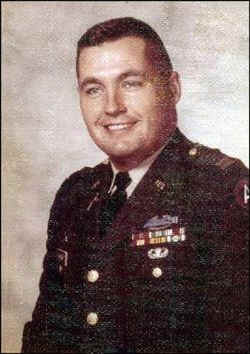

1969 | 10 | 25 | E-5 SGT | Charles E. | Shultz | 11B4S | KIA, helicopter shotdown | Laos; CCN, MLT2, Bru Company; aboard B/101st AVN Huey #65-09738; pilot hit by RPG |
25 Oct 69- Charles E. Shultz, SGT E-5, USASF, Company B (Bru) Exploitation, CCN, Asst Team Leader-KIA--
|
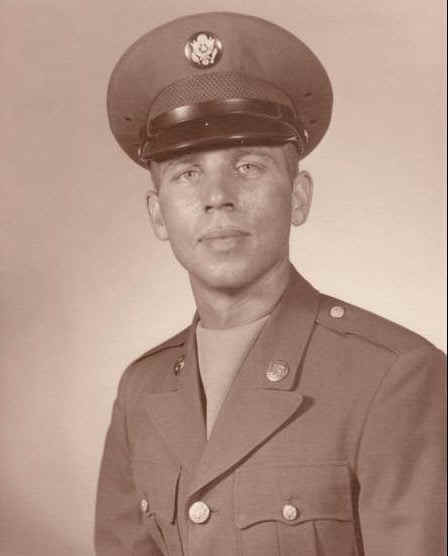
25 Oct 69
From: "Lynne Black"
To: <ray.davidson@usmc.mil
CC: "David Gordon"
Subject: 25 October 1969
Date: Sat, 15 Oct 2005 19:25:12 -0700
BlankRay Davidson,
This note is in response to your query about a MACV/SOG mission run 25 October 1969. My name is Lynne M. Black Jr, I was the team leader (One-Zero) of recon team Idaho headquartered out of MACV/SOG Command & Control North (CCN) at Marble Mountain, Danang, South Vietnam. The night of 25 October 1969 RT Idaho performed what was called a Bright Light mission (rescue) of surrounded Americans and Cambodians. Dave Gordon, who was the one live American rescued on that night. I received a Bronze Star for this mission and have added the text of the commendation for the benefit of your research and have attached the story of that night as near as I can remember after all these years. Lynne,
I can't remember the exact numbers right now, but we had more than 2 Am and 8 Yards. What I remember specifically is that SGT Schultz chose to stay back with me and put several Yards not one (2 to 4) on the first helo in his place. His reasoning I'll address later. David
DEPARTMENT OF THE ARMY
HQ. 5TH SPECIAL FORCES GROUP (AIRBORNE), 1ST SPECIAL FORCES
APO San Francisco 96240
GENERAL ORDERS NUMBER: 1821
AWARD OF THE BRONZE STAR MEDAL FOR HEROISM
1. TC 320. The following AWARD is announced.
Black, Lynne M. Jr. (SSN), STAFF SERGEANT, UNITED STATES ARMY, Special Operation Augmentation (CCN), 5th Special Forces Group (Airborne), 1st Special Forces, APO 96240
Awarded: Bronze Star Medal with "V" Device (First Oak Leaf Cluster)
Date action: 25 October 1969
Theater: Republic of Vietnam
Reason: For heroism in connection with ground operations against a hostile force in the Republic of Vietnam: Staff Sergeant Black distinguished himself by heroism on 25 October 1969 while serving as a team leader of a six man rescue team whose mission was to be inserted behind enemy lines in an attempt to rescue four survivors of a helicopter crash. Prior to volunteering for the mission Sergeant Black was aware that the team would have to rappel onto an unsecured landing zone during the hours of darkness. The mission began at 2250 hours. Upon reaching the crash site the team found they could be inserted by jumping eight feet from the chopper into a small clearing. Sergeant Black organized the team on the ground and quickly moved them to the site of the crash. A quick inspection of the aircraft confirmed five KIA's. Sergeant Black then moved the team in search of the survivors. Radio contact was made with the survivors and Sergeant Black split his team, leaving half to secure the area of the crash, and taking the other half down a steep hill to the vicinity of the survivors. Within minutes the link-up was made with the survivors, and Sergeant Black called the rest of the team to his position. During the next hour he directed airstrikes upon the enemy positions and organized the extraction procedures. Sergeant Black remained on the ground until all other personnel were extracted by McGuire rigs and then came out on the last chopper.
The next day Sergeant Black led another party into the area to recover the bodies and the crashed helicopter. Sergeant Black's heroism was in keeping with the highest traditions of the military service and reflects great credit upon himself, Special Forces and the United States Army.
Authority: By direction of the President under the provisions of Executive Order 11046, dated 24 August 1962.
GENERAL ORDERS NUMBER 1821 DATED 10 NOVEMBER 1969, HEADQUARTERS, 5TH
SPECIAL FORCES GROUP (AIRBORNE), 1ST SPECIAL FORCES, APO 96240
FOR THE COMMANDER:
OFFICIAL:
Signed
NELS V. Marin P. B. Merridck
CPT, INF LTC, Infantry
Asst Adjutant Adjutant
DISTRIBUTION:
2-CG, USARV, ATTN: AVHAG-PD, APO 96375
2-CG, USARV, ATTN: AVHAG-DB, APO 96375
10-A&D, 5th SFGA
1-201 file indiv conc
1-PIO, 5th SFGA
2-Ref & Rec sets, A&D
1-CO, Indiv conc
2-CO, USAPERSVCSPTCEN
ATTN: AGPE-F
Ft Benjamin Harrison, Ind 46249
For official personnel file indiv conc
2-Office of Personnel Operations
ATTN: EPADS-S
Washington, DC 20310
Robert,
I am researching an extraction that occurred on the night of 25 Oct 1969. Extraction pilots were told that 18 members of SF Team were to be extracted. Second Slick in was downed by ground fire, 8 indigs and 2 SF were on board. I am trying to find out what team it was (should have been
out of CCN) I see a Schultz was KIA that day and another two but they were out of CCC. Can you help? I noted that you posted the Sullivan story, thank you. That column really means a lot to his daughter. She tells me she reads it every morning. Ray Davidson Program Analyst Amphibious Assault Vehicle
======
Subj: CCN 69-70 Date: 8/17/01 11:16:49 AM Pacific Daylight Time
From: Thomas.Clark@mail1.monmouth.army.mil (Clark, Thomas P CECOM LRC IEW)
To: sog1rlnoe@aol.com ('sog1rlnoe@aol.com')
Bob:
Hello. My name is Tom Clark (CW4, now USAR inactive). I was assigned to A Co, 158th AVN (Ghostriders) at Camp Evans, from AUG 69 to AUG 70 (callsign - "Joisey"). During my tour, I participated in several CCN missions including a couple of prairie fire events. I have only just heard of the SOG story being documented in the book cited on the your web site, so I haven't read it yet. I'll pick it up soon. I know you're not familiar with every mission that took place in I corps but there was one in particular that has always left me wondering if everyone survived. I wanted to see if you have any info on a prairie fire mission that took place somewhere between 15-29 OCT 69? The mission was launched out of CCN Quang Tri, and involved the extraction of a five member team (all round eyes, I think) from an area about 100 miles north of Khe Sanh. If memory serves after 32 years, the team had been attempting to break contact most of the day. We (Ghostriders) got the call for volunteers about 1800 hours. I was the Pilot in the lead aircraft. The AC and mission commander was LT Danny "Dog" Salin. As I understand it, Dog remained involved in SF Avn. after Vietnam. Unfortunately, he was lost performing another mission for the company in Central America during 1995. The Ghostriders launched three Hueys and D Co (Redskins) sent three Cobras. We departed from CCN about 2000 hours, in marginal weather. Our flight proceeded northwest up the plain of jars at 100 knots for 45-50 minutes, and then turned east for another 20 minutes. The NVA were on the radio the entire time. When we arrived at the site, there was intermittent light ground fire and we had a difficult time locating the team. About this time, air dropped flares began to descend from the low overcast and our air cover (A-6s) appeared right after the flares. With the flares we soon found the team in a bare tree, on top of a razor back ridgeline. We terminated our approach at a high hover just over this tree. Our crew threw out the four McGuire rig lines and the team tied off. We had five guys on four rigs as Dog began a climb out amid growing ground fire. Eventually, we disappeared into the clouds and the small arms stopped. By now we were tight on fuel so, we had no choice but to return to Quang Tri direct, at 9000 feet in the clouds. We tuned in the NDB at Quang Tri and hoped uncle Ho wasn't willing to waste a SAM on a helicopter. Roughly 50 minutes later we put the team on the mat at CCN. They were frozen but, they were alive and safe. I never got a chance to talk with any of the team members and I've always wondered who they were, and if anyone was lost from the team before we pulled them out. If you have anything on this mission that can be discussed, I'd appreciate the info. Thanks, and thanks for providing the Ghostriders with the best missions I've ever flown. Tom "Joisey" Clark
Walter H Wald; Donald M Shue; William T Brown
1969 | 11 | 3 | E-6 SSG | Gunther H. | Wald | 05B2S | MIA-PFD | Laos; CCN, RT Maryland, XD643674, 34k NW of Khe Sanh, Saravane Prov., w/ Brown & Shue |
1969 | 11 | 3 | E-6 SSG | Donald M. | Shue | 05B4S | MIA-PFD | Laos; CCN, RT Maryland, XD643674, 34k NW of Khe Sanh, Saravane Prov., w/ Brown & Wald |
1969 | 11 | 3 | E-6 SSG | William T. | Brown | 12B4S | MIA-PFD | Laos; CCN, RT Maryland, XD643674, 34k NW of Khe Sanh, Saravane Prov., w/ Shue & Wald |
03 Nov 69- William T Brown, SSG E-6 of La Habra, CA, Tm Ldr; Gunter Herbert Wald, SGT E-5 of Bergen, NJ, Asst Tm Ldr, and Donald Monroe Shue, SGT E-5, Tm Radio Op, USASF, SOA, RT MARYLAND CCN, Da Nang, Ops 35, MIA-Presumptive finding of death. A numerically superior enemy force attacked the team at night while in their RON position 30 miles inside Laos near Ban Chakevy Tai. The NVA, stripped to their shorts, came in silently with only AK’s and grenades. Brown was wounded in the side, and Walt and Shue wounded by fragmentation. Both were last seen lying wounded on the ground as the team’s position was about to be overran. Due to heavy enemy activity, the remaining team had withdrawn leaving the three Americans behind. Adverse weather prevented a search until the 11th. The search team discovered "web gear" belonging to the wounded Americans, but nothing more. Wald had been in the Marine Corp,but got out and joined the Army to be a Green Beret. Shue was new to the team and it must have been his first mission. Filed by: “The Frenchman" La Tourneau, (Why I know all this is because I was the team leader of RT. Virginia until Wald showed up and he out ranked me as a E-6 and I was only a E-5. They made him team leader and I ran two missions with him and then Tilt Meyers went home to the states and left Lynne Black alone on RT. Idaho. I then joined team Idaho as Black's 1-1. That gave CCN two operational teams with two Americans on each team). Remains recovered
|
|
|


In a message dated 8/24/2012 11:29:34 A.M. Central Daylight Time, triddleco@aol.com writes:
On 3 November 1969, Recon Team (RT) Maryland from MACV-SOG, CCN, was inserted into Laos on a recon mission. The team consisted of Gunther Wald, Bill Brown, and Donald Shue. The team came under heavy attack and all were mortally wounded. By the time a Bright Light (search and rescue/recovery) team went in, after being delayed by bad weather, all that was found was some web gear. In 2009, a farmer in Laos discovered some remains that were determined by JPAC to be those of Wald, Brown and Shue. Brown and Shue were identified early, returned and buried with full military honors. On 30 May 2012, Gunther Wald was finally accounted for. On 30 August 2012, the previously MIA members of RT Maryland will be buried together in Arlington National Cemetery. There will be a visitation and service for families and friends on 29 August 2012 from 1800 - 2000 at the Robert Murphy Funeral Home, 4510 Wilson Blvd, Arlington, VA 22203. There will be a formal service at 1100 at the Old Post Chapel on Fort Myer. A caisson will take the remains of Wald, Brown and Shue to their final resting place in Arlington. They will be buried together with full military honors.The Special Forces Charitable Trust will sponsor a reception immediately following the ceremony for family, friends and SF Veterans in attendance. T sends
In a message dated 8/30/2012 1:01:30 P.M. Central Standard Time, HewittGW@state.gov writes:
It was a beautiful day for such an occasion and we had a large number of SF – SOF types attending + 3-4 SOG reps to include Gary Robb and myself.
There should be a write up in the next SFA Drop for Chapter XI who came out well for the honors rendered. 3rd Infantry “The Old Guard” with Horse Platoon Caisson and an Honors Platoon of sharp marching troops with fixed bayonets did it right down to the bugler and crisp ceremonial 21 gun salute. Having served in the Guard myself before SF and SOG and then seeing these three warriors come home together for a final resting place was a proud - moving moment indeed – especially since they are now joined company with 400,000+ other service members. Right next door to their gravesite was another SF soldier just returned from Afghanistan. None of that makes it better for the surviving families I am sure but they certainly can know others care and remember what their relative meant to us. One family came all the way from Germany for this and they were all I think proud to see the military never forgets their own. The Chaplain said it right when he said we interpret in the Holy Bible that we do not have a soul – rather a body. He went on to say though the body rests here We are each and communally the soul that rises and lives amongst us!! With that we are joined to these guys who gave their all for us in many measures and many ways. Made it right for me! Best to all of you out there who I am so proud to have known personally or just by affiliation to SOG. I will and I request that you raise an appropriate toast this evening to all of us here and passed before us. George W. “Sunny” Hewitt
A Note from The Virtual Wall
03 Nov 1969 SSGT William T. Brown , SST Gunther Wald, SP4 Donald Shue and six Montagnards formed a patrol operating in Laos. The patrol team was attacked by a numerically superior force 30 miles inside Laos near Ban Chakevy Tai in Saravane Province. Four of the Montangards escaped and returned to camp to report the ambush and capture of their comrades. When last seen, Brown had been wounded by a gunshot just below the rib cage. He was lying on the ground as the attackers shouted, "Capture the Americans". SSGT Wald and SP4 Shue were also seen to receive numerous shrapnel wounds from a fragmentation grenade. The other team members were forced to withdraw leaving them behind. Bad weather precluded insertion of a recovery team until November 11. They searched the entire area, but could only find some web gear which was identified as belonging to three of the indigenous team members and SP4 Shue. There was no trace of any graves or of the three missing Americans. They were classified as Missing In Action. As of 18 Nov 2006, SFC Shue's remains have not been repatriated. You can check current status on our MIA Current Status Page.
Robert, Donnie Shue and I were good friends in SFTG, he, James Greene and I were all NC guys, so we hung around together. Jimmy was KIA on Nui Coto with B55 March of '69, I replaced him there, Donnie went missing that Nov. I have talked with his wife and daughter several times over the years, telling the daughter about her father, who was a great guy. Unfortunately I have no info on his last mission, but pray that he is finally found and put to rest. Jack Tobin
INFORMATION REQUEST
Case 1514 Names: WALD, Gunther H.; BROWN, William T.; SHUE, Donald M.
Incident Date: 3 November 1969
UTM Coordinate: 48Q XD 643 674
Country: Laos Province: Savannakhet
Unit Assigned: Reconnaissance Team Maryland, Special Operations Augmentation (CCN), 5th Special Forces Group.
Background: On 3 November 1969, SSG Gunther H. Wald (10), SSG William T. Brown, and SP4 Donald M. Shue (12) were members of Reconnaissance Team (RT) Maryland operating in Laos near the border with Vietnam. RT Maryland consisted of three U.S. Army Special Forces soldiers and six indigenous soldiers. The nine men were in hasty defensive positions during a heavy rain storm in the vicinity of grid coordinate 48Q XD 643 674 inside Laos, approximately two kilometers west of the Vietnam/Laos border. At approximately 1500 (local), they were attacked by a 30 man enemy force from the high ground to the east and southeast. The three Americans were gravely wounded and had to be left behind when the other team members were forced to withdraw. One of the indigenous soldiers was also killed while evading.
On the afternoon of 4 November 1969 an AH-1G Cobra helicopter overflew the loss area and observed several trails through the elephant grass, but no signs of activity or signals were detected. Extremely bad weather prevented the insertion of another RT until 11 November 1969. That team found load bearing equipment belonging to three of the indigenous members of RT Maryland and SP4 Shue. However, efforts to locate the three missing Americans or their remains proved negative.
A post-incident board of inquiry was convened by 5th Special Forces Group on 28 November 1969. According to testimony from the Team’s interpreter, PONG, all three Americans were unconscious. SSG Wald and SP4 Shue were wounded by grenade fragments. SSG Brown was shot through the body by an AK-47 round and was most likely dead. PONG also stated that as he was withdrawing, he heard someone in the attacking force shout, “Hurry, forward, capture all of the Americans.”
The limited information contained in the board of inquiry report named the six indigenous soldiers on RT Maryland as: PONG (team interpreter), THE (KIA, while evading), CAM PHAN, TAHON, DE and RONG.
The Defense POW/Missing Personnel Office (DPMO) and Joint POW/MIA Accounting Command (JPAC) continue research and investigative efforts to resolve this case. Any additional information that you can provide may improve our chances of bringing home these three Americans.
Information Requirements:
1. What is the status of the remaining five indigenous soldiers on RT Maryland?
2. What are their full names?
3. Did any of them survive the war?
4. Does anyone know their current whereabouts?
5. Some post-war information suggests that only four indigenous soldiers survived the incident. Can anyone confirm and identify the second indigenous soldier killed in this loss incident?
6. Provide any additional information about the RT Maryland loss incident.
From: gulflyer@aol.com
Bob, greetings......
my name is Clint Miller , aka LURCH , and call sign Dragonfly ,,,a cobra pilot from C/4/77ARA who supported MLT2 quite often in conduct of business across the fence. just finished talking with Rick Freeman (GL573) about the loss of RT Maryland in nov 69...was not on initial insertion, but did get involved after they got in trouble....was part of the effort that spotted the rucks and web gear..no bodies, tho...interestingly, after we returned to LZ Star, Clarence Dover (believe he was e-8 then) asked if i would take him to the site in the front seat of the cobra and either land or crash the aircraft so that we could continue the mission of retrieval of the team...i agreed and showed him how to operate the turret weapons should we need them...at some point the launch officer determined that was not the best plan and we scrubbed........did fly out to the site at least 2x and did draw significant fire from several positions....i was reminded by freeman that probably the rucks and stuff were "planted" as bait for ambush......Hope this can assist in the resolution of their loss....am currently working as an EMS pilot in central Arkansas , and am available for further mind probing in the matter..Clint Miller 318-347.3784 USA, ret'd Dragonly / Griffin 93 ( i always wore a red helmet) I am so proud and happy to know men of your caliber. Once again I say that I learned more about soldiering in the year I spent with SOG, then I did in the other 21years of active duty. Too bad my health allows me only short rides on my motorcycle. As a member of SOA riders, I vow never to be but at my best. The vest is worn with the thought in mind, I represent the best of the best. God bless you all. A leg that is proud of my 11B40 MOS.
Larry, and all SOA Riders,
I'm compelled to report that our SOA Riders were outstanding over the weekend in Concord & Kannapolis, NC, for the Don Shue return, funeral service and burial. First and foremost, they looked the best and brought a sense of dignity to the event. They kept their military barings, even when some of the other organizations forgot who should be at the held of the motorcycle procession. I've never experienced anything like the Shue weekend, from his arrival Fri. morning in Charlotte, to a small ceremony with family Fri., to riding in formation with the hearst from NG the ideaHQ to funeral home and then to two civic ceremonies before returning to the funeral home. Ditto Sun., when our men attended the funeral service by invitation of the Shue family. And, then leading Don's final ride to the cemetery. Of course, at the cemetery they all stood tall, no torn clothing, no raggity-assed beards, just againcenstanding tall for our comrade in arms: Sgt. Donald Monroe Shue. A special thanks to Robert Noe, who road his Harley from Louisiana - while chasing thunderstorms, to NC. Robert also drove to Ft. Bragg to get three blue military PUC pins: one for Betty, Peggy - Don's sisters, and Micky Jones, Don's nephew, who used to ride with Donnie years ago. Other riders, included Lou DeSeta - from Bear, DE; Bill Barclay, from St. Augustine, FL; Ron Owens, of Miami; Jim (I'm sorry, I'm spacing on his last name) and his wife; Jason Hardy, of nearby Salisbury. A special thanks to Doug "The Frenchman" Le Tourneau who purchased copies of the PUC and PUC coins for the family members and PUC coins for the SF Troops in the event. Other SOA men in attendance: Doug Godshall - FOB 1/4; John Randolph - of Maine, and 1st SFG; John Owens, of FL, who ran recon at CCN and talked to Donnie when he went into isolation in '69; "Destiny" the cover rider who inserted RT Maryland in'69 and observed team's equipment in RON site, with no team members present; George Martin, six 'Yards, "Bulldog" Smith, Jack Tobin, Cliff & Karen Newman, SGM Cole, Eldon Bargewell. Eldon's son Logan showed up in his SF uniform, standing tall and Noe's grandson Corey appeared in his 82nd uniform. I apologize in advance for those I failed to mention. This weekend was a tremendously emotional weekend for all participants. There was healing, cleansing, and a feeling of peace knowing that the men & women of JPAC pulled off another miracle, finding RT Maryland SF troops and getting them home. The local reaction was phenomenal, profoundly patriotic, is the only way to describe it. And, Lt. Gen. John Mulholland arrived, along with the CO of the 7th SFG. The honor guard was from the 7th and made every old fart REAL proud to see them in action. I've invited the nephew of Don, Micky Jones to SOAR XXXV. Larry, thanks again to you and the men who carry SOA Riders. We promised Don's sisters that SOG SF troops would be on each arm from beginning to end, and that some of our men were ride in the procession, a procession that extended nine miles. That's not a typo. Thus, we had SF men on their arms and SOA Riders leading the final procession into the cemetery. Tilt -------------------------------------------------------------------------------------- I noted Tilt's comments about the return of Don's remains and the welcome home memorial held for him. I wanted to let you know, if you haven't heard already, that Bill Brown's remains were returned to the US, too. The Army conducted a first rate funeral for Bill, with full military honors, at Arlington National Cemetery, on 26 Sep 12. Attending were a handful of Bill's surviving relatives. Unfortunately, Bill's parents and brother had died without ever getting a full account of Bill's fate. Also present were Eldon Bargewell, Darrell Arey, Frank McCloskey, David Maurer, Doug Le Tourneau, and my wife and me. I have heard that there will be a service for Günter Wald sometime this year, but that's all I know. Regards, Ken Van Arsdel
|
1969 | 11 | 12 | E-5 SP5 | Randolph V. | Rhea | 11F3S | KIA | SVN; CCC, Kontum Prov., YB950686 by mortar attack at A-242, Dak Pek |
12 Nov 69- Randolph V Rhea, SP/5, USASF, CCC-KIA by mortar attack
|

POSTED ON 7.18.2018
POSTED BY: WKILLIAN@SMJUHSD.ORG
GROUND CASUALTY
SP5 Randolph V. Rhea was Special Forces-qualified Infantry Operations and Intelligence Specialist assigned to Command and Control Central (CCC), Military Assistance Command, Vietnam–Studies and Observations Group (MACV-SOG), 5th Special Forces Group. On November 12, 1969, an enemy mortar attack occurred on the Special Forces camp at Dak Pek in Kotum Province, RVN. Some of the 82mm rounds impacted along the short runway, scattering the Allied aircraft parked there. American AH-1G Cobra helicopters spotted the mortars on a facing hillside and attacked the position, ending the bombardment. It had not lasted more than two minutes. Personnel who had been on the runway got up, dusted off, and looked around. On the tarmac one man still lay there. It was SP5 Rhea. Two men rushed to him, turned him over, saw no wound, but he was dead. A medic examined more closely and found a pinpoint in his chest where a splinter of a mortar fragment had entered and penetrated his heart. Rhea got hit because, instead of running for cover, he had run in the open to help a pilot. For his efforts, Rhea was posthumously awarded the Silver Star for bravery. [Taken from coffeltdatabase.org and the book “Secret Commandos: Behind Enemy Lines with the Elite Warriors of SOG” by John L. Plaster]
1969 | 11 | 13 | E-6 SSG | Ronald E. | Ray | 31E4S?? | MIA-PFD | Laos; CCN, RT Rattler, YC184666, 36k SW of A-102, A Shau, w/ SGT Suber |
1969 | 11 | 13 | E-4 SP4 | Randolph B. | Suber | 05B2S | MIA-PFD | Laos; CCN, RT Rattler, YC184666, 36k SW of A-102, A Shau, w/ SSG Ray |
13 Nov 69- Ronald Earl Ray, SSG E-6, Tm Ldr of Port Arthur, TX MIA Remains not Recovered, Randolpt Bothwell Suber, SGT of Balin, Missouri, USASF MIA Remains not Recovered and Three Special Commandos, RT RATTLER CCN, Da Nang, Ops 35, MIA, Presumptive finding of death. The recon team was attacked 16 miles inside Laos west of Thua Thien Province by a numerically superior force with three team members killed. Ray suffered a small arms wound and fell to the ground yelling being hit in the chest and arm. He was last seen lying on the ground as the team’s position was overran by enemy forces. The sole surviving team member, SCU Nguyen Van Bon, shook Ray but received no response and noted Ray’s weapon was smashed. Suber was last seen trying to gain contact on his URC-10 emergency radio, then picked up his weapon and aimed at four approaching hostile soldiers, but the rifle did not fire because it had became jammed, and Suber was hit immediately afterwards and fell to the ground. Nguyen Van Bon was able to evade the enemy, fight his way free. Emergency beeper signals were monitored in the area for several days, however, bad weather and enemy activity a search team could not be inserted.
Ronald E Ray Fr Vir Vn Wall |
Randolph B Suber |
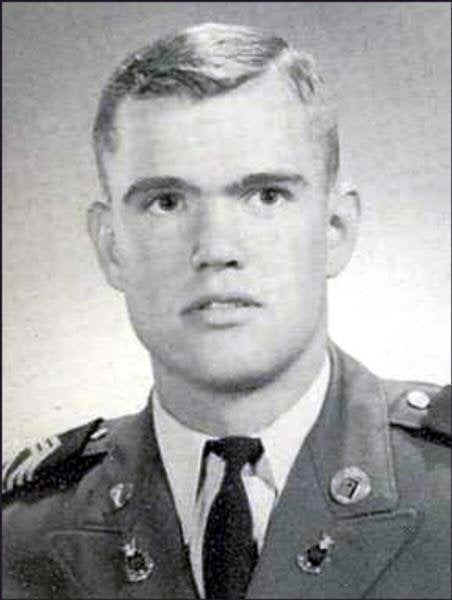
18 Nov 69 - One Special Commando KIA, CCN(?). The SOG team had come into contact with the NVA close to "The Trail" during the night, were surrounded and under attack. Of the six team members (two Americans & four indigenous), one had been killed and two others were wounded. Unfortunately, the weather in the area was terrible; low clouds and visibility and severe turbulence. We launched ASAP from NKP with three CH-3s and two A-1 escorts. On arrival in the area, we made contact with the NAIL FAC who had a Heavy Hook (SOG) rider with him. I was pleased to discover that the NAIL was 1/Lt Hank Haden, an outstanding young FAC from NKP with whom I had worked other emergency exfils. Hank was below the overcast and, despite the fact the clouds were almost on the karst tops, was directing air strikes against the enemy. He advised us that the turbulence in the area was quite severe and that our planned approach route to the team was unusable due to the low clouds. The good news was that there was a hole in the undercast that we could descend through. The bad news was that the hole was over a known 23 mm gun. Obviously, there was no choice and we went through the hole. Once the formation was below the cloud layer, following standard tactics the other two helicopters held clear (while keeping us in sight) as we followed the FAC into the team's location. We spotted the team's smoke on a steep ridge line that was covered with under small arms and automatic weapon fire and our escorting A-1s were delivering protective ordnance. The steep slope of the ridge prevented a landing so we hovered with the nose wheel on the ground and the main gear in the air over the precipice. The wind turbulence coming over the edge of the ridge was indeed severe and the CH-3 was bucking wildly as we hovered. Despite the 30 years that have elapsed, I clearly recall my initial glimpse of the team as they came into the area of elephant grass blown flat by the rotor downwash. The first two team members were dragging their dead comrade by his boots. With the helicopter bucking like a rodeo bull, the team had difficulty getting the body on board and it seemed like an eternity before all were finally on board. The A-1s continued to lay down protective fire as we came safely off the ridge line. After the exfil, we had the privilege of having a beer with the surviving team members at the SOG Heavy Hook compound at NKP. At that time, I asked the Heavy Hook commander, Major Bill Shelton, why, since they were under fire, didn't the team leave the body. He explained to me the importance to the Nungs/ Vietnamese of returning the body of the team member to his home village for a proper Buddhist funeral. That the SOG Special Forces members would go to that extent (recovering the body while under fire and managing to get it aboard a nearly out of control helicopter) to assure the loyalty and future support of their indigenous troops, made me respect them more than ever! Those guys were unbelievable! Before sending this narration, I ran it by Bill Shelton and Jerry Kibby for their comments and/or additions. By “Dusty” Jim Henthorn 21st S.O.S. Jerry sent me the following interesting comments about the mission:
|
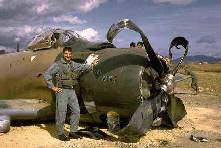
If you don't mind my "view from the other seat", I would like to add a little to the below. The A-1s which were providing close air support for the mission were unable to work in their usual way, i.e., near vertical descent firing/dropping weapons followed by a near vertical climb-out and turn back for another near vertical pass at the target area. The combination of low clouds and high terrain forced them to stay under the clouds in order to be of use and they had to make long horizontal passes at the target area, during which they strafed with their 20 mm cannons for as much of the pass as they could. After passing the target area, they had to remain under the clouds with the ground still in sight and fly a horizontal loop back to the target area for another pass - and while they were doing this, they had to avoid the high terrain, each other and the two other CH-3s on the mission. The result of this was a lot less supporting fire on the target than would have been possible in different meteorological conditions. When the team came into sight (popped up out of the elephant grass, by my observation), they were (as you said, Bob) dragging the dead team member. This was my first time as copilot in the "low bird", and I was backing up Bob on the controls in a non-interfering way. He was having to fight the winds to try to keep the nose gear on the top of the peak, and I don't think he noticed that the heavy head winds had resulted in the rotor blades being so low in front of the helicopter that they were almost at belt-level with the approaching team members. There was not time, as the team approached, pulling their dead mate, to tell Bob about the problem. I pulled back on the collective slightly, which caused two things (maybe three, if you count pissing off Bob to an extent), it raised the path of the rotor blades and it caused us to back-off slightly. But it also allowed the team to move under the blade path while it was higher than it had been initially. When we had the team on board, Bob turned us to face down-hill and we accelerated just above ground level down the hill as fast as we could go. As we went down, and prior to pulling into the clouds, we passed right over a manned anti-aircraft position - which did not have time to come to bear on our aircraft. I also recall a sudden sickening feeling as we ran down the hill - smoke in the aircraft. I recognized the source within a second or less as the smoke from our own machine guns. Our FE's were putting out all of the fire they could from our M-60s, and the shape of the CH-3 causes a reverse airflow, pulling air (and gun smoke) from the back up to the front and out the windows. I met one of the team members we pulled out that day at a bar-b-que at the NKP Heavy Hook detachment some time after this mission. He sat across from me while we ate and told the story of his last mission as a team lead, the one which made him decide he had enough of that for a while. As he described the mission, I thought it sounded familiar and I asked some specifics that confirmed it was the mission which Bob described. That Special Forces NCO, once he knew I was part of the crew that got him and his team out, tried to give me anything and everything of value that he had - which in the situation of the day was mostly weapons. I declined his offers, as we were all well provided with personal firearms. He did tell me something I had not known about the mission. One was that the wounded in their group were wounded by their own grenades, which they had to lay down in a short-long pattern to try to keep the enemy off of them. The other thing he told me that I did not know before was that our helicopter, as it sat there with the nose gear on the karst to pick them up, was actually on top of some of the NVA surrounding them.I sure hope he made it through the rest of the war. By Jerry Kibby. The exfil was conducted by Jim Henthorn, the pilot and co-piloted by Jerry Kibby. The two FE’s were Ssgt Jim Burns and Ssgt Charles Hill.
1969 | 12 | 3 | E-5 SGT | Wayne M. | Anderson | 11B4S | KIA | Laos; CCC, Exploitation Force |
03 Dec 69- Wayne M Anderson, SGT E-5, USASF Co B Exp Force, CCC-KIA, Note, he was personal friends of both Joseph Whelan and Ronald Bozikis who were KIA'ed 25 Oct 69. Wayne was killed 4 days before his 21st birthday, missing planned celebrations at CCC. He was shortly thereafter to go on R&R with best friend from CCC, Terry Minnihan, to Hawaii where he was to marry his betrothed, with Minnie as his best man. A top secret mission in Laos on Dec 3, ended all those celebrations and plans....but it could have been a drunken 21st and a great R&R. Instead Terry accompanied a casket home during that same planned R&R. No medals are issued for this, which is another act heroism beyond measure. The stateside news of his death then and now, will wash along emotional wreckage, until the last of the many who love/d him, dies. Input from: darcy_g1@telus.net who writes "I was a Canadian living in Pullman in the late 60's and he was my best friend, as all others seemed acquaintances by comparison. That war and his death were yesterday but contradictorily are long ago. Still chokes me."
Memorial at: http://www.vvmf.org/Wall-of-Faces/1115/WAYNE-M-ANDERSON
Wayne (M. Anderson): 1) himself reading a letter from home in a hootch at CCC, |

04 Dec 69, Edward Rowe Smiley, Jr ., Sp/4, Gunner, 195th AHC -KIA. a gun ship was lost while supporting CCS in a cross-border mission [filed by Tyler Furbish,195th AHC historian].
Edward Rowe Smiley, Jr (center) |
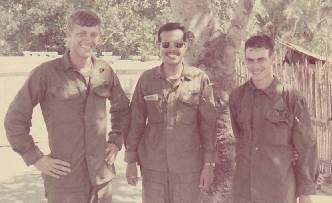
22 Dec 69 (Added Jul 8, 2013) James Edward Kennedy, SSG E6 MIA Remains not recovered and Donald Deane Burris, Jr. Chief Warrant Officer W2, MIA, died while missing, body not recovered. 57th AHC, 52nd Avn Bn, 17th Avn Group, 1st Aviation Bde, USARV, US Army. Because this unit was a SOG support element was a support mission and a SOGGER inserted on brightlight, they are included in SOG losses until such time as information can be developed that they were not on a combat support mission for SOG, they will remain SOG losses.
James Edward Kennedy, |
Donald Deane Burris, Jr |

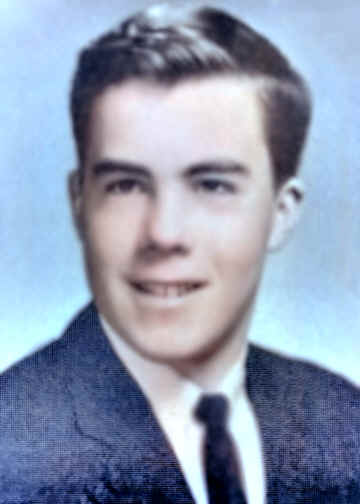
+
In a message dated 7/2/2013 4:50:33 P.M. Central Daylight Time, harrisrayd@aol.com writes:
I think the 57th still flew for CCC in late 1969. On December 22, (my 22nd birthday) I was at Dak To on Bright Light when word came in that a Charley model got shot down in Cambodia, right at the tip of the tri-border. I was 10 of Minnesota, and Bill Spurgeon was the 11. He and I rappelled into the site through triple canopy, and found a door gunner sitting next to the ashes of the ship. We got him out on strings, but couldn't find a second gunner who was supposed to be there. Like I wrote, I can't forget it, December 22, 1969, my 22nd birthday. Brightlight at Dak To, late morning till dark. I used my Air medal paperwork to figure distance, since I did two missions to the Golf course, insertions and extractions at an hour and five minutes to around an hour and ten. I measured the distance from Dak To and the Golf course, and figured speeds were normally about the same. I got in touch with an MIA outfit I ran across and said if they searched eastern facing hills in a five or six square Kilometer zone, they might find the crash. Never heard back on it.
It was a high canopy, around a hundred feet, surprisingly open on the ground, probably close to 40 degree incline. How the pilot hovered there rock solid for twenty minutes each time, is beyond my understanding. Second time out, I was looking down for bad guys, and came up under a six inch branch, right on the back of my neck. He could have ripped me to pieces, but instead the gunner told him to drop a foot, and I wriggled out from under, and got out of there. It was a stupid, rookie mistake on my part. I owe my life to those two guys.
A previous ship came in right after the crash, and dropped McGuire rigs. The gunner we brought out had fallen out of the rig immediately because of a broken arm. He was also cut up and in shock. Just the two pilots came out that time, and one dropped off on the way to Dak To. Bad end. When Bill and I got back with the gunner, we were told to reinsert and make a more thorough search for the second gunner. We went back in with two Yards at least four hours after the crash, certain it was hot by then. Again we rappelled in, (My rope got tangled in the ring with branches, and I grabbed a tree and slid down when the gunner cut the rope. My Omega watch got ripped off by the bark as I recall.) The four of us looked all over the hillside, and in the trees, and came to the same conclusion that we had the first time in. The gunner was probably burned up and under the helicopter, which was still smoldering.. We came out, and to my knowledge he is MIA to this day. Two deaths with one rescue by CCC, and another rescue by helicopter friends. I think the last name of one of the crew was Kennedy. I provided info on the crash site to an MIA recovery group a number of years ago, but never heard anything back. Air medal says the flight was an hour long, and I remember it was into the sun, west-south west of Dak To. The hillside faces east, and on the way back, at sunset, the chopper put us down in a very large open field, cut the ropes, and bundled us in for the rest of the ride to Kontum. There was a general hissy fit about leaving 400+ feet of nylon rope behind. Priorities are priorities in the back office. You might want to contact proper sources and include these guys. God knows they deserve it. Keep up the good work.
Respectfully, Ray Harris
REMEMBRANCES
1969 | 12 | 29 | E-7 SFC | William E. | Spencer | 11B4S | KIA | SVN; 3 MSFC, B-36, A-361, Phuoc Long Prov., Opn STRIKER, YU006293 3k east of A-341 Bu Dop |
29 Dec 69- William E. Spencer, SFC E-7, USASF, CCC, Spike Team IL, Asst Tm Ldr-KIA William Spencer was the 1-1 of RT Illinois with John Plaster, the 1-0. Plaster left for extension leave and while he was away an old friend of Spencer from Training Group showed up at the CCC compound and asked him if he wished to join the Mike Force for a mission while his team was on stand down. Spencer left with his friend and was KIA stepping off the chopper. Jason Hardy. Spencer was assigned to CCC at the time he was KIA'ed with B-36. Body Recovered (Virtual Wall has him assigned to RT ILLINOIS, DET B-36, Special Forces Honor Roll website has him (Det A-361 (3 Mike Force) KIA 3k east of A-341,Bu Dop,Phuoc Long Province,South Vietnam (Op.STRIKER).
|

1970 | 01 | 9 | E-5 SGT | Richard A. | Thomas | 11B4S | KIA | Cam; CCS, w/ RT??, w/ SFC Bartlett (this was a 5-man team) |
1970 | 01 | 9 | E-7 SFC | Larry P. | Bartlett | 11B4S | KIA | Cam; CCS, w/ RT??, w/ SGT Thomas (this was a 5-man team) |
9 9 Jan 70- Larry Paul Bartlett, SFC E-7 and Richard Alan. Thomas, SGT E-5 of CCS, KIA’ed-RR My friend and long time SFTG roommate Richard Thomas who was KIA along with SFC Larry Bartlett.. They were on recon in NE Cambodia for CCS. Richard was a very kind guy, well liked but shy; he will always remain in my memory as a true friend. SFC Bartlett was 32 years old and was not married. Larry died from multiple fragmentation wounds SGT Thomas was 22 years old and was married. Richard Thomas died from small arms fire and was born on in Fresno, California.-John Hanscom, SF' Extracted from Page 454, Green Beret Commandos in Cambodia by Fred Lindsey, LTC, USA(RET) "It was speculated that staying in their RON for a long period of time may have let the enemy find their location. Then they proceeded directly from the RON to an LZ, rather than the the recommended zig zag approach may have contributed to their discovery."
 |  |
 The pic in the bar is of from left to right; UI, Rich Thomas, Mike Buchanan, Rich(?) Joecken, Carl Franquet (me). We were all in the O&I course together and went to town for a few brews. Taken either in late ’68 or early ’69. Photo by Carl mffi115@aol.com For additional photo's click-->Photo's (He's at the bottom of page 8 of the photo gallery) |
FINAL MISSION OF SFC LARRY P. BARTLETT
1970 | 01 | 10 | E-7 SFC | James Henry | Zumbrun | 91B4S | KIA, fixed wing shotdown | Laos; CCC, Covey, in O2-A #68-6863 20 miles west of Dak To while supporting a team on the ground |
10 Jan 70- Henry J Zumbrurn, SFC B-7, USASF CCC, Kontum, Ops 35, and 1LT John A. Lehecka Covey Forward Air Controller assigned to the 20th Tactical Air Support Squadron at Da Nang.Killed-RR while engaged as a Covey Rider supporting a SOG recon team. Remains Recovered
 |  |
FINAL MISSION OF SFC JAMES H. ZUMBRUN
|
1970 | 01 | 13 | E-6 SSG | Glenn E. | Tubbs | 11B4S | MIA-PFD, drowned | SVN; CCS, 1st Exploit. Co, Pleiku Prov., YA675330, Se San River crossing 17 km WNW of A-253 Duc Co |
13 Jan 70- Glenn Ernest Tubbs; SGT E-5 of Amarillo, TX, USASF, CCS, Ban Me Thout, Ops Assigned to Recon Co - MIA-Presumptive finding of death. SGT Tubbs, a member of a river crossing team, was lost in the swift current in a river crossing of a deep channel of the San River close to the Cambodian border 12 miles northwest of Duc Co. One team member took the rope across and the other team members used the rope to assist in the crossing; however, Tubbs, the last member to cross, begin to have trouble when he was near the center of the river, losing grip of a rope, he was swept away, observed going under a six times after being carried over some deep rapids about 50 feet downstream from the rope. The team member chased after him, two by swimming back across the stream, he had disappeared and was not seen again.
REMAINS NOT RECOVERED
 |
1970 | 02 | 7 | E-5 SP5 | Steven M. | Kuster | 11B4S | KIA | SVN; CCC, Hatchet Force Sqd Ldr; jeep ran over a mined 122mm at A-244 Ben Het, Kontum Prov. |
07 Feb 70- Steven M Kuster, SP/5, USASF, CCC-KIA. Kuster was one of my squad leaders. (I was a platoon sergeant in Co A.) Kuster had taken his squad up to Ben Het (I think, might've been Dak Pek), I forget exactly why; maybe just for additional security or to secure the landing strip during a lull in the frequent sieges up there. This was a special assignment; usually we never detached a squad to do anything, much less support someone else's camp. But those were the orders. I couldn't remember when this happened, real late in my tour. I came back in February '70, and his date of death is Feb 70 also .. so it must've been within a week or so of my return. We used to joke about Kuster's name (although not in front of him; he was just a young NCO, buck sergeant I believe, and pretty new to SF and all this). You know, "Kuster" and Custer, Little Big Horn, etc. But you know SF humor, usually pretty dark. We never dreamed ...Kuster had his entire squad piled onto an M-151 jeep, going to take them down to the river below the camp for a quick bath. The jeep ran over a buried (either 122mm rocket or 155mm howitzer round, I forget which now), I'm told command-detonated. It blew the jeep to crap, and everyone on it. SF team heard the explosion, sent people to investigate, found the platoon interpreter hobbling up the dirt road for help, hurt leg but otherwise basically unharmed. They went down the road, found the jeep upside down, blown to hell, bodies scattered all around in the middle of a grass fire. They put out the fire, recovered the bodies. I don't want to receive any email, calls or letters from begrieved family members. I have nothing to tell them that would make them feel better, or make his loss worth while. David Kirschbaum, SGM, USA SF (Ret), Plt Sgt, Co A Hatchet Force CCC NOTE: BEING THAT HE WAS A SQUAD LEADER IN A HATCHET FORCE, ALL HIS MEN WOULD HAVE BEEN INDIGENOUS.- RLN
 |
1970 | 02 | 12 | E-7 SFC | Walter K. | Dennis | 96D40 | DNH, heart attack | SVN; SOG20, Gia Dinh Prov. |
12 Feb 70- Walter K. Dennis, SFC E-7, USASF, SOG20, NCOIC-Non-hostile, died of illness
 |
GROUND CASUALTY
1970 | 02 | 25 | E-7 SFC | Bobbie R. | Baxter | 12B4S | DNH, vehicle crash | SVN; B-53, Bien Hoa Prov., S-4 NCOIC |
25 Feb 70- Bobbie R. Baxter, SFC E-7, USASF, B-53 Camp Long Thanh-Non-hostile, died of Vehicle loss or crash Bien Hoa Province, South Vietnam
 |
1970 | 02 | 28 | E-7 SFC | William | Boyle | 91Z4S | KIA, BNR, helicopter shotdown | Laos; CCC, FOB2, YB586188, Chase Medic, CH-34 shootdown, 16k south of Leghorn |
28 Feb 70- William (Bob) Boyles, SFC assigned to the Medical section of CCC of Waltrous, PA, and approximately Special Commando Soldiers (Exact Number unknown) USASF CCC; Konturn, Ops 35; a Vietnamese Choctaw helicopter pilot, and a Co-Pilot, and Door Gunner form the 219th Vietnamese Air Force, Da Nang, Ops 32-All listed as MIA, Presumptive finding of death. This Vietnamese crew had volunteered to perform a resupply and pick up wounded men of Hatchet Force Company B, Kontum, in the mist of a fire fight in Operation Halfback in Laos, on top of the same hill Hatchet Force Company A had occupied back on 4 March 69. Having just loaded the wounded Commandos the helicopter was hit by a B-40 rocket. SFC Boyles was last seen standing inside the aircraft. The area was searched thoroughly, but remains were found after the fire.
 |  William (Bob) Boyles is pictured on the right, Fred Zabitozky, CMH Recipient is far left, and Warren (Bud) William center. Photo by Bud William |
William Boyler
05 March or 5 May 1970 (official records say 5 March)- Charles Garvin Dougan, CW2 & Robert Ira Rabb,1LT, James Laurence Howell, SGT, Crew Chief , James Delvin Smith, SP4, Gunner of the 195th AHC-KIA-RR due to helicopter crash in support of CCS Operation UH-1H tail number 68-15525 was shot down in the vicinity of the Quan Loi Air field-Some members of the believe that all 4 men mentioned above were KIA in the same aircraft crash, Phuoc Long, SVN out of Quan Loi into Cambodia. It was a gun ship that was hit with a rocket and went down killing all crew (Note: on the same date and that the records are mistaken - which date is correct is a matter of contention. [Filed by Tyler Furbish-195th historian]
| C
|  |  |


FINAL MISSION OF CW2 CHARLES G. DOUGAN
1970 | 03 | 6 | E-7 SFC | James W. | Finzel | 11B4S | DNH, drowned | SVN; CCN, RT Moccasin, drowned while at the beach at CCN |
06 Mar 70- James W. Finzel, MSG E-8, 35yo, USASF, CCN, Da Nang, Ops 35 Non-Hostile (Drowned at CCN)-RR The following is submitted by Col. Larry Greene: "I remember Sgt McKee was swimming with SSG Finzel the day Finzel drowned. (Finzel) was a big, muscular guy who owned a monkey that had a taste for rum and coke (the monkey). There was another NCO swimming with them but I don't remember his name. He could have been Finzel's 1-1. I had just gotten to know Finzel before he died. Both of our teams had been at Phu Bai in isolation trying to get into the AO, but either the weather or activity on the LZs had prevented it. Finzel's team finally got in and stayed for about 5 days or so. My team got in and got shot out after a few hours. We had come back to Da Nang about the same time.
  |
1970n 03 26 O'Neill, Thomas P SSG E-6 Maritime Studies Group OP 37
FINAL MISSION OF SSGT THOMAS P. O'NEILL
1970 | 03 | 24 | O-2 1LT | Jerry L. | Pool | 31542 | MIA-PFD (remains ID'ed 06/2001) | Cam; CCC, RT Pennslyvania, YB484003 38k SSW of Leghorn, Ratanakiri Prov., on UH-1H #68-15262 |
1970 | 03 | 24 | E-7 SFC | John A. | Boronski | 12B4S | KIA, BNR (remains ID'ed 06/2001) | Cam; CCC, RT Pennsylvania, YB484003 38k SSW of Leghorn, Ratanakiri Prov., on UH-1H #68-15262 |
1970 | 03 | 24 | E-6 SSG | Gary A. | Harned | 05B4S | MIA-PFD (remains ID'ed 06/2001) | Cam; CCC, RT Pennsylvania, YB484003 38k SSW of Leghorn, Ratanakiri Prov., on UH-1H #68-15262 |
24 Mar 70- Jerry Lynn Pool, 1LT 0-2, RT one-two of Freeport, IL, John Arthur Boronski , SSG E-6, Tm One-Zero, of Ware, Mass, Gary Alan Harned, SGT, Tm One-one, of Springboro, Pa USASF and Special Command commando Scouts (Number and names unknown) CCC, Kontum, RT Pennsylvania, Ops 35 and Michael Davis O'Donnel, Cpt, Pilot of Springfield, Ill, John Charles Hosken, Co-Pilot, WOI, 0-2 of Chagrin Falls, OH; Rudy Morales Becerra, SP/4 of Richmond, TX and Berman Ganoe, Jr. SP/4 of Belleview, FL US Army UH-IH Helicopter Crew from the 170th AHC, Tail # 262, Ops 32/75-MIA, Presumptive finding of death. A recon team which had been engaged with an enemy force in Cambodia for three days, requested extraction. The UH-1H, 170th AHC responded in support of the team. The landing zone in the tri-border area 14 miles inside Cambodia, had enemy forces closing in, the pilot, ignoring his own safety attempted the extraction. The helicopter set-down on the LZ , the entire team boarded the aircraft and having just loaded the recon team, and in an effort to depart, the helicopter started its assent reaching an altitude of about 100 feet when an explosion was observed in the aircraft. The aircraft continued to fly for about three hundred meters when another explosion occurred. No bodies were seen being thrown clear of the exploding aircraft. The aircraft crashed and burned uncontrollably. No rescue was attempted due to heavy enemy fire. See "No Name Creek" Tales from SOG, Also see the "Into the Killing Zone, Mar 24, 70," Tales from SOG Subj: RT Pennsylvania/Bikini Red Three Funeral and Interment Services From: (Clyde Sincere). :
 Crash site |  |  J |  | |
 |  |  |
On 24 March 1970, RT Pennsylvania, MACVSOG OP-35 from CCC consisting of three U.S. and five Indigenous long-range reconnaissance patrol members were being extracted while under heavy enemy contact by a UH-1H helicopter flown by members of the 170th Aviation Company, 17th Aviation Group, lst Aviation Brigade. Immediately following the extraction, Major Michael D. O'Donnell transmitted that he had the entire eight man team on board and was departing the area. As the aircraft began its ascent, there was an explosion in the aircraft. The helicopter continued for about 300 meters when another explosion caused the aircraft to crash. Aerial search and rescue efforts were initiated, however, there was no sign of life at the crash site. In January of 1994, a joint search team interviewed Le Thanh Minh of Kontum. Minh reported that in April 1993 while searching for aluminum, he located a crash site in Cambodia. He stated he found human remains, three dog tags, a first aid kit and a rucksack. He also heard that people from Laos had discovered a watch, a gold ring and an AR15. He further indicated that the crash site was spread over a 100 meter area. He stated that the tail section of the aircraft was visible and engraved with the number "262". He gave the dog tags to the team, two were Berman Ganoe, Jr. and one belonged to John C. Hosken, (both crew members of the Huey). In January of 1998, a joint search team entered the area of the crash site and this time they were successful in locating the aircraft. The remains of all of the crew and team members were recovered, along with dog tags, weapons and other personal effects. After many years, the brave men of Bikini Red Three and RT Pennsylvania were on their way home. At 1300 hours, 16 August 2001, A group funeral service was conducted at the Old Post Chapel, Fort Myer, Virginia the for: Michael D. O'Donnell - Major, Aircraft Commander, 170th AviationCompany. John C. Hosken, CWO-3, Pilot, 170th Aviation Company. Jerry L. Pool, Captain, RT Pennsylvania - "One-Zero"; John A. Boronski, SFC, RT Pennsylvania - "One-One"; Gary A. Harned, SFC, RT Pennsylvania - "One-Two"; Berman Ganoe, Jr., SSG, Door Gunner, 170th Aviation Company; Rudy M. Becerra, SSG, Crew Chief, 170th Aviation Company.
Interment at Arlington National Cemetery followed the funeral service. There was one casket containing the remains of some of the above honored men. There were some family members who elected to have their loved ones remains interred near their homes of record. For instance, SSG Rudy Beccera's family is having him interred at Greenlawn Cemetery in Rosenberg, Texas with full military honors on Sunday, 19 August 2001 at 1400 hours. Family members of both the aircraft crew and RT Pennsylvania participated in the services with full military honors. Seven National colors were presented to family members in a very somber interment service.
A number of SOA and SFA members were also present to honor these fallen comrades: Michael Ash, SOA # 1432-GL; Robert Bechtoldt, SOA # 146-GL and his son John; Neil Coady, SOA # 565-GL and his wife Kathy; William Deacy, SOA # 1303-GL; R.J. Graham, SOA # 184-GL and his wife Joan. Also two friends of R.J. came: John and Ryan Long; Wally Johnson, President, Chapter XI, SFA; Robert Jack, SOA # 414-GL; Al Keller, SOA # 1488-GL; William Lueders, SOA # 664-GL; Gene McCarthy, SOA # 256-GL; Lloyd O'Daniel, SOA # 1469-GA; Clyde Sincere, SOA # 010-GL; Michael Wilson, SOA # 1338-GA; James L. Young, Pending SOA Membership, his wife Candy and daughter Elizabeth. Additionally approximately 60-75 family members and guests were in attendance. Regards, Clyde
FINAL MISSION OF 1LT JERRY L. POOL
REMARKS: SURVIVAL UNLIKELY - PER SAR
SYNOPSIS: By early 1967, the Bell UH1 Iroquois was already the standard Army assault helicopter, and was used in nearly every "in-country" mission. Better known by its nickname "Huey," the troop carriers were referred to as "slicks" and the gunships were called "Hogs." It proved itself to be a sturdy, versatile aircraft which was called on to carry out a wide variety of missions including search and rescue, close air support, insertion and extraction, fire support, and resupply to name a few. It usually carried a crew of four.
Military Assistance Command Vietnam - Studies and Observation Group (MACV-SOG) was a joint service high command unconventional warfare task force engaged in highly classified operations throughout Southeast Asia. The 5th Special Forces channeled personnel into MACV-SOG through Special Operations Augmentation (SOA) that provided their "cover" while under secret orders to MACV-SOG. These teams performed highly classified, deep penetration missions of strategic reconnaissance and interdiction that were called, depending on the time frame, "Salem House," "Daniel Boone," "Shining Brass" or "Prairie Fire" missions.
The NVA had enjoyed years of sanctuary in Cambodia and Laos, free from the war in Vietnam, with the exception of the ever-present threat of MACV-SOG teams who roamed the rugged mountains in search of them. Major hospitals, training centers, and rest and recuperation areas had been established in these areas, free from artillery barrages, attacks by ground troops, and while subjected to bombings, free of the massive bombing runs that racked North Vietnam daily. 1970 was to be the year the NVA were to lose their sanctuaries, as well as their safety from American and allied troops. With the Prince of Cambodia deposed, and the new Prime Minister, who was an avid enemy of the NVA, movements began immediately to seize control of the Cambodian countryside, thus denying the NVA their long-held supply routes and sanctuaries.
Plans were already underway to invade Cambodia with joint forces of American and ARVN forces later in the year. MACV-SOG teams from all three areas of operation - Command and Control Central (CCC), Command and Control North (CCN), and Command and Control South (CCS) - were to reconnoiter the interior of both Cambodia and southern Laos in preparation for the invasion, code named "Lam Son 719." Some of the most concentrated efforts of these initial reconnaissance missions were aimed at the communist's major sanctuaries in Ratanakiri Province, Cambodia. This province was covered with triple canopy jungle that shielded most ground activity from aerial view. Coupled with the high and treacherously steep mountains that covered the entire sector, this made ground reconnaissance a necessity, as well as a dangerous and often fatal venture. Insertions and extractions were nearly always carried out by aircrews negotiating their helicopters over "hover holes" in the jungle canopy that required pilots to tightly maneuver and weave to enter and exit them. Rope and ladder or landing zone extractions that were located inside canyons and narrow valleys often appeared to be custom built by the enemy for cross fire ambushes that no amount of aerial coverage could prevent.
On 21 March 1970, just 3 days after Prince Schanouk was removed by the parliament and Lon Nol was installed as the Prime Minister, then 1st Lt. Jerry L. Pool, team leader; SSgt. John A. Boronsky, assistant team leader; Sgt. Gary A. Harned, radio operator; and 5 Montagnard Commandos, comprised "Reconnaissance Team (RT) Pennsylvania," which was inserted by helicopter into Ratanakiri Province, Cambodia. The team's mission was to determine the size and movements of the NVA force that was seizing control over the province as well as the suspected NVA movements in neighboring provinces.
Within an hour of being inserted, RT Pennsylvania had been located by highly trained NVA Counter-Recon Hunter teams who were aggressively following them. Moving in a southwesterly direction away from their insertion point, the team fought through heavy jungle and the steep mountain terrain at an exhausting pace. Each time the team stopped, the pursuing NVA would catch up with them and a brief firefight would ensue. During these encounters, the NVA pushed the team deeper into the mountains to avoid capture.
The first night RT Pennsylvania managed to set up a small encampment and gain some much needed rest. However, by first light the team was moving again, this time with the NVA even closer than before, and frequently seemingly right behind them. By nightfall of the second day, 1st Lt. Pool and his team were on a constant dodge and ambush routine with a large force of pursuing NVA. All the team's efforts to evade the NVA failed. Finally at a point when the team reached a state of nearly total exhaustion, the communists incorporated dogs into their search effort.
On the morning of 24 March 1970, the members of RT Pennsylvania were losing ground fast. Jerry Pool radioed for an emergency Prairie Fire Extraction. His team had gone as far as they could and needed to either abort the rest of the mission or face death or capture. Under the circumstances, they could not evade much longer. After relaying their dire situation, the team resumed its evasive tactics up the side of the next mountain.
The Forward Air Controller (FAC) Air Force Capt. Melvin Irvin, pilot; and MSgt. Charles Septer, observer; call sign "Covey," flew over RT Pennsylvania's position. MSgt. Septer was in constant radio contact with the Americans on the ground. 1st Lt. Pool reported they had been "running and ambushing all morning, but their pursuers were right behind them." Charles Septer knew he had to get relief for the team or they were not going to make it. He called for close air support and soon a flight of A1-E Skyraiders, referred to as "Spads" when functioning as attack aircraft, arrived on the scene. With the protective air cover dropping CBU (cluster bomb units) and napalm around the team, they were able to place some distance between themselves and the advancing enemy.
The napalm slowed down the NVA, but it also started numerous fires in the dense growth of the jungle, these fires soon became as much of a threat as the advancing NVA. Jerry Pool reported that now both the fires and NVA were closing in on them. As the Spads worked overhead, Charles Septer devised an extraction plan. He radioed instructions to the team leader directing the team to move to the nearest available extraction LZ that was southwest of their position, near the bottom of a narrow valley with steep canyon walls. 1st Lt. Pool acknowledged the transmission and again emphasized the NVA were closing in and they were going to need more aerial coverage. At roughly 1130 hours, MSgt. Septer called Dak To for additional close air support.
Capt. Michael D. "Mike" O'Donnell, aircraft commander; then WO1 John C. "Hippie" Hosken, pilot; SP4 Rudy M. Becerra, crew chief; and SP4 Berman Ganoe, door gunner; comprised the crew of a UH1H helicopter (serial #68-15262), call sign "Red 3," in a flight of 4 Huey and 4 Cobra gunships conducting the emergency extraction mission for the RT Pennsylvania. All 8 of the helicopters were assigned to the 170th Aviation Company, 17th Aviation Group, 1st Aviation Brigade.
WO1 James E. Lake, who flew the aircraft that originally inserted RT Pennsylvania, and veteran pilot/former Green Beret Johnny Kemper, flew Red Lead, the flight leader for the Hueys. WO1 Hosken, while shy and retiring, received his nickname from the little round glasses he wore. SP4 Berman and SP4 Ganoe were both veterans of many clandestine missions "over the fence" into the politically denied areas of Laos and Cambodia. Capt. O'Donnell was Red platoon leader, but flew Red Three because while senior in rank, he was junior in experience, so he flew in the wingman position rather than lead. This was because on many MACV-SOG missions, experience equated to survival for the aircrews and teams alike.
After an approximately 20-minute flight, the four Cobras and two slicks arrived at the team's location. The Spads still circled in the sky above. Below them, the Covey Rider pointed out RT Pennsylvania's location to the gun team, and then gave coordinating references to the enemy positions based on the reports from 1st Lt. Pool. Immediately, the lead Cobra dove down to fire rockets along with its 40mm cannons and miniguns into NVA positions around RT Pennsylvania. The other gunship and the two Hueys orbited 1500 feet above the site, waiting for the team to reach the extraction LZ. The first Cobra soon expended its rockets and ammunition. The gunship withdrew from the area and flew to Dak To to rearm and refuel. On the ground, the situation facing RT Pennsylvania was deteriorating. Jerry Pool reported that they were back in contact with the enemy. They were moving as fast as possible, but the NVA were right behind them. To reach the LZ from their position, the team had to descend to the valley floor before moving southwest some distance.
In the sky above, WO1 Lake noted that he had a bit more than one hour of fuel remaining. Considering Pennsylvania's progress, he judged that it would reach the extraction LZ at about the time the two Hueys would be forced to return for fuel. He instructed Capt. O'Donnell to remain on station as long as possible to provide air cover for the team on the ground while he returned to Dak To to rearm, refuel and collect the other two Hueys for the extraction. Racing back to Dak To, James Lake and Johnny Kemper discussed the best way to perform what was sure to be a red-hot extraction. Landing in Dak To, WO1 Lake briefed the other two aircrews on their situation. Not only was RT Pennsylvania in desperate need of extraction, but by the time they could return, Capt. O'Donnell and the other Cobras would need to refuel. Time was critical.
Approximately 45 minutes later, WO1 Lake and the other two Hueys were enroute back to the LZ. WO1 William H. Stepp and WO1 Alan Hoffman were the pilots of the two Hueys. Neither pilot had extensive experience and WO1 Hoffman was also new to Vietnam. Because of this, neither of them totally appreciated the situation until they were airborne and had crossed into Laos. The reality set in as the flight raced westward. The aircrews monitored the radio transmissions between the FAC and 1st Lt. Pool as the team's situation continued to deteriorate even further.
Those 45 minutes had been harrowing ones for RT Pennsylvania. In continuous contact with the enemy, they were running through the dense jungle toward the LZ. The extraction birds were now ten minutes away. As the team stumbled down a steep slope towards the valley floor, Jerry Pool fell injuring his ankle. He reported that the enemy was right behind them, the fires were closing in, and he could not move further. He asked MSgt. Septer where the extraction birds were. Charles Septer replied they were on their way. 1st Lt. Pool looked up to the sky and saw Mike O'Donnell's Huey orbiting the LZ, he desperately radioed, "You ain't got no balls at all if you don't come down and get us right now!"
The aircrews supporting MACV-SOG operations had a creed they lived by: "You take them in - you get them out!" Without hesitation, Mike O'Donnell told Charles Septer that he would make the extraction alone. James Lake heard the transmission and told Capt. O'Donnell the rest of the extraction force was minutes away and to wait for them to arrive. Mike O'Donnell's reply was simple, the men on the ground didn't have a few minutes and he was going in. Followed by a Cobra gunship, Capt. O'Donnell dropped down between the canyon walls, slowed and hovered over RT Pennsylvania. He waited at a hover while the team scrambled through the dense undergrowth toward his aircraft. As the minutes ticked by, James Lake and the others arrived overhead. After roughly four minutes on the ground - an eternity under the circumstances - Mike O'Donnell started to pull up and away from the LZ. Slowly gathering speed, he climbed skyward. At an altitude of approximately 200 feet above the ground he reported, "I've got all eight, I'm coming out." The other aircrews heaved a collective sigh of relief. Suddenly and without warning, Mike O'Donnell's helicopter exploded in flames. Raining parts as its momentum carried it forward; the Huey continued some three hundred meters beyond the point of contact before it crashed in the jungle.
After a moment of stunned disbelief, the first voice over the radio was that of Cobra pilot Capt. Michael Jimison who was following Mike O'Donnell's Huey down the valley. He said, "I didn't see a piece bigger than my head." Capt. Jimison stated that he would move in for a closer look at the crash site. Making a wide, high-speed orbit of the site, the two Cobras flew back to the head of the valley, and began a run down the valley at a speed of close to 200 knots. Suddenly, the canyon walls lit up with muzzle flashes and tracer rounds. From the northern wall of the canyon, WO1 Lake watched a white streak flash behind the lead Cobra exploding against the far wall of the canyon. At the end of the pass, Capt. Jimison reported that he could see nothing in the heavy jungle of the valley floor except smoke and fire. Suddenly, a red flash of light followed by a column of dense black smoke rose from the crash site. Fires began to burn furiously in the jungle in and around it. James Lake decided to make a closer investigation of the crash site. He ordered the other helicopters to remain in high orbit while he descended through the veil of smoke toward the crash site. As he approached the valley, he watched thousands of tracer rounds begin their seemingly lazy looking arcs from the jungle on the canyon walls to flash by all sides of his aircraft.
The crash site was located at the bottom of a valley with steep walls that was populated by hundreds of NVA soldiers who were pouring out small arms and automatic weapons fire. From their position on the walls of the canyon, the NVA could shoot down at any aircraft attempting to fly through the valley near the burning wreckage. There was nowhere to land and hovering was certain death. James Lake and Johnny Kemper agreed there was nowhere to go, and nothing left they could do. From what they saw on the pass through, with what lay below them in smoke and fire, neither man believed that any person could have survived the explosion aboard the Huey or the 200 foot fall that followed it. WO1 Lake made a max power climb-out from the valley, and reluctantly turned away and ordered the flight to return to Dak To. At the time the immediate search effort was terminated, Mike O'Donnell, John Hoskins, Rudy Becerra, Berman Ganoe, Jerry Pool, John Boronski and Gary Harned plus the indigenous team members were immediately listed Missing in Action. Due to the area of loss being deep within enemy held territory, no further search and rescue/recovery operation was possible.
The Huey's wreckage was also located approximately 3 miles southeast of the Cambodian/Lao border, 15 miles west of the Cambodian/South Vietnamese, 23 miles southwest of the tri-border junction to Cambodia, Laos and South Vietnam and 35 miles west-southwest of Dak To, South Vietnam.
On 16 November 1993, during JFA 94-2C, a joint team under the auspices of the Joint Task Force for Full Accounting (JTFFA) traveled to Cambodia to investigate this loss incident. The team landed by helicopter on the top of the small hill about 500 meters south of the valley in which the Huey's wreckage was located. As the team moved to the crash site through the dense jungle and rugged terrain, it took them 2 ½ hours to travel the distance of only one-kilometer. The team searched the area, but found no evidence of a crash site.
On 18 January 1994, another JTFFA team interviewed Le Thanh Minh, a Vietnamese resident of Kontum, South Vietnam. Le Thanh Minh reported that in April 1993 he found the crash site in Cambodia while looking for aluminum. He said he found human remains, three dog tags, a first aid kit and a rucksack. He heard that people from Laos had discovered a watch, a gold ring, and an AR15 gun. He also reported that the crash site was spread over a 100-meter area and the tail section was visible and engraved with the number "262." He gave the dog tags to the team, two belonged to Berman Ganoe and one belonged to John Hoskins. The remains consisted of 15 small bone fragments.
Later in 1994, a JTFFA recovery team located and began excavating the crash site based upon information provided by Le Thanh Minh. As the work progressed, the American team members noted that the site had obviously been heavily scavenged over many years. Other joint teams returned to the site twice in 1995 and once again in 1998 to complete the excavation. During the various trips to Cambodia, US personnel also interviewed a variety of local residents of the region about the crash site and the fate of its crew and passengers. When questioned, the villagers would frequently say things like, "Oh yes, we've gotten some stuff from there," then they would produce remains, equipment and/or wreckage.
In January 1998, the recovery team entered the crash site for the final time. At the time the excavation site was closed, the team members believed they were able to recover all human remains, dog tags, weapons, other personal effects, pieces of equipment and aircraft wreckage that was left at the crash site. In addition to the material recovered during the excavation, on several occasions human remains and material was recovered from local villagers as well as Vietnamese bones brokers. One bone fragment associated with this loss was actually sent into the Defense Prisoner and Missing Office (DPMO), Washington, DC; and from there it was sent via US mail to the US Army's Central Identification Laboratory, Hawaii (CIL-HI).
The remains recovered included 18 teeth/parts of teeth and a large number of bone fragments of varying sizes representing bones from every portion of the body and included some complete ribs and a scapula and were transported to the CIL-HI for forensic examination by the laboratory's staff. After a thorough examination and testing, CIL-HI forensic personnel concluded that only 3 bone fragments could be positively identified through mt-DNA to Mike O'Donnell, 3 teeth and 1 bone fragment to John Hosken, 2 teeth and 1 bone fragment to Rudy Becerra; and 5 teeth and 2 bone fragments to Berman Ganoe. No teeth or bone fragments were matched to Jerry Pool, Gary Harned or John Boronski's dental records or their family's DNA samples.
On 16 August 2001, a group burial was conducted at Arlington National Cemetery for Mike O'Donnell, John Hoskins, Rudy Becerra, Berman Ganoe, Jerry Pool, John Boronski, Gary Harned and the five Montagnard team members with the names of all seven Americans on the headstone. On 19 August 2001, those individually identified remains for Rudy Becerra were interred at the family burial plot at Greenlawn Cemetery, Rosenberg, Texas.
For the families and friends of Mike O'Donnell, John Hoskins, Rudy Becerra, Berman Ganoe, Jerry Pool, John Boronski and Gary Harned, they finally have peace of mind in knowing where their loved ones lie. For other Americans who remain unaccounted for in Southeast Asia, their fate could be quite different. Since the end of the Vietnam War well over 21,000 reports of American prisoners, missing and otherwise unaccounted for have been received by our government. Many of these reports document LIVE America Prisoners of War remaining captive throughout Southeast Asia TODAY.
Military men in Vietnam, Laos and Cambodia were called upon to fly and fight in many dangerous circumstances, and they were prepared to be wounded, killed or captured. It probably never occurred to them that they could be abandoned by the country they so proudly served.
At the same time the families of these 7 Americans were informed of the individual or group identification of their men's remains, they were also informed of the very real probability that more remains of their loved ones could be recovered from or turned over by other Asians in the future.
1970 | 04 | 2 | E-7 SFC | Donald G. | Armstrong | 11F4S | KIA | Laos; CCC, FORD DRUM during a low-level photo mission; aircraft managed to return to base |
2 Apr 70-Donald G. Armstrong, SFC, CCC, KIA during low level photo mission over Cambodia, aircraft returned. Awarded the Distinguished Flying Cross for his heroism and extraordinary achievement while engaged in aerial flight. He served as an Infantry Operations and Intelligence Specialist (Special Forces Qualified). He was assigned to MACV-SOG, 5TH SPECIAL FORCES GROUP.
See https://army.togetherweserved.com/
 |
1970 | 04 | 3 | E-6 SSG | Everette E. | Cofer | 11B4S | KIA, DOW | Cam; CCS, RT Pick, mult frag wounds |
03 Apr 70- Everett B Cofer, SSG E-6, USASF, RT PICK, CCS, Da Nang, Ops 35 Remains Recovered. Everett was on a Recon Mission with RJ Graham [filed by William "Bill" Deacy]
 |
FINAL MISSION OF SSGT EVERETTE E. COFER
1970 | 04 | 3 | E-4 SP4 | Carl J. | Helring | 96C20 | DNH, drowned/suffocated | SVN; MACSOG 80, Gia Dinh Prov. |
3 Apr 70 Helring, Carl J- SP/4, attached to MACSOG 80'S from 11/01/69 until his death an interrogator from the 525th MI BN, drowned in recreational center swimming pool Gia Dinh Province, South-Non Hostile.
 Helring, Carl J- |
1970 | 04 | 6 | E-6 SSG | Andrew T. | Brassfield | 11B4S | KIA, BNR | Laos; CCN, RT Intruder, XD983057, 39k WNW of A Luoi |
06 Apr 70-Andres Thomas Brassfield SSG E-6, USASF Recon Tm Missouri, CCN, Da Nang, Ops 35, -KIA, body not recovered. On an intelligence gathering Recon mission in Laos. The team stopped for a rest and came under came under intense enemy fire and all team members were wounded and SSG Brassfield was fatally wounded. Brassfield?s remains had to be left behind in an effort to break contact with the enemy. As the team stopped for a rest, it came under heavy enemy fire. In attempting to gain better cover, Brassfield was fatally wounded. The remaining team members were unable to recover his body because they had all been injured and were unable to carry him while trying to break contact with the enemy. Brassfield was never found. He was a personal friend of Jack Frost who was my first room mate when I got to CCN-and I had the opportunity to meet him several times during my tour with CCN - rln
 |
FINAL MISSION OF SSGT ANDREW T. BRASSFIELD
1970 04 | 15 | E-6 SSG | Dennis W. | Neal | 11B4F | KIA | SVN; CCC, RT Montana, during Bright Light insert at LZ Orange near A-245, Dak Seang |
1970 | 04 | 15 | E-6 SSG | Michael V. | Kuropas | 11B4F | KIA | Cam; CCC, RT Hawaii |
15 Apr 70-Michael V Kuropas, SSG E-6 USASF and Dennis W. Neal, SSG E-6 CCC-KIA (Kuropas was with RT Ohio before joining VIRGINIA) both were killed when attempting a bright light rescue of the 170 AHC. In March of 1970, Prince Sihanouk was in
 Michael V Kuropas |  |
LZ (LANDING ZONE) ORANGE...FROM WALL OF FACES
In Respectful and Loving MemorySSG Dennis Neal SSG Michael V. Kuropas Then the call came to lay down their lives for their comrades in the afternoon hours of April 15, 1970. Would they take the call? The 170th Aviation Helicopter Company had in the early morning hours of April 15th started inserting reinforcements on a small hill that was nothing more than a bald knob with craters outside the perimeter of a Special Forces Camp. However, this bald knob was a strategic position, which offered a premier vantage point over the entire valley and was in demand by both the Americans and North Vietnamese. The reinforcements were to come to the aid of an isolated Special Forces Camp at Dak Seang under siege by an entire North Vietnamese Army Division. Unknown to the reinforcement element, the bald knob was already under the control of the North Vietnamese Army’s Divisional Headquarters element. The first helicopter successfully landed without incident where two pathfinders and six Army of the Republic of Vietnam (ARVN) soldiers disembarked. The helicopter departed and the two Americans pathfinders started to bring in the remaining flight of helicopters with their reinforcements aboard. The North Vietnamese waited and as the next helicopter approached and was about 50 feet from the Landing Zone (LZ), they opened up from all directions on the crew on the ground and the inbound helicopter, killing one of the pathfinders immediately. Aboard the helicopter, the crew chief was hit repeatedly as the helicopter crashed and the eight ARVN soldiers aboard were killed. The pilot, co-pilot, and door gunner survived the crash along with the wounded crew chief. As these individuals were attempting to distance themselves from their downed bird, the pilot was hit a number of times in the back and fell wounded. The co-pilot drug the pilot away from the helicopter to the side of the hill below a crater and were joined by the door gunner. The pathfinder who had survived the initial volley of fire on the ground moved to aircraft wreckage and rescued the wounded crew chief and moved back to where the wounded pilot was lying. The surviving Americans and ARVN soldiers were completely surrounded by a dug in and well Fortified enemy. As the defenders started laying down suppressive fire so they could move about, the six ARVN soldiers ran into the jungle, deserting the Americans. Throughout the day, a number of attempt were made to rescue these soldiers to no avail. The North Vietnamese were using the trapped Americans as bait to draw in other rescue helicopters. By 1:00 pm, the authorized rescue attempts stopped due to the intense barrage of enemy fire and damages sustained by the rescue aircrafts. Even with the Air Force’s fast flyers (F4's and A1E’s) strafing and dropping Napalm around the besieged aircrew, the enemy did not lose ground and those survivors were being chocked and were at the mercy of the enemy who would taunt them by firing into the dead pathfinder, who’s body was exposed. The weather was becoming worse and the risk to aircraft greater, soon they would be socked in and rescue out of the question. They were like mice being played with by a menacing cat, taking his time for the kill. The Special Forces Camp was under siege and the weather was now turning against them. Another negative turn of event was looming against their survival. The Army and Air Force commands decided rescue was no longer possible and no further attempt would be made sealing their fate to death. Two other 170th’s helicopters had been inserting SOG recon teams around 9:00am, their crews were listening to the radio traffic regarding the Dak Seang reinforcement and rescue attempts. They landed at Dak To, requested release from their mission so they could assist in the rescue and asked for a SOG brightlight team, which SOG agreed. Dak To made communication with CCC at Kontum for the team.. Two SOG recon team volunteered to mount a rescue attempt. SSG Dennis Neal, Team Leader of Recon Team Montana and SSG Michael V. Kuropas, Team Leader of Recon Team Vermont volunteer for the mission and without hesitation, as usual, their Montagnards also volunteered. They combined their two recon teams to form a brightlight extraction force and were picked up and arrived on station about 2:00pm where they watched Jolly 27 (Jolly Green Giant, CH-46 helicopter) crash. By the time the SOG brightlight team arrived and were ready for their rescue attempt, they were fully aware of what had happened. (Two 170th Huey helicopters had been shot down, six shot up, one OH6 helicopter blown out of the sky, one Jolly Green crashed and another shot up so bad it had to be scrapped after landing, and one A1E aircraft last seen leaving the area of operations with one engine on fire). The brightlight team maintained a holding pattern at high altitude watching a number of other unauthorized attempts to rescue, which were unsuccessful. At about 3:00 pm, with full knowledge of what they were about to face, a decision was at hand. It was time for a last ditch effort and as their helicopters approached the bald knob LZ, they started taking heavy machine gun fire from a quarter mile out. As the helicopter with the SSG Neal and Kuropas made it’s approach to the LZ, it came under intense enemy fire, the chopper was losing torque in their engine. Before the helicopter was forced down, SSG Neal, Kuropas, and the Montagnard Team members were all dead or dying from severe multiple gunshot wounds. The helicopter’s tail boom had been hit by a B40 rocket which did not detonate, but logged itself in the bindings of the tail-rotor controls. The chopper slammed onto the LZ hard, several of the aircrew that had been pinned down made it to the helicopter which was able to manage to regain enough power and torque to lift off and fall down the hill side away from the enemy, all the while taking a steady hail of enemy fire. Of this action, SGT Rosido Montana, pathfinder, of the 52nd Avn Bn was killed with the initial volley of fire. Eight ARVN soldiers aboard the crashed helicopter were killed and the pilot, WO Albert J. Barthelme, Jr., died of wounds before the rescue aircraft arrived. SSG Dennis Neal and SSG Michael V. Kuropas along with all the Montagnards of SOG were killed before the rescue helicopter slammed onto the Landing Zone. Sp/4 Vincent S. Davies, door gunner and Sp/5 Donald C. Summers, Crew Chief, both of the crashed helicopter, suffered multiple gunshot wounds were rescued. The co-pilot, WO Roger A Miller of the crashed helicopter was attempting to retrieve the body of WO Albert J Barthelme, Jr. and was left behind as was CPL Herndon A Bivens, pathfinder, of the 52nd Avn Bn who had positioned himself in the crashed helicopter fighting off the NVA with his M60 machine gun when last seen. The co-pilot, WO Tom Bennie of the rescue helicopter was wounded. At the conclusion of the war in 1973, WO Roger A Miller was release as a prisoner of war. He relates he and CPL Bivens were captured after spending the night and while attempting to return to friendly lines the following day. They were ambushed by the Viet Cong and CPL Bivens was wounded 5 or 6 times in he chest. The Viet Cong later told him Bivens had died after a couple of hours after being wounded. In effect, All had been either killed, wounded, taken prisoners with the exception of the pilot of the rescue helicopter, Captain Bill MacDonald. Without the heroic action of SSG Neal, Kuropas, the Special Commando’s, SOG’s disregard of command’s directives, and the men of the 170th Aviation Helicopter Company, the rescue would not have been made. See Dak Seang for complete details of this action by Col Donald C. Summers.
|
POSTED ON 8.24.2015 ON THE WALLOF FACES
POSTED BY: WKILLIAN@SMJUHSD.ORG
FINAL MISSION OF SSGT MICHAEL V. KUROPAS - TOTALLY INCORECT
1970 | 04 | 17 | E-7 SFC | Jerry L. | Prentner | 91B4S | DNH, accidental self destruction | SVN; CCS, Dispensary Medic, Darlac Prov., accidental GSW |
17 Apr 70- Jerry L Prentner, SFC B-7, USASF, CCS, Ops 35, Accidental Gun Shot- KIA-RR

|
GROUND CASUALTY
1970 | 05 | 8 | E-5 SGT | Charles J. | Hein Jr. | 11B4S | DNH, accidental self destruction | SVN; CCC, w/ RT Vermont, Kontum Prov.; WP grenade accident |
08 May 70- Charles J. Hein, Jr, SGT E-5, USASF, CCC- On May 6, John and other members of his unit were getting ready to go out on maneuvers and they were getting the grenades packed. The grenade Hein was handling fell on the concrete floor and cracked. “He saw that the fuse had been detonated and so he picked it up and ran to the door to get it out of the building, but before he could get rid of it, it blew up in his hands.” John was airlifted to the hospital in Pleiku and died two days later
 |  Charles top left |
Sidney man gave his life to save fellow soldiers By TESS GRUBER NELSON, Staff Writer
1970 | 05 | 12 | E-6 SSG | Robert F. | Preiss, Jr. | 11B4S | KIA, DWM (recovered 06/20/95) | Laos; CCN, RT Cobra, YC298740, 21k SW of A-102, A Shau |
12 May 70- Robert Francis Preiss, SSG E-6 of Cornwall, NY, USASF, Recon Team Cobra, CCN, Da Nang, Ops 35 KIA - Body recovered. While on a recon mission in Laos, the team was engaged by a North Vietnamese Army squad size unit while the team was on a rest break and SSG Preiss was mortally wounded. Due to the enemy situation, the team was enforced to withdraw leaving Preiss's remains behind. A search team was inserted on the 18th and it appears the battle area had been sterilized and a large rock slide had occurred. The only indication of Preiss? presence is the smell of decomposing flesh from beneath the rock slide.
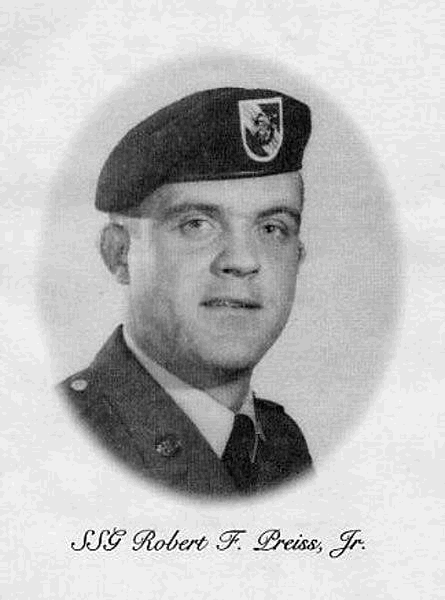 |  Preiss center |
FINAL MISSION OF SSGT ROBERT F. PREISS JR.
1970 | 05 | 25 | E-6 SSG | Robert L. | Coleman | 11B4S | KIA, DOW | Laos; CCN, RT New Jersey |
25 May 70- Robert L. Coleman, SSG E-6, USASF, RT NEW JERSEY, CCN, Da Nang, Ops 35, KIA-RR Coleman, a member of a team on a recon mission in Laos. The team was attacked by a North Vietnamese Unit and Coleman was shot in the spleen and bled to death before medical assistance could be provided.
 |
30 May 70- Brian J DeVaney CWO aka B.J, of the 17Oth AHC, a native Canadian, who's last day of flying was the day before. One of his last missions was to insert a SOG recon team from CCC in the BRA area of the Ho Chi Minh Trail on 28 March. On the 30th, he learned the team was now in trouble and need to be extracted from the area, he felt it was his responsibility to extract the team since he had inserted them and therefore took the mission. Upon the approach to extract the team, the helicopter came under intense fire from a RPD Machine Gun, raking the chopper from front to rear while it hovered in an effort to pick up the team under fire. Several rounds entered from the rear of the aircraft. Two rounds hit SP/4 John P. Martin, Of the 17Oth AHC, crew chief, sitting directly behind the pilot DeVaney, one round hit Martin in the left thigh and one hitting the left tibia and going through the right Femur. One of these rounds that hit Martin passed through about a 1/4" inch crack in the Armor Plating protecting the pilot hitting CWO DeVaney’s armor chest plate bouncing back into his heart killing him instantly. The aircraft rolled, crashed and burned. SP/4 Martin came to from being unconscious, he was under the fuel cell of the aircraft, as he began to crawl away, Lt John W Naurot, of CCC's Recon Team, left the safety of the bomb crater and retrieved Martin by pulling him to safety in the crater. How the other crew members consisting of the Co Pilot Taylor and B.J got to the crater is not clear, Either the Co-Pilot and other members got to the crater themselves or the other members of the Recon Team exposed themselves to the hail of bullets by crawling out and pulling the crew back to safety. One SCU scout was also KIA in this incident. All members were rescued by another 170th Helicopter who lost 4" of tail rotor in the extraction. (Information provided by John P. Martin and edited by Robert Noe)
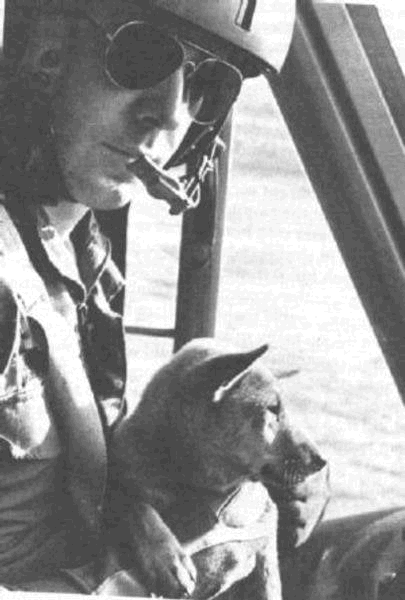 |
1970 | 06 | 4 | O-2 1LT | Mark H. | Rivest | 31542 | KIA | Laos; CCC, Reaction Company, Plt Ldr; small arms fire |
04 Jun 70- Mark H. Rivest, 1LT 0-2, USASF, Reaction PLT LDR CCC-KIA in Laos
 |
FINAL MISSION OF 1LT MARK H. RIVEST
1970 | 06 | 10 | O-2 1LT | Vyrl E. | Leichliter, Jr. | 31542 | KIA | Cam; CCS, w/ Exploitation Force, Platoon Ldr; small arms fire |
10 Jun 70- Vyrl E. Leichlieter, 1LT 0-2, USASF, CCS, Plt Ldr-KIA small arms fire
 |
FINAL MISSION OF 1LT VYRL E. LEICHLITER
30 Jun 70- William Stephen Sanders CPT 0-3, Pilot, FAC, of Winthrop, Maine USAF, 23rd Tac Air Spt, and Five crew members of an HH53, Captain Leroy C. Schaneberg, pilot; Major John W. Goeglein, co-pilot; SSgt Marvin E. Bell, flight engineer; SSgt Michael F. Dean, pararescueman; and MSgt. Paul L. Jenkins, pararescueman 40TH ARRS, 3RD AIR RESCUE GROUP, 7TH AF , Ops 32,MIA. His aircraft was shot down while providing support for a SOG recon team in Laos. The back seat rider escaped and was rescued. (Filed by William "Bill" Sheldon: CPT William Sanders, USAF, was flying a mission out of MLT 3, NKP. Back seater was SFC Albert Mosiello, USASF, CCN, MLT 3. Mosiello stated they were hit in the side by apparently a 37mm AAA round. He debriefed that the explosion probably killed CPT Sanders. Mosiello ejected, and was under canopy for 4 - 10 seconds. An HH 53 Jolly Green from 37th ARRS was launched from Danang to recover Mosiello. Sandys (A1s were covering). As the HH53 made an approach to hover, an NVA fired an RPG into the rotor of the HH53. The aircraft rolled out of the sky and exploded in a huge fireball. All 6 crew members were presumed KIA. 56th SOW commander, COL Sam Crosby informed me the 37th was launching another HH53, and asked if I desired to arm the A1s with tear gas for fire suppression. I affirmed, and as soon as the tear gas was down, the 2nd HH53 picked Mosiello out on a penetrator. I flew an electronic search of the crash site the following morning, with CPT Fred Parrot, FAC pilot 23rd TASS. No radio signals detected, no movement in or near the site. An NVA company was observed moving to the area. We pickled 2 pods of HE rockets into the NVA, and then departed the area. I sat on a KIA/MIA board. CPT Sanders was presumed to be KIA, but as I recall the status remained MIA for a long time. His status is still Body not Recovered; however, the five crew members of the HH53 Remains have been recovered.
 |  |  | 
|
 |  |
A note from The Virtual Wall
On 30 June 1970, Captain William S. Sanders, pilot, and SFC Albert E. Mosiello, observer, were conducting a visual reconnaissance mission in an OV-10A (tail number 68-3807, call sign "Nail 44"). Due to mission requirements for handheld photography NAIL 44 was flying below the usual minimum of 1500 feet. The aircraft was taken under fire and hit by a 37mm AAA shell in its left side adjacent to the pilot's position. With his pilot unresponsive and the OV-10 no longer airworthy, Mosiello ejected. The OV-10 had gone down in heavily forested, rugged mountains about 3 miles west of the Lao/South Vietnamese border and 12 miles south of the demilitarized zone (DMZ). A second FAC in the vicinity heard SFC Mosiello's emergency beeper and made radio contact with the downed observer. He then initiated Search and Rescue operations. A HH-53C JOLLY GREEN helicopter from the 40th Air Rescue/Recovery Squadron (ARRS) at Udorn RTAFB, Thailand, was immediately dispatched to the area of loss. The HH-53 crew consisted of
Captain Leroy C. Schaneberg, pilot; Major John W. Goeglein, co-pilot; SSgt Marvin E. Bell, flight engineer; SSgt Michael F. Dean, pararescueman; and MSgt. Paul L. Jenkins, pararescueman.
As the aircraft hovered over SFC Mosiello's position, it was hit by a Rocket Propelled Grenade (RPG) in the rotor head. The rotor assembly separated from the fuselage, which rolled over and crashed in a fireball on the ground. No emergency beepers were heard from the helicopter's crash site and the FAC could see no signs of survivors. Although nightfall was approaching, a second effort was staged using a helicopter from Da Nang and A-1E SANDYs for fire suppression. SFC Mosiello was picked up. In his debriefing statement, SFC Mosiello stated a belief that Captain Sanders had been killed by the AAA hit and that he did not see Sanders eject or another parachute deploy. Search efforts for the Captain Sanders and the HH-53 crew continued through the next day, but no beepers were heard, no contact with the downed aircrew was made, and there were no visual sightings of survivors. SAR efforts were terminated and the six men were listed as Killed in Action/Body Not Recovered. In December 1992, a US/Lao team surveyed and excavated the HH-53 crash site. Human remains were recovered and on 7 March 1995 the US government identified the remains as those of the five HH-53 aircrewmen. Efforts to locate the OV-10 crash site were unsuccessful due to the terrain and dense jungle.
17 Nov 2002
I rode in his airplane. We slipped those surly bonds and faced the dangers of combat together. He was a very good pilot, and a Forward Air Controller who did a superb job supporting the men of SOG on the ground. He died way too young, and his body has yet to be recovered. But I shall always remember him as such a good man, a good pilot, a great FAC, and a friend. God bless you Bill Sanders, NAIL 44. From a friend and comrade-in-arms, Bill Shelton wlshelton@msn.com
FINAL MISSION OF CAPT WILLIAMS S. SANDERS
(?) Jul 70, A Special Commando Scout, Bru, PIt Ldr, Co A, Hatchet Force This SCU was killed while he and some of the PIt Scouts along with SFC Robert Noe were were on the South China Beach of CCN compound after being returned from an extended tour of security duty of Hickory Radio Relay site. While in the water with some of his Plt members, a hand grenade was thrown into their midst and exploded resulting in his death. Correction: Interestingly enough, I was about 20 feet from this guy when the grenade went off, retrieved him from the surf and ended up taking him to the 95th Evac where he was pronounced dead, then on to the Morgue at the Da Nang...My take on the event (according to the other SCU wounded), was that the subject was fishing with a grenade in waist deep water, had just pulled the pin to throw it when he dropped it (his hands were wet), he bent down hoping to retrieve and throw it in time, but didn't quite make it... which accounted for the massive wound to his forehead. Hadn't thought about that in years.... RT Hanna --Don't know which version is true, but you are correct, there was massive damage done to his head. Went to the morgue and transported his body back home. Maybe the version I got was because I was the American PLT Sgt and the Yards didn't want me to know they were fishing with explosives or the other yards didn’t know what he was doing and though someone threw the grenade at them???? Note: This was the day we got back from Hickory and that afternoon was sent on the Co Roc mission.. RL Noe
1970 | 07 | 4 | E-7 SFC | Charles F. | Bookout | 11C4F | KIA, BNR | Laos; CCN, RT Colorado,YC362495, 16k west of Ta Ko |
04 Jul 70- Charles Franidin Bookout. SFC E-7 of Oklahoma City, OK, USASF, RT COLORADO, CCN, Da Nang, Ops 35 KIA, Body not recovered. The team was on Recon in Laos which was ambushed where he was wounded, examined by a team member who found a single bullet hole in Bookout's back. A few moments later stopped breathing. Because of the tactical situation, his body could not be extracted at the time. (Added by Fred Wunderlich, "Lightning": The team's 11, Oliveras, confirmed a head shot) Body not recovered as of 25Jan2023 He was a personal friend of Jack Frost, my former room mate. I was friends with Wunderlich and knew Charles-. rln
 |
FINAL MISSION OF SFC CHARLES F. BOOKOUT
On the Fourth of July in 1970, SFC Bookout was conducting a reconnaissance mission when his unit was ambushed in Laos. The team's position was near the border of Laos and South Vietnam, south of the South Vietnam city of A Shau, in Saravane Province, Laos. On the first burst of fire, SFC Bookout was wounded. He was examined by one of the squad members, and a single bullet hole was found in the left side of his back. About 10 minutes later he stopped breathing, and no pulse could be found. Due to the tactical situation and the intense enemy fire, the team was instructed to move to a clearing for extraction. SFC Bookout was left behind, because it would have slowed the progress and endangered the lives of the rest of the team to try and carry him to safety. It was believed that he was dead. The rest of the team was extracted safely at about 1900 hours that day. No search teams were inserted to recover Bookout because of impending darkness and the enemy situation. For every insertion like SFC Charles Bookout's that was detected and stopped, dozens of other commando teams safely slipped past NVA lines to strike a wide range of targets and collect vital information. The number of MACV-SOG missions conducted with Special Forces reconnaissance teams into Laos and Cambodia was 452 in 1969. It was the most sustained American campaign of raiding, sabotage and intelligence gathering waged on foreign soil in U.S. military history. MACV-SOG's teams earned a global reputation as one of the most combat effective deep-penetration forces ever raised. The missions Bookout and others were assigned were exceedingly dangerous and of strategic importance. The men who were put into such situations knew the chances of their recovery if captured was slim to none. [Taken from pownetwork.org]
1970 | 07 | 5 | E-8 MSG | Richard L. | Smith | unk | KIA | SVN; CCC, HQ Co Club Manager, Kontum Prov., w/ SFC Lishchynsky ambushed returning from Pleiku |
1970 | 07 | 5 | E-7 SFC | George | Lishchynsky | 11B4S | KIA | SVN; CCC, HQ Co, Kontum Prov., w/ MSG RL Smith ambushed returning from Pleiku |
05 Jul 70- Richard L Smith, MSG E-8 and George Lishchynski (also spelled Lishcnynsky), SFC USASF, CCC-KIA On July 5, 1970, SFC George Lishchynsky and MSGT Richard L. Smith were returning from Pleiku in a jeep along Highway 14 with two other persons (Dusty Moore and Jan Novy) when they were ambushed by a band of Viet Cong. Both SFC Lishchynsky and MSGT Smith suffered fatal wounds in the attack. [Taken from specialforceshistory.com]
 |  |
1970 | 07 | 13 | E-7 SFC | David B. | Hayes | 05B4S | KIA | SVN; CCC, RT California, Kontum Prov., hit at first light when leaving RON site |
13 Jul 70- David B. Hayes, SFC E-7, USASF, RT CALIFORNIA, CCC-KIA SMALL ARMS FIRE
 |
SFC DAVID B HAYES SILVER STAR CITATION:
20 Jul 70 Cpt David W. Ayers, Co Pilot, US Army Helicopter 68-16550, Co A, 101st Abn Bn, 101st Abn Div. KIA body recovered. When attempting to insert a Hatchet Force Platoon from Co A, CCN on top of Co Roc Mountain. Air loss Shot down in Laos on insertion, his aircraft was the first aircraft attempting to land and came under immediate fire, was hit by a RPG and fell off the top of Co Roc, down the steep clift and crashed, died on impact, helicopter burned before body could be removed. Cpt Ayers, 25 years old from Simi, Ca., arrived in country Jun 70 and this was his initial checkout flight with Co A. ADDITIONAL INFORMATION Click on --> CoRoc (Cpt Ayers remains have been recovered and returned back to the US).
NNOTES BY Robert Noe, Platoon Sgt:
1. WO Curtis Bodin was scheduled to be the Peter pilot on this mission on the AC that crashed with the loss of Cpt Ayers. The morning of the mission he reported to Operations and saw that his name had been crossed out and Cpt Ayer's name written in. He went to Cpt Ayers and told him that he was suppose to be the Peter Pilot, he says that Cpt Ayers told him that Rank has its privileges. Curtis says he was upset and Cpt Ayers was new and this would was first mission, but after all these years realizes that it would have been him instead of Cpt Ayers that was killed.
2 2. At the TOC Operation's briefing to the PL Ldr and Sgt it was stated there were teams inserted below the top with the mission to climb up to the top of Co Roc, but they got shot out almost immediately upon insertions so this mission was to insert the Exploitation Platoon on top of the mountain. The Plt Sgt asked why would they insert on top when the teams were all getting shot out below the top, the response was not to worry because they would be conduction bombing missions 24 hour before the insertion. Remembering WW2 pre-invasions prep with bombing and shelling, after which the enemy would emerge in full force for a defense...thus, it was determined this would be a suicide mission. Some years later, the Plt Ldr said that he had been informed the insertion would be in advance of a NVA Regiment moving in to occupy Co Roc and the regiment beat us there. It is my personal opinion that the saving grace for the Platoon was the emergance of that on NVA who fired the RPG which hit the lead chooper and the chopper fell off the mountain down the clift instead of crashing on top, thus preventing a repeat of the LZ ORANGE mission with the loss of Michael V Kuropas and Dennis W. Neal ON April 15, 1970 http://www.macvsog.cc/dak_seang_15_apr_70.htm#Dak Seang
 |
FINAL MISSION CAPT DAVID W. AYERS
1970 | 07 | 25 | E-5 SGT | Peter M. | Vanderweg | 11B4S | KIA | Laos; CCC, Exploitation Force Sqd Ldr, ??where?? |
25 Jul 70- Peter M. Vanderweg, SFC E-7, USASF, Co A, Exploitation Force CCC-KIA died outright small arms fire
 |
10 Aug 70-John E. Crowley, Sp4, D Troop, 1st Squadron, 1st Cavalry, Americal Div., assigned to Shining Brass mission. Remains found under overturned wreckage of a Huey. Ground loss was Aug 10, 1970, Laos. From: Neal Riley <nealtriley@yahoo.com>
JTFFA-Full Accounting, Oct 6, 2008.
 |
Notes from The Virtual Wall
On 10 August 1970 D Troop, 1/1 Cavalry, was tasked with inserting a Special Forces reconnaissance team into Laos about 26 kilometers west of Ngok Tavok. The aircraft, UH-1H tail number 68-16520, When the helicopter lost power and crashed when it was about 25 feet above the ground in the landing zone. SP4 Crowley and one passenger were trapped inside the aircraft. A medic from another helicopter entered the wreckage and managed to free the passenger, but Crowley was firmly wedged between the aircraft and the ground. After two or three minutes of effort, the medic gave up trying to free him. The medic determined that Crowley was dead, as there was no pulse and he could get no response from him. All personnel were extracted and another rescue team was inserted just before dark, but was unable to get back to the wrecked aircraft because of enemy activity. The second team was extracted the next day, and no further efforts were made to go back to the crash site. SP4 Crowley was classed as Killed in Action, Body Not Recovered. His remains were recovered on 26 June 1998 and officially identified on 22 April 2000.
13 Aug 70 Alan Browne Cheesman, Cpt; George D. Henry, Cpt; Terry D. Reams, SSG; and William L. Ripley, Sgt, USAF, 21 St Special Ops Sqd, Ops 32, Nakhon Phanom RAFB, Thailand, performing a CH-3E helicopter (Tail # 63-9681) Thailand-KIA-RR "extraction mission in Laos was damaged due to heavy enemy fire and on returning back to base the aircraft suddenly turned upside down and burst into flames, and crashed" -Info by Jim Williams, 361st AHC & 2nd source, Mike Taylor; also [Harve Saal's Legends who has the incident as "day/month unknown, 1969"]). (Special Note: Filed by Maj William "Bill" Sheldon, Cmdr of MLT-3: The crash of an HH3 killing Cheeseman, Reams, Henry and Ripley, was not Prairie Fire related. The HH3 was on a training flight inside Thailand. The crew and AC were daily SOG assets. On this mission, Cheeseman, an experienced PF pilot, was acting as IP for a couple of new pilots. Apparently, they were shot down north of Ubon RTAFB by a 12.7, 14.5 or 50 cal, in Thailand. The AC did land upside down, and as I recall there was one USAF pilot, (the student I believe) escaped through the canopy hatch.)
 |  |  |  |
FINAL MISSION OF CAPT ALAN B. CHEESEMAN
08 | 14 | E-5 SGT | John A. | Premenko | 05B4S | KIA | Laos; CCS, w/ RT?? |
14 Aug 70- John A. Premenko, SGT E-6, USASF, CCS, Recon Tm Radio Op-KIA in Laos. He was transferred to CCN and was the first of those transferred from CCS to CCN to be KIA'ed. A few days after "he arrived at CCN he volunteered to strap hang with a CCN Recon team where he was killed. The team was inserted into the area of operation and operated one day without being detected by the enemy . While leaving the defensive perimeter that they had established during a rest break, the team was attacked by a superior sized force and well-armed force of enemy soldiers. In the initial exchange of fire SGT Premenko was critically wounded. Despite the facdt that he was seriously wounded, SGT Premenko reacted quickly and returned a savage burst of fire. This provided enough cover for the fellow team members to be able to find covered positions and return fire on the enemy. As the team members fired on the enemy, they moved forward to SGT Premenko's position in a valiant effort to save his life. His wounds proved too severe, however, and he died almost instantly. Though suffering from a mortal wound, SGT Premenko had managed to provide the covering fire necessary for the other team members. (Per 5th SFGA GO #1758, dtd 09/04/70)" EXTRACTED FROM pagte 641 and 642, Secret Green Beret Commandos in Cambodia, by LTC Fred S. Lindsey, USA Ret, dated 11/6/2012
 11 |
1970 | 08 | 21 | E-6 SSG | James E. | Holder | 11B4S | KIA | SVN; CCN, RT Asp, in the DMZ. He was the 1-2 and was on his first mission. |
21 Aug 70- James E. Holder, SSG E-6, USASF, Recon, CCN-KIA
 |
MAC V SOG
1970 | 08 | 31 | E-7 SFC | Charles H. | Gray | 11B4S | KIA, fixed wing shotdown | Laos; CCN, Covey, in OV-10 #68-3798, approx 60 miles SW of Da Nang |
31 Aug 70 - Michael John Mc Gerty, CPT 0-3, 20TH TAC AIR SPT SQDN, 504TH TAC AIR SPT GROUP, 7TH AF Ops 32/75 and Charles H Gray, SFC E-7, FAC Covey Rider, Ops 35, KIA-RR. OV-1O aircraft was shot down in Laos. However according to reliable sources, the aircraft was flying low in clouds attempting to locate a recon team and hit a mountain top. (Having met SFC Gray a number of times while I was on Bright Light standby duty at the Mobile Launch Site in Quang Tri. Charles would come into the briefing room and later we'd drink a beer together, I found him to be a very dedicated and likeable person who enjoyed what he was doing. I felt I could rely on him coming to my rescue, regardless of the circumstances -RL Noe)
 |
FINAL MISSION OF CAPT MICHAEL J. MCGERTY AND SERGEANT FIRST CLASS CHARLES H GRAY
4-7 Sep 70-Three unnamed SCU Hatchet Force Company B, Operation Tailwind, Kontum Operating deep in Laos, within 45 miles of Chavane, Company B performed one of the most successful Hatchet Force operations. In this operation, 3 SCU Montagnard killed, 33 wounded and all 16 Americans wounded. For their efforts, they secured the most important intelligence find on the NVA 559th Group since the war. Details by Ben Lyons Sep 5, 2006.
1970 | 09 | 15 | O-2 1LT | William R. | Goolsby, Jr. | 31542 | DNH, accidental self destruction | SVN; CCS, Khanh Hoa Prov., grenade accident at CCS compound at BMT |
15 Sep 70- William R. Goolsby, 1LT 0-2, CCS, New Assignment (arriving on Sep 10, 70) and assigned as a Platoon Leader, Exploitation element, not Recon-Death Non Hostile. Killed in the Recon Company billets when a fragmentation grenade that was either sabotaged in shipping, no pin installed, or he accidentally pulled the pin while rigging up his web gear exploded. Details by Ben Lyons, Sep 5, 2006.
"Lt Goolsby of B Company was killed by self-accidental discharge of a grenade in his room as he was packing to go on a recon mission. He was just newly assigned to CCS, BMT. Goolsby was killed, his roomate was med-evac'd, REecib CO Troy Giley reported, 'If I remember correctly his roommate was 1LT Gary T. Christian, then the XO of Recon Company, Christian returned within two weeks to get his gear and then went to the US for eye surgery.' No further details available" Extracted from: Page 607, Secret Green Beret Commandos in Cambodia by LTC Fred S. Lindsey, USA (RET)
Note: He arrived on the 10th and killed on the 15th, only 5 days with CCS, it is highly unlikely we was going on a Recon Mission with 5 days with the unit. I'd speculate that he might have been going on sometype of orientation, but no way would he be actually going on an actual mission without being properly trained. This is not something any specialized unit would do. RLN
 |
1970 | 09 | 20 | E-6 SSG | Anthony B. | Appleton | 91B4S | DNH | Okinawa; CCN, during stand-down on Oki |
20 Sep 70- Anthony B. Appleton, CCN, Da Nang, Ops 35 died as a result of a non hostile action as a result of a self inflicted wound - not on the wall. As I remember, the word was he had gotten a "Dear John" letter and he was distressed. Anthony was a great guy and I like him and thought of him as a friend. so I was deeply sadden to learn of his loss. -rln "SSG Anthony B. Appleton, CCN (OP 35) who died of a self-inflicted wound on September 20, 1970. SSG Appleton was in Okinawa on a HALO training mission. For this reason, his name does not appear on the Vietnam Veterans Memorial." Special Operation Association
 |
1970 | 10 | 5 | E-5 SGT | Fred A. | Gassman | 11C4S | KIA, BNR | Laos; CCN, RT Fer de Lance, YC227912, 28k WNW of A-102, A Shau, w/ Davidson |
1970 | 10 | 5 | E-6 SSG | David A. | Davidson | 11B4S | KIA, BNR | Laos; CCN, RT Fer de Lance, YC227912, 28k WNW of A-102, A Shau, w/ Gassman |
05 Oct 70 - David "Babysan"Arthur Davidson, SP/5, Tm Ldr of East Riverdale, Maryland, and Fred Allen Gassman, SGT, Asst Tm Ldr of Ft Walton Beach, FL and Two Special Commando Scouts of RT Fer-de-Lance, CCN Da Nang, Ops 35 on Recon 12 miles inside Laos west of Ta Bat--KIA, Bodies not recovered. After the team was inserted in Laos, it made contact with an enemy force. Gassman contacted an aircraft and reported that Davison had been hit by a long burst of enemy fire and had fallen off a cliff and that the team was receiving ground fire from three sides. Gassman was requesting an airstrike when the FAC heard him say "I?ve been hit - and in the worst way." Gassman fell to the ground groaning with a large hole in his back. Two SCU escaped and provided a graphic detail account of the other's deaths. A search was attempted, but prevented by the heavy enemy presence in the area. (Added by Fred Wunderlitch "Lighning": Gassman ran with Lighning on several missions but could not resist running with his old buddy "Babysan" who came up from CCC to CCN). [Photo featured page 104-105, Project Omega, Eye of The Beast, by James E. Acre]
SSG DAVID A. DAVISON
1st Brigade 101 1965-66
Project Omega 1966-68
CCS, CCN 1968-1970
KIA 62nd mission- He was a man among men. VR, Ted
 |  |
On October 5, 1970, SSGT Davidson and SGT Fred A. Gassman were members of a joint American and Vietnamese reconnaissance patrol operating about 12 miles inside Laos. The patrol had established their night position west of Ta Bat when they were attacked by a hostile force. According to the two surviving indigenous patrol members, Davidson was hit once in the head during a long burst of enemy fire while the team was attempting to evacuate the area, and fell down a ridge, after which he lay motionless with what appeared to be a fatal head wound. At about 1300 hours, Gassman radioed the overhead aircraft that they were being hit from three sides, and that they were low on ammunition and requested an emergency extraction and air strikes. As he attempted to retrieve the homing device, he stated on the radio, "I've been hit, and in the worst way", followed by several groans before the radio went dead. The surviving indigenous patrol members said that they last saw Gassman lying motionless with a large hole in his back. One unsuccessful search and recovery attempt was made shortly after the incident, but further attempts were curtailed due to the difficult tactical situation in the area. Davidson and Gassman remain missing. All other team members were successfully extracted. [Taken from pownetwork.org]
A Note from The Virtual Wall
By report, Recon Team "Fer-de-Lance" was inserted into Laos west of the A Shau Valley on 05 Oct 1970. The team was led by SSgt Davidson with Sgt Fred Gassman as number two and an unknown number of indigenous troops. The team was attacked on the night of 05/06 Oct while in a night defensive position just south of Route 922 near the village of Ta Bat. SSgt Davidson was hit and apparently killed early in the fight. Sgt Gassman and the surviving troops attempted to break contact, but were tracked and engaged by NVA troops. The last contact with the patrol was at about 1300 on 06 Oct, when Gassman reported that he had been hard hit. Two of the indigenous troops were sucessfully extracted and during their debriefs reported that both Davidson and Gassman had been fatally wounded. Although an immediate effort was made to recover the missing team members, the recovery team was unable to locate any of them before being forced from the area by NVA troops.
By report, Staff Sergeant Davidson was serving his fourth tour in South Vietnam at the time of his loss. While there can be no doubt that he was heavily decorated, The Virtual Wall has not been able to obtain information on his awards and can display only the "basic four" awards received by everyone wounded or killed in Vietnam.
12 Mar 2004 Davidson was respected by SFC Jerry "Mad Dog" Shriver and rivaled Shriver in having made an incredible number of trips across the "red line" into Cambodia and Laos. Davidson had a previous tour with SOG. His nickname was "Babysan" because he had a youthful boyish face but in the field he was incredibly proficient and cool. Like Shriver he just kept going out until the odds caught up with him. One report was that on his last mission the final radio transmission was "I am hit and in the worst way..." His remains were never recovered from Laos. I only met him once, he was with Shriver, in the Moose's Lounge, a bar in the B-23 compound in Ban Me Thuot in the spring of 1968. He may have been operating out of the SOG compound at East Field about 7 clicks outside of Ban Me Thuot at the time. By the time Davidson bought it late in 1971 the NVA "hunter-killer" teams really had SOG's number. The NVA placed so many trailwatchers on potential LZ's getting "on ground" undetected was practically impossible. The odds were definitely against them and he just kept going out. Davidson had courage but went into denied areas once too often. It had to end as it did. He had incredible courage. One of the very best to wear the green beret, Davidson was a legend to those who knew of him. Between the two of then, Shriver and Davidson may have done more over the line insertions than any other 30 men combined. Rest in Peace "Babysan", Rest in Peace... Je me souviens....... From a member 5th Special Forces, 1968. |
1970 | 10 | 19 | E-7 SFC | Peter J. | Wilson | 11B4S | MIA-PFD | Laos; CCC, RT South Carolina, YB618135, 28k SW of A-244, Ben Het |
19 Oct 70 - Peter Joe Wilson, SSG E-6, USASF, Recon Tm Ldr, CCC, Kontum, Ops 35 MIA-Presumptive finding of death. Team Leader of a Recon team in Laos, which made contact with a numerically-superior enemy force two miles inside Laos in the tri-border area southwest of Ben Het. The team made four contacts, which forced the team to abandon the battlefield with the hostile force in close pursuit and then Wilson directed the team to head in an easterly direction. This is the last time Wilson was seen by Sgt John M. Baker when Wilson directed him to the front of the patrol. Wilson was covering the rear and tending to the wounded soldier, Djuit; later Baker heard Wilson transmit "May Day, May Day" on his emergency radio and the sounds of a firefight from the direction of the separated patrol element.. An intensive search of the area was made without success. Brightlight: RT Texas was brightlight during this period. Covey reported hearing the emergency signal from SSG Wilson's radio. It was decided to deploy our team to try and find SSG Wilson. We had two slicks with accompanying gunships. I (Sgt Don Green) was the one-two and radio operator on the team. I was in the second slick in the left door. VC had set a trap and were waiting for us. They fired Rockets flying just under the skids of the lead chopper. The mission was aborted.
Received Mar 3, 2005 "Hi, My name is Pamela Jo Wilson (Brownfield)I as named after my Dad. SSG Peter Joe Wilson. MIA on 19 Oct 1970 two days after my 5th Birthday. I was just looking on the internet and found my Dads name. I never know there was anything out there about him. I don't know much about him. My mother passed away about tens ago. She never told me much. I read today that his nick name was "Fat Albert" I never knew that. I sure would like to learn more if I could. Anyways it was kinda nice knowing something about a man I never remembered. My email address is pamela.brownfield@us.army.mil"
 |
1970 | 11 | 14 | E-5 SGT | Leonard P. | Allen | 11B4S | KIA | Laos; CCN, RT Anaconda |
14 Nov 70- Leonard P, Allen SGT E-5, USASF, CCN, Da Nang, Ops 35, KIA-RR. On a mission in Loas as a member of RT ANACONDA. former Det B-55 (5 Mike Force) Remains recovered
 |
1970 | 11 | 24 | E-6 SSG | Martin I. | Arbeit | 11B4S | KIA | Laos; CCN, Co. A, (Nung Company), near Co Roc, west of A-101, Lang Vei |
24 Nov 70- Martin I. Arbeit , SSG E-6, USASF, CCN Da Nang was on operations with Co A, Hatchet Company and was KIA,-RR. SSG Arbeit was every bit a professional soldier. He use to have a monkey that he cared for that accompanied him until May of 1970 when he was in Long Than, B-53 drawing ammunition for a mission. SFC R.L. Noe was also drawing C-4 and the monkey jumped off Arbeit's shoulder and grabbed one block of C-4 explosive and carried it to the rafters of the warehouse where the monkey took a bite and then shortly thereafter fell dead. The last I saw of Arbeit was at the CCN TOC in Aug 70 where I suggested he seek a desk job because the way he was going, he would not survive Nam. During the 2005 Special Forces Association, Samuel Snyder stated that Martin had ran past him and got hit in the leg opening up the femoral arty and he bled to death before he could be evacuated.-RL Noe.. I read what you had about Marty Arbeit-he was a great guy. I had been the medic inserted on his previous mission when the medic was sick. Also I had wanted to go on the mission when he was killed but they had someone else assigned and I could not bump in. I was the chase medic that was sent, they had trouble hooking Marty to the ladder for extract. I climbed down to help but he had sustained several hits. I latter wrote a paper at Loyola University about that mission- wishing only that I got there sooner or had been the medic on the mission. I ended up with Marty's car-15 for awhile and gave him and his spirit some credit for helping me stay alive [by Bob Woodham] .
 | 
Click on image to enlarge |
Dear Mr. Noe,
1970 | 11 | 28 | E-7 SFC | Ronald E. | Smith | 11B4S | KIA, BNR | Laos; CCC, RT Kentucky, YB650174, 24k WSW of A-244, Ben Het |
28 Nov 70- Ronald E. Smith, SFC E-7 USASF CCS, Ban Me Thuot, Ops 35 MIA in Cambodia while on Recon patrol. as of 2023 Body not recovered
A Note from The Virtual Wall
On 28 November 1970 Recon Team Kentucky was conducting a long-range reconnaissance mission in Attopeu Province, Laos, near the tri-border area of Vietnam, Laos and Cambodia. In mid-afternoon, the team, which consisted of two US Special Forces soldiers and a number of ARVN Special Forces personnel, was attacked by a company-sized enemy force. The initial attack split the recon team and wounded SFC Smith. The team leader made his way to SFC Smith and found that Smith had been hit in the head and torso by automatic weapons fire. As he and an ARVN team member attempted to recover Smith's body, a rocket-propelled grenade exploded nearby, killing the ARVN soldier and knocking the team leader unconscious. The remaining team members broke contact, carrying the wounded team leader with them but leaving their two dead behind. After extraction, the team leader reported his belief that SFC Smith was dead. The enemy presence precluded insertion of a ground team to search for and recover the two bodies. While available information indicates that SFC Smith was carried as Missing in Action for a time, it also indicates that an annual review board eventually recommended, and the Secretary of the Army accepted, a finding that SFC Smith had been killed in the 28 Nov 1970 action. His present status is Killed in Action, Body not Recovered
"I am the niece of SFC Ronald E. Smith USASF. He is still very loved and missed by my entire family. I would love it if you could put me in touch with anyone who knew him. Pics and stories are all we have of him for now and I would love to have more info on him. Thank You - Crystal erickscustomlawn@sbcglobal.net
I have extended contact to the family. I went to his funeral. -B. Kuhlman GL 2881 (Posted Via email Jun 8, 2011)
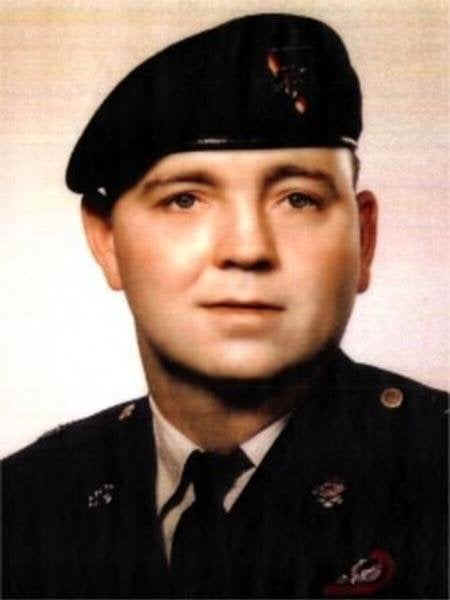 |  |
FINAL MISSION OF SFC RONALD E. SMITH
1970 | 11 | 29 | E-7 SFC | John R. | Bean | 11B4S | KIA | Laos; CCC, A Company, 3d Platoon (Hatchet Force) |
29 Nov 70 - John R. Bean, SFC E-7, USASF, CCC, Kontum, Ops 35, KIA-RR~ Body escorted to the United States by 2Lt Robert Noe on 7 Dec 70. The operation lasted from Nov 25-29, 1970. SFC Bean was killed in the morning of the 29th before the extraction. He was awarded the Purple Heart and the Silver Star for his actions during the operation. The operation is officially listed as a search and clear operation. The platoon was sent into the area to determine what was there. In early November an RT was sent into the same area. On the first day they ran into a company sized NVA unit which tried to capture them. The NVA used bull horns and fired rpg’s over their heads in an effort to capture them rather then kill them. My platoon was sent in to find out what was really there. We made contact on our first day. The conversation that the NVA unit had just prior to the initiation of combat was they were expecting an RT. The platoon was in and out of combat everyday during the operation. Besides large cashes of rice and other food the platoon discovered a bomb making factory late in the day of the 28th that was 20 meters wide by 50 meters long. Slightly after the discovery of the factory an NVA company made contact and chased the platoon until dark. During the night the platoon hid by staying in a river with the search being conducted on both sides of the river. Intelligence determined that we probably ran into the 66th NVA Regiment. All members of the platoon were wounded and there were 5 Montinards killed as well as SFC Bean. Another Sergeant on the operation was awarded the DSC. After the extraction an arc light was done the same day. By Steve Feldman. As I was rotating back to the US, I was designated to escourt his remains back to the in early December 70. RLN
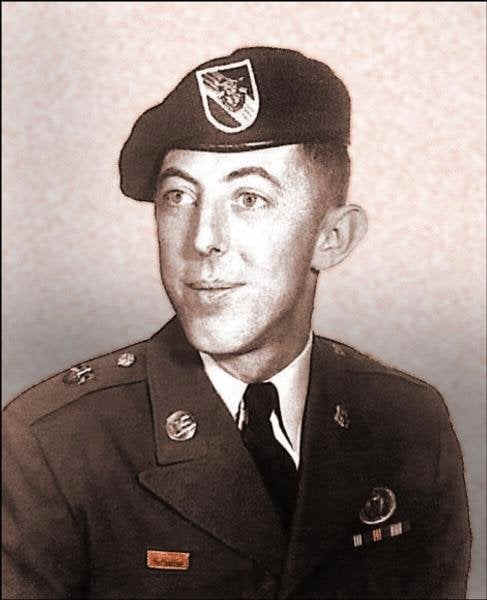 |
1970 | 12 | 4 | E-6 SSG | George C. | Green, Jr. | 05B4S | KIA, BNR | Laos; CCC, RT Washington, YB671492, in Charlie 3, 16km NE of Leghorn |
04 Dec 70- George Curtis Green, Jr. SGT E-5, USASF, CCC, RT Washington, Kontum, Ops 35 MIA, Presumptive finding of death. The recon team operating in Laos, after insertion and spending the night. The next morning the team killed a sentry, shortly thereafter they were engaged by an company size enemy force. The team began evasive maneuvers, having shaken the enemy for a short time. At the extraction LZ, in a burst of enemy fire, Green was killed with three wounds in his back with small arms and rocket-propelled grenades. Green was hit three times in the back with small arms fire and killed instantly. The intensity of the enemy attack forced the team to leave Green's remains behind during the extraction. As of 2023 body not recovered
 |  |
FINAL MISSION OF SGT GEORGE C. GREEN JR.
1970 | 12 | 28 | E-6 SSG | Roger L. | Teeter | 11B4S | KIA, DOW, fixed wing shotdown | Laos; CCN, Covey, aboard OV-10 #67-14661, near Ban Bamran, 48Q XD509615, just west of the DMZ |
28 Dec 70- James Smith, Pilot, CPT, USAF 20TH TAC AIR SPT SQDN, 504TH TAC AIR SPT GROUP, 7TH AF, Ops 32 and Roger L. Teeter, SSG E-6, USASF, CCN Da Nang, MLT 3 Covey, Ops 35 KIA while performing operations to extract a recon team which had been surrounded by enemy forces. (By Fred Wunderlitch, "Lighning": Teeder was a personal, close friend and he stayed pass his DEROS date to fly the Covey mission).
 |  |
FINAL MISSION OF CAPT JAMES L. SMITH AND ROGER L. TEETER
1971 | 01 | 22 | E-6 SSG | Kenneth | Lovelace | 11F4S | KIA, helicopter crash | SVN; B-53, Instructor, Bien Hoa Prov., same Huey as Celano |
1971 | 01 | 22 | E-5 SGT | Hugh D. | Opperman | 11C4S | KIA, helicopter crash | SVN; CCC, trainee at 1-0 school, Bien Hoa Prov., same Huey as Celano |
1971 | 01 | 22 | E-5 SGT | Frank A. | Celano | 11B4S | KIA, helicopter crash | SVN; CCC, trainee at 1-0 school, Bien Hoa Prov.; 240 AHC #66-16356; hovering over downed LOH |
22 Jan 71- Kenneth Lovelace, SSG E-6. USASF Instructor, Recon Tm Ldrs School, B-53, Long Than, Ops 38; Frank A. Celano, SGT E-5 and Hugh D. Opperman, SGT E-5, USASF, CCC, Kontum, Ops 35, KIA during a SOG Reconnaissance Team Leader’s Course. Although they were one-zero students, they were tasked to undertake a recover of a downed LOH. During the attempted insertion by ladders, the men reached the bottom rung of the ladder, but the helicopter was still too high off the ground from them to get off the ladder. In this percurious position on the ladder, they started taking fire and the helicopter crashed. FOR DETAILS SEE-->LOVELACE/CELANO/OPPERMAN/SMITH
 |  |  |
1971 | 01 | 28 | E-5 SGT | Arthur A. | Smith | 11C4S | DNH, helicopter crash | SVN; CCN, trainee at 1-0 school, Bien Hoa Prov. |
28 Jan 71- Arthur A. Smith, SGT E-5, USASF CCN, Da Nang, Ops 35 killed in helicopter crash (non hostile) Bien Hoa Province, South Vietnam (Trainee at 1-0 school). He is listed by the Virtual Vietnam Wall as being assigned to Co A, 5th SFGA.

|
GROUND CASUALTY
29 Jan 71- David Ives Mixter, SGT E-5 of Darien, Conn, USASF, CCC, RT Colorado, Kontum, Ops 35 MIA-Body not recovered. While on a recon mission operating in Laos that made contact with an enemy force. The enemy used B-40 rocket propelled grenades against the team and one exploded directly in front of Mixer. He was checked by a team member, he was covered with blood and did not respond, thought to be dead and was left behind in the effort to break contact with the enemy. Due to heavy enemy activity his remains were left behind. NOTE: Mixer was SOG’s final MIA in Laos. As of 2023 his remains have not been reovered.
 |
POSTED ON 10.18.2014 POSTED BY: WKILLIAN@SMJUHSD.ORG FINAL MISSION OF SGT DAVID I. MIXTER |
Gerald Ernest Woods Walter Edward Demsey, Jr, ,
1971 | 02 | 18 | E-5 SGT | Allen R. | Lloyd | 05C4S | KIA, BNR, helicopter shotdown | Laos; CCN, RT Intruder, YC481785, 5k S of A-102 A Shau, w/ CPT Watson, 101AVN #68-15255 |
1971 | 02 | 18 | O-3 CPT | Ronald L. | Watson | 31542 | KIA, BNR, helicopter shotdown | Laos; CCN, RT Intruder, YC481785, 5k S of A-102 A Shau, w/ SGT Lloyd; 101AVN #68-15255 |
18 Feb 71- Ronald "DOC" Leonard Watson, CPT 0-3 of El Paso, TX; Allen "Baby Jesus"Richard Lloyd, SGT E-5 of St Charles, Minn; USASF, CCN, Da Nang; RT Intruder, Ops 35 and George Phillip Berg, WO-1 of Belford, NJ Air Craft Commander; Gregory Stephen Crandall, WO-1; Gerald Ernest Woods, WO- 1, Pilot; Walter Edward Demsey, Jr, SP/4, Crew Chief of Glendora, NJ; Robert Joseph Engen, SP/4 of Stockton, CA; Walter Edward Lewellen, SP/4 of New Albany, IN; Gary Lee Johnson, PFC E-3, Door Gunner of Malibu, A CO, 101ST AVN BN, 101ST AVN GROUP, 101ST ABN DIV, Comanchero 19, UH-1H #68-15255. MIA-Presumptive finding of death. With less than 2 weeks before the end of US-led teams in the A Shau in Laos . Upon insertion the team encountered the enemy and engaged them, killing two and the remainder dispersed. The team worked their way to an LZ and a Huey was making a STABO rig extraction. All 3 Americans hooked up and as the helicopter lifted off, it was hit. A door gunner cut one of the ropes loose and SSG Sammy Hernandez fell 30-45 feet before the helicopter went off a cliff with the other two Americans still on the ropes. The helicopter crashed and exploded Killing these 13 men. " On 19 Feb, a Special Forces recovery team was inserted at the crash site to search the area. Woods and Berg were found dead in their seats. Johnson's body was found in a tree. One leg of Demsey, the burned CE, was found in the cargo compartment. All remains were prepared for extraction, and the team left to establish a night defensive position. Enroute, the team found the remains of Lloyd and Watson, still on their rope slings, in the trees on the edge of a cliff. Because of the rugged terrain and approaching darkness, the rescue team leader decided to wait until morning to recover these two remains. However, the following morning, the search team came under intense fire, and te team leader requested an emergency extraction, and in so doing left all remains behind." Hernandez was rescued. (See 19 Feb for continued action). Note: See RT Intruder in the "individual memorial" section. {Filed by SSG Don "Sluggo" Murphy: . In January of 72 I was the covey rider at Phu Bai and Bob Woodham our chase medic asked me if I would look on the ridge in the South end of the Ashau for a ladder that was in the treetops. I did and it was still there. He was involved in the brightlight operation for Watson and Lloyd. He said he had put both bodies in bags there. The lines were still hooked to them and led to where the aircraft was crashed. He asked if I would check with MACSOG and mount a recovery mission for those two and the aircrew still in the crash site. I did but the request was denied.} [Doc (the Brain) Watson came to the front gate of CCN one day and asked for an interview. He was or had been in the Phoenix Program. He had a PHD from Stanford. I asked him why he wanted to be a 10. He said it was to help him understand human psychology," why would a person want to lead in such a program." We accepted him and sent him to 10 down at Long Thanh. He also told me that he was an orphan..-BG George Gaspard]
AS OF 2023 Remains of Watson, Berg , Lloyd,, Johnson , Woods and Demsey Not Recovered
 |  |  |  |  Gerald Ernest Woods |
 |  R |  | 
|
The Missing Men of RT Intruder MACV-SOG, or Military Assistance Command Vietnam Studies and Observation Group, was a joint service high command unconventional warfare task force engaged in highly classified operations throughout Southeast Asia. The 5 th Special Forces Group at Na Trang channeled personnel into MACV-SOG (though it was not a Special Forces group) through Special Operations Augmentations (SOA), which provided their "cover" while under secret orders to MACV-SOG. These teams, from the three Command and Control locations, CCN, CCC and CCS, performed deep penetration missions of strategic reconnaissance and interdiction. They were called, depending on the time frame, "Shining Brass" or "Prairie Fire" missions. RT Intruder was one of the teams that performed these missions along the Ho Chi Minh Trail. These missions were most often performed in Laos, well beyond radio range and artillery support. In early 1971, three American Special Forces troopers manned RT Intruder, from Command and Control North (CCN) at Da Nang. The Team Leader, or One Zero, was CPT Ronald L. (Doc)Watson. The second in command, or One One, was SGT Allen R. (Baby Jesus) Lloyd and SGT Raymond L. (Robby) Robinson, was the One Two. Additionally, the team had ten Bru Montagnard tribesmen assigned. The team makeup changed, according to the needs of the mission, but most of the missions were conducted with all three Americans and five of the Bru tribesmen. On 8 February 1971, the South Vietnamese government announced Lam Son 719, a large-scale offensive against enemy communications and supply lines in that part of Laos adjacent to the two northern-most provinces of South Vietnam along the Ho Chi Minh Trail. The mission was to interdict the flow of supplies from North Vietnam. The South Vietnamese Army (ARVN) would provide and command ground forces, while the US forces would provide airlift and supporting fire. Phase I, named Operation Dewey Canyon II, involved an armored attack by the US from Vandegrift Base Camp toward Khe Sanh, while the ARVN moved into position for the attack across the Laotian border. Phase II began with an ARVN helicopter assault and armored brigade thrust along Route 9 into Laos. American helicopters transported ARVN ground troops, while the US Air Force provided cover strikes around the landing zones. Ten days later, on 18 February, two teams, RT Intruder and RT Python, were inserted into opposite sides of the infamous A Shau Valley in support of Lam Sam 719. RT Python would insert six or seven kilometers east of RT Intruder on an abandon fire base. On the second day another team was to reinforce RT Intruder at their location over looking the A Shau valley and bring in additional ammunition and a couple of 60-MM mortars. Their mission was to tie down NVA forces by calling in air strikes, gather intelligence and run reconnaissance missions towards the valley. The A Shau Valley had never been hotter. Captured documents revealed that the NVA had moved eleven counter-recon companies there to reinforce LZ watchers, trackers, and dogs, rear security units and infantry battalions. Additionally, they had two anti-aircraft artillery (AAA) battalions defending the valley, with one located at each end. The A Shau diversion was initially assigned to the 2000-man strong 1 st Brigade, 101 st Airborne Division. However, the specter of heavy US losses forced the planners to reconsider using the airborne brigade. The decision was then made to give the mission to MACV-SOG instead. On that date, RT Intruder pulled their final mission together. The team was being considered for a High Altitude Low Opening (HALO) mission. For this reason, their performance was to be evaluated on this particular road watch/interdiction mission in the A Shau Valley. SFC Sammy Hernandez and SFC Charles Wesley (Wes) joined the team as "strap hangers". They would determine if the team got the nod for the HALO training and subsequent missions. Both of these men were already HALO qualified and needed team members that they could trust for these difficult missions. Sammy and Wes did not volunteer for this mission. A few days prior to the insert, Sammy and Wes were in the Recon Club having a drink or two. Sammy suggested that they walk down to the TOC and see what was going on. When they entered the S-2 section, they saw SGM Billy Waugh talking to Captain Watson and the AST. SGM Waugh turned and asked, "What are you two doing?" Sammy, with a smile on his face said, "Screwing off Sergeant Major." Billy replied, "Well, you two get your rucksacks and weapons. I'm sending you where you can't screw off. You two will be going with RT Intruder." As the two headed back to their hooch to secure their weapons and rucks, Wes cursed Sammy and said, "See, I told you we shouldn't go down to the TOC. I was in the A Shau Valley as a Platoon Sergeant with the 101 st back in 1968. All the bad guys in the world are in that valley." The A Shau was probably the most NVA-infested area south of Hanoi! This valley was not a place for amateurs, and a road interdiction mission was doubly hazardous. However, RT Intruder was judged to be ready. The mission of road watch and interdiction required that they go in a little heavier than usual, so the addition of two Americans was welcomed. The team was inserted onto a small rocky clearing, west of the A Shau Valley and just over the Laotian border (YC473783). The Covey pilot for this insert was Captain Tom Yarborough flying an OV-10. This clearing did not offer much in the way of concealment. The enemy could spot the team from the ridge line and objective (hill 1528) that they were heading towards, and they did just that. RT Intruder waited for the choppers to leave and tried to attune their ears to the jungle noises. Threading their way north-east through the lush jungle growth, the team disappeared into the forest, just as they heard a series of shots to their left and right front. This was the NVA's method of signaling each other when they had a team spotted. Sammy was carrying an M-60 machine gun and a CAR-15. Behind Sammy was Wes, and every time a signal shot was fired by the NVA, Sammy would turn and give Wes a smile. Sammy was on America's first combat HALO drop and had also run recon with Project Delta. The M-60 that Sammy was carrying had the old style quick-change barrel lock, and every so often it would unlock and the barrel would fall out, making a nerve-racking noise. Sammy finally secured the quick-change barrel lock with a string. Traveling east, they soon crossed the Vietnamese border and arrived at the western-most ridge of the A Shau Valley. The ridgeline was heavily canopied, and there, hidden by the overhanging boughs, safe from aerial observation, was the trail! This wasn't just a footpath. A large number of personnel could walk side by side on this veritable walkway! Also strung along side of the trail were 10 or 15 strands of communications wire. The team crossed the trail and set up security. They were not sure if they were on the correct hill to conduct the road watch, so CPT Watson radioed Covey and asked him to make a low level pass over the hill on which they were to set up. It turned out that they were around 200 to 300 meters south (YC480784) of the hill where they were supposed to set up. Not that it made much difference which hill they were on; RT Intruder ran into trouble right after Covey made his over-flight. Within minutes, the team made contact with a five-man NVA element that was coming towards them on the trail, and quickly killed them. Upon recommendation from Sammy and Wes, CPT Watson called for a STABO extraction, since they were compromised almost from the start. It was getting late and the clouds would roll in soon, making an extraction impossible. Wes and Robby had retrieved the rucksacks from the dead NVA that held several documents, a communist flag, medals and clothing. So it was decided that Robby would go out on the first bird with Wes and two of the Bru. It took about thirty to forty minutes for the helicopters to arrive on station. The top of the ridgeline was now socked in with clouds and Watson had to vector the helicopters by sound. The helicopter pilots that supported SOG were among the best that Company A (The Comancheros), 101 st Aviation Battalion, had to offer. It took nerves of steel to hover a helicopter at tree top level in the clouds while moving forward a few feet at a time and trying to locate a SOG team that had just made contact. Just knowing that at any moment you were going to get shot out from under your rotor blades was enough to rattle anyone's nerves. Lt. Larry Hull flying an O-2 replaced Captain Yarborough for the extraction of the team. The first of three helicopter piloted by WO Steve Diehl appeared out of the clouds, hovered over the team and dropped an aluminum ladder out one door. Robby, Wes and the two Bru snapped their rucksacks to the first rungs of the ladder, and climbed up and snap-linked themselves to it. The Huey struggled to lift them in the thin, mountain air, dragging the ladder through the trees. The pilot was having trouble keeping the Huey straight. He had run out of control pedal as the helicopter made a slow turn and twisted the ladder in the trees. It may have crashed if the four had not jumped off the ladder just seconds before the crew chief cut it from the chopper. The team landed on top of the five NVA that they had just killed. Wesley's rucksack was still snapped to the ladder as they ran back to the team's perimeter. The next helicopter in line hovered over the team and dropped our STABO ropes. Wes, Robby and the two Bru snapped their harnesses into the STABO rope and gave thumbs up to the crew chief. In seconds, they were catapulted up through the trees. The pilot pulled pitch, pushed the cyclic forward, and nosed the helicopter towards the valley and down the side of the mountain in order to gain the needed air speed. The four were only a few feet above the treetops as the pilot gained air speed and flew up through the clouds. For the next twenty minutes they were in excruciating pain from the leg straps. Robby had the extra weight of the NVA's rucksack and one of the Bru had managed to stand on Wesley's shoulders while he adjusted the straps between his own legs. Wes promptly shoved the Bru's feet off his shoulders. Because the first bird had so much trouble, only three Montagnards were extracted on the next lift. This left Watson, Lloyd and Hernandez for the last helicopter. When they arrived at the 101 st ABN DIV firebase, instead of lowering them to the pad, the helicopter came in too low and slammed the team outside the perimeter, and then dragged them a few feet through the concertina wire. An engineer stake pierced Robby's leg. When the pilot realized what had happened, he immediately pulled the chopper up and set them back down on the pad. As the team was putting their STABO ropes into the helicopter, CWO George Berg got out and put his arms around Wes and said he was sorry for dragging them through the wire. He then said that he was going back to the area to pick up the rest of the team. Wesley, Robby and the two Bru got on the other two helicopter. On the way to MLT-1, the pilot turned and told Wesley that CWO Bergs helicopter crashed with Watson, Lloyd and Hernandez. Wesley told the pilot to fly back to the ex-fill point and see if they could locate the crash site with the help of Covey and rappel onto the site. By this time it was already dark and the pilot was ordered back to MLT-1. The helicopter that had the ladder cut by the crew chief evacuated Robby to the at hospital Phu Bai.. . After being released later that night from the hospital, Robby learned the horrible truth. The last helicopter had crashed! Back in the launch site at MLT-1, Wesley, the only American to make it out other than Robby, debriefed the OIC and NCOIC on the mission up to the extraction. By this time, the Covey rider, SFC Fernandez, had landed and came into the briefing room. He stated that he saw the main rotor blade come off as the helicopter tried to extract the rest of the team. The next morning, RT HABU, the on-call Bright Light, team was flown up from Da Nang. The team leader was SSG Danzer. On his team were SSG Cliff Newman, (also on the first combat HALO jump), SFC Jimmy Horton, SGT Lemuel McGlothren, and SSG James Woodham as the Medic. Cliff practically forced his way on this Bright Light team when he heard that his friend Sammy was in trouble. They both were like that. Wes thought he was going to return to Da Nang and was outside when SSG Danzer asked him what had happened. Wes was briefing Danzer on the mission and showing the infill LZ and the route to the extraction point on the map when SGM Waugh walked up and said, "Wes, you'll go back with RT HABU and lead them to the hill." Wes said, "Right, Sergeant Major, I think I've just volunteered again." Wes got another rucksack and put one of the six body bags, extra water and ammo in it. They would go in light, as they were not going to RON. The team now had six Americans and six Montagnards. They loaded on two helicopters and headed west for the A Shau Valley and the Laotian border. As they flew high above the valley, the team could see what was left of the old A Shau Special Forces A camp and its airstrip. Turning to the southwest, the Hueys started final approach as they crossed over into Laos. Wesley, kneeling between the two pilots, pointed to the LZ. The lead helicopter turned to the northwest and started its final approach, with two snakes flying along side. The LZ was the same rocky area with very little growth. Once off the helicopters, the team started moving in the direction of RT Intruder's extraction point. The team had been moving about thirty minutes when Covey, Captain Yarborough came up on the radio and asked Danzer to count his people because someone was on the LZ popping an orange panel. Danzer informed Covey that all his team was accounted for. The Covey then made a low level pass over the LZ, and reported that the person looked like an American, that he was sending in the chase bird. The team later learned that it was Sammy. SGM Waugh was in the chase helicopter and came in over Sammy and threw him a STABO rope. Sammy looked up at Waugh in the door of the Huey and showed Waugh his middle finger. SGM Waugh understood what Sammy meant by that hand signal and had the pilot land. Sammy later said he was not riding another STABO rig after the last one. The Bright Light team made it to the top of the hill and the trail without incident. Once there, they discovered a STABO rope that was frayed on the broken end, like it had been stretched before it broke. Wesley found what was left of his rucksack. It had been cut up and everything was missing. This included ten toe popper M-14 mines, three or four claymores, hand grenades, extra ammo and rations. A good piece of intelligence for the NVA was left on the ground next to Wesley's rucksack. It was an envelope from Sears with Wesley's name and unit on it. Wesley had received the letter just prior to inserting on the first day and without thinking, stuck the letter in the side pouch of his ruck. He had left the ruck snap-linked to the ladder when he jumped off. Sammy later said he had secured Wesley's rucksack to his own STABO rig. Sammy was then carrying an M-60 MG, CAR-15 and two rucksacks. The extra weight may have saved Sammy's life by causing the rope to break. Sammy said that when the rope broke that he was knocked unconscious when he crashed back to the ground. When he regained consciousness, he heard voices and could see flashlights not far from where he lay. Sammy crawled over the side of the hill as the NVA passed by him. He remained hidden until daylight and made his way back to the insert LZ. SFC Jose Fernandez was flying right seat in an O-2A Skymaster as Covey rider. This was his second Covey mission. He had run recon for many years and he had had enough. Fernandez informed Danzer that he had the crash site spotted. It was only a short distance over the side of the hill in the direction of the A Shau Valley and he would direct the team to it. It was real hairy on the trail and everyone wanted off as quickly as possible. The team started moving in the direction that Covey had gave them. The thick undergrowth hampered their movement, and they had to snake their way through the wait-a-minute vines and deadfall. Wes used his signal mirror to let Covey know their location. The team made a couple of course corrections and found the crash site. Covey had already called for a CH-53 from NKP, Thailand, to extract the bodies and team. Then the unexpected happened. Covey was orbiting above the team and gathering information about the crash from Danzer. On his last pass over the team, the pilot was in a sharp left hand bank. The team could see the top of the wings. Seconds passed and then the team heard a crashing sound; the noise of the O-2A Skymaster's engines stopped. You would have had to been there to understand the feelings of the six Americans. The team continued putting the bodies of the helicopter crew into body bags. Both pilots were still strapped in their seats. One door gunner, SPC Gary Johnson, was hanging from a tree. Wes and Cliff lowered him down out of the tree. Meanwhile, McGlothren and Horton put the two pilots, CWO George Berg and WO Gerald Woods, in body bags. A single leg was also found, but not the rest of the body. It was assumed the body was that of SPC Walter Demsey, and that he was under the helicopter, which had caught fire when it crashed. The engine and transmission had completely melted and had started to flow like lava. The only recognizable part of the helicopter was the tail section and rotor mask, without its rotor blade. Then another setback came; when a replacement Covey arrived on station, it informed Danzer that the CH-53 that was enroute to extract the team would be diverted to the crashed O-2A. The Air Force had declared a SAR emergency because it was their aircraft that went down. They would extract the team that had already rappelled onto the crash site. CPT Fred "Lightning" (and that's another story) Wunderlich tells about his rescue mission this way: "We would rappel onto the crashed O-2A from a Huey and look for survivors. I picked only three men; my One One, SSG Kloecki, and two Montagnards from my team, and my team only. One enduring memory is giving the old 1-2-3 count down to rappel in on the wreck, and then only I went down until I started yelling at the rest to join the party." It turned out the pilot, 1LT James (Woodstock) Hull, and SFC Jose Fernandez, were dead. Ironically, just before leaving on this mission, Horton had given Fernandez his ten baht gold chain and Buddha for safe keeping until he returned. Lightning and Kloecki found the gold chain and Buddha lying in Fernandez's lap. "We were able to pull Fernandez from the wreckage, put him in a body bag, strap him to the jungle penetrator and hoist him up. The pilot could not be recovered because the engine was up against his chest. As the CH-53 hovered over us, one of my commandos started firing from the perimeter around the wreck site, we could not see the bad guys. A Parajumper from the CH-53 came down to look at the wreckage, as it was a SAR mission. It was found out many years later that he was not an Air Force Parajumper, but actually a SOG Recon man." By the name of ? At this point, it was late and the weather was closing in fast. The Bright Light team knew they would not be extracted, so they placed the body bags on top of the burnt-out helicopter. Danzer decided to look for a RON site and moved the team away from the crash. A short distance away, the team spotted two STABO ropes and followed them to a cliff. At the bottom of the twenty to thirty foot cliff lay CPT Watson and SGT Lloyd. They did not appear to be alive and Danzer decided to retrieve them the next morning. It was almost dark and the team followed the cliff for another twenty five to thirty meters and set up a perimeter with their backs to the cliff. Danzer, with the radio, was at the edge of the cliff, sending a spot report to Covey. McGlothren, Horton and Wesley were in the center. Newman and Woodham were up the hill about twenty meters with the Bru, putting out claymores and setting up the perimeter. Wesley and McGlothren pulled the body bags from their rucksacks and spread them on the ground. Wesley told Mc that he was going to use his for a sleeping bag because it was getting chilly. Mc said hell would freeze over before he would crawl in a body bag. The team had established an E&E route over the cliff in the event they were hit by the NVA during the night. The night was uneventful, so they thought. During the night, unknown to the team, the NVA did sneak in close. At first light, Danzer was on the radio giving a spot repot to the Covey that was orbiting in the area. Across the valley, on an old, abandoned firebase was RT Python with Captain Jim Butler, SSG Les Chapman and SFC Brazer. They were inserted the same day as RT Intruder and had been surrounded by two hundred NVA from the first day and had been in constant contact. Stinger and Specter aircraft were used extensively during their three-day, two night ordeal. A CH-53 was on its way from NKP, Thailand, along with a flight of A1E-Skyradiers, to extract RT Python. Horton asked Wesley for a cigarette and Wes said, "As soon as we light one, we will get hit." Newman heard movement to his front and signaled Horton, then set off his claymore and emptied a magazine at the approaching NVA. At that moment, hand grenades rained down on the team and every claymore on the team's perimeter went off. A grenade landed between Mc and Horton and exploded with a bright yellow flash. Horton jumped up; his foot was nearly blown off and was left just dangling. The grenades continued to be thrown onto the team. Newman ran past Horton, grabbed him with one hand and pulled him over the cliff. Woodham and the rest of the Bru followed close behind. Wes followed Mc over. Danzer jumped off the cliff from where he had been standing while talking to Covey. Danzer tried to pull his rucksack and radio with him. All he ended up with at the base of the cliff was the handset. Horton was dragged by Mc and Woodham a short distance from the cliff. Most of the Bru had moved over the second cliff, which were only five or six feet high. In between the two was an outcropping of large rocks, which provided some cover from the AK fire and grenades. Wesley saw movement from over the small cliff and thought the NVA had moved around behind them. He was ready to fire them up when he saw the faces of the team's Bru. He signaled for them to come up. They managed to climb back up and take up positions in the rocks. The NVA were still throwing grenades over the cliff, but not as many. Newman saw Danzer staring at his handset with nothing attached. That's when Cliff thought it prudent to call for some help. He got on his URC-10 survival radio and made contact with Covey, explaining the grave situation to him. Covey had already launched a set of slicks and Cobras to the area. In the mean time, CPT Butler, who had been monitoring everything over his radio, told Covey to send his extraction CH-53 to RT Habu and get them out first because his situation had calmed down some. Now the team was getting movement from the left and right, as well as from the top of the cliff. The team was now firing in these three directions with everything they had. Covey told Newman that the CH-53 was still about thirty to forty-five minutes out because they had to fly around the AAA sites, but the A1E's would be there shortly. Mc was laying on top of Horton trying to protect him from the grenades while Woodham worked on his ankle and foot. A Huey showed up and while standing in the open, Newman directed him over to the team. They dropped a STABO to take Horton out, but when it went over the second cliff, Wes sent one of the Bru down to retrieve it so Horton could be snapped to it and extracted. Instead, the Bru snapped himself into the rig. At that same moment an RPG-7 was fired at the helicopter from the ridgeline and exploded, sending hot shrapnel into the helicopter, wounding WO Scott Optenberg, the pilot and the right door gunner. The pilot pulled away and took a surprised Bru with him. Wes was at the edge of the cliff waiting for the rope to be handed to him when the Bru went flying by, eyes as big as silver dollars. The helicopter took fifty hits and still flew. Newman was still standing in the middle of the small clearing talking to Covey, who was in an OV-10, directing him to make gun runs on the ridge line from where the RPG fire came from. After a couple of gun runs on the ridge, Covey informed Newman that the A1E's were on station and that he needed smoke to mark the team's location. Newman threw a smoke, but instead of going straight up it followed the ground up and over the cliff. Covey could not get a positive mark on the team's location. So, he tried to talk the A1E's in on a gun run. The first A1E came in hot and low, releasing a string of CBU's the size of baseballs, in one side of the team's perimeter and out the other. Mc was wounded in the back along with some of the Bru. Wesley was knocked down by the concussion but got to his feet and pulled the pin on a smoke grenade, balanced it on the butt of his CAR-15, and held the weapon above his head by the barrel. The smoke went up through the trees. Covey and the A1E's now had a good fix on their position. During most of this ordeal, Newman was standing in the open talking to Covey and continued to do so, directing the air strikes and gun runs. Two F4-C's showed up and dropped 500 pounds bombs on the east side of the team's position towards the valley. Covey informed Newman that the CH-53 was on final to their position, and to get Horton on the jungle penetrator first. The A1E's continued to make CBU and gun runs "danger close" around the CH-53 while the team was being extracted. In the CH-53, Mc was attending to Horton's grenade wound. Out the left window, the mini-gun gunner was spraying the top of the ridge where most of the enemy fire was coming from. Two of the Bru were at the rear of the helicopter firing M-79 CS grenades and an M-60 machine gun off the ramp. The CS was being whipped up by the rotor wash, so the pilots were wearing their oxygen masks. Newman kept Woodham and Danzer until the last ride up. As they cleared the trees the winch released because of the weight and they fell back to the ground. Newman unhooked from the jungle penetrator and stayed on the ground by himself. Even when he was finally hoisted up, Newman continued to fire his weapon. On the way back to the hospital at Da Nang Air Base, the pilot, a full Colonel, asked Wesley where their NVA prisoner was. Wesley, understanding the situation said, "We had to kill him." Wes reached in his shirt pocket and pulled out the two NVA medals that he got off the dead NVA two days before and gave them to the Colonel. Wes told the Colonel that they belonged to the POW. A big smile came over the Colonel's face. Fourteen A1E Skyraiders made victory rolls past the Jolly Green CH-53 before heading back to Thailand. The pilot must have called ahead to the hospital and told them he was bringing a seriously wounded Special Forces team member in and that they may look a little different from the average Army troops, and that they would have Montagnard tribesmen with them. As they landed at the hospital, a lot of AP's encircled the helipad. It looked like every doctor and nurse was also outside watching the big CH-53 land. It wasn't everyday that a helicopter of that size landed on that small pad. As the rear ramp was lowered, hundreds of expended shell casings from the M-79 grenade launcher and M-60 machine gun fell onto the helipad. Some of the hospital personnel were collecting the expended shell casings as the American team members helped carry Jimmy Horton into the emergency room. The Montagnards followed and one of the ER personnel told McGlothren that he couldn't bring the Montagnards in. McGlothren told the nurse "If I was you, I would not try to stop them from coming in." Newman informed the staff that they were not to ask Jimmy Horton any questions about where he had been and what he had been doing. The team loaded back onto the CH-53 and one of the nurses was overheard saying, "Who are those guys?" Mc and the others would have their wounds treated at the CCN dispensary. The team was flown back to the CCN compound for debriefing, where they found out that RT Python, commanded by CPT Jim Butler, was to be extracted by the same CH-53 that extracted RT Habu. Butler had told Covey to divert the CH-53 over to RT Habu and extract them first. Remember, RT Python was surrounded by hundreds of NVA and had been in continuous contact from the first day. CPT Jim Butler stayed awake for three days by taking green Hornets. SSG Les Chapman, the One-One of RT Python, had engaged an NVA with hand-to-hand combat while trying to save one of his Montagnards, who had been wounded and fell down the side of the hill into a ravine. The Montagnard died in that ravine. Chapman received the DSC for his actions, although not until years later. The next day, RT Habu learned that the CH-53 had taken 17 hits in the tail section. SSG Les Chapman started flying as a Covey Rider after his mission with RT Python. He stated that after a week, the jungle reclaimed the crash site. As it could no longer be seen from the air. A final quote that was written to Dave Demsey by Fred Wunderlich: "I want to express my earnest thanks to the likes of your brother and his comrades. The selfless and extraordinary brave men of the air assets who supported Special Operations. Every single SOG hand has a special place in their tearful heart for the sacrifice made by such hero's as a group lost so many in the rescue of so few. Even with the SOG image of rough and tough warriors, we know we were still standing on the shoulders of real men. I gladly take my part of the obligation to pay homage to the largely unsung groups who quite literally saved the likes of me and so many others. The few of us from SOG remaining today would certainly be a much smaller number without them. Perhaps such sentiments can give some closure where the actual physical word may cloak its mysteries in time as events and evidence are dust to dust" On 9 March 2002 Cliff Newman, Charles Wesley and Lemuel McGlothren will return to Vietnam on invite from JTF-FA (Joint Task Force-Full Accounting). Their mission is to lead or show JTF-FA team members the crash site of the Bell UH-1H Iroquois. This return to Vietnam has been in the planning stages for a number of years. It is due in part to the efforts of Dave Demsey, the brother of Walter Demsey. Also traveling with the team will be Tanya S. Biank, the Staff Writer for the Fayetteville Observer. The Lost Men of RT Intruder was written in part by the men who were actually there. Charles Wesley, Cliff Newman, Lemuel McGlothren, Sammy Hernandez, and Fred C. Wunderlich. With Comments from Les Chapman, Jim Butler, Billy Waugh, and permission from Robby Robinson to use part of his Web Site writing at: http://www.geocities.com/pentagon/quarters/9463. Other information came from the after action reports (AAR). And last but not least, the Pilot's. Tom Yarborough, Bob Clewell, Scott Optenberg, Steve Diehl.
|
1971 | 02 | 19 | E-7 SFC | William M. | Fernandez | 11F4S | KIA, fixed wing shotdown | Laos; CCN, Covey Rider, trying to recover RT Intruder; aboard O-2A #68-11001, 55 mi West of Da Nang |
19 Feb 71- James "Woodstock" Larry Hull, 2LT 0-1 of Lubbock, TX USAF, FAC Pilot, 20TH TAC AIR SPT SQDN, 504TH TAC AIR SPT GROUP OPS 32/75 and William "Jose" M. Fernandez, SFC E-7, USASF FAC Covey Rider, TF1AE- Da Nang (CCN), LT Hull last seen providing air support for a SOG recon team listed as MIA; SFC Fernandez KIA-RR. (Added by Fred Wunderlitch, "Lightning": This mission was a continuation of the action from 18 Feb and before. My team did the bright light on the 0-2 crash site. We were able to pull Jose out, but Woodstock was pinned between the engine and seat. "Your text is a little unclear if it implies that Hull might be MIA, but there is no doubt in my mind that he was KIA). "As always the devil is in the detail and the passage of time has dimmed but certainly not erased the memory of what was a rather hectic period. Frankly, everything went to shit that week on nearly all the operations. I saw Sammy go out with Doc and Lloyd, and Cliff come up when things got tough on that one while other missions were also in trouble. We all suited up as brightlight (rescue/reaction) teams. We were listening to the radios, always an agonizing trial where you feel beyond doing anything about it, and heard of the chopper and then later the covey crash. I was to go after the covey aircraft and picked only three others from my team; my 11 (assistant team leader in SOG jargon) Kloecki, who's status I do not know, and two of our local commandos (SCU). Knowing the terrain I planned to rappel in and we did so from a Huey to a thick forest of tall saplings on the hillside just in Lao. It seemed that the O-2 had gone in as a flat spin and cleared a hole down to the ground. The whole top and wing section was shredded down, exposing the cockpit. There were firefights going on in the East, seemingly about a kilometer away, and a lot of aircraft activity in the area. Both Jose and Woodstock were dead and the crash had broken nearly every bone in their bodies. I literally rolled up poor Jose's legs stuffing him into the body bag. Woodstock was wedged tight in the wreckage, especially as the custom was for the pilot to sit well forward. The O-2 gun sight had taken the top of his head off and he was crushed in the seat between the engine shoving back and the rear fuselage. We could not get him out. An HH-53 was sent to get us. One of my SCU started firing from the perimeter around the wreck site but we could not see the bad guys. The HH-53 Parajumper even came down to look with us at the wreck but there was no way to get Woodstock out and there was still a lot of action in the area. We were all hoisted up, along with Jose's body. Onboard, I asked the crew chief if we were going over the hill to get the other team, but he said there was another chopper. It turned out that there wasn't but, like I said, it was a less than agreeable day in a week of unpleasantness. I went back to Lao in 91/92 as part of an oil exploration seismic operation for explosive ordnance clearing... We were in the A/O (Area of Operations) as we used to call it, but I was never quite close enough to this particular area to try and check it out. As I've said, I believe that the general action for the RT Intruder brightlight was about a kilometer East of the covey crash site. Being fairly mountainous territory, I gather that the chopper healed over down the ridge and could be even further from the extraction site." (Frederick Wunderlich, Dec 99) VISIT The Missing Men of RT Intruter In May 2005, the last man Hull's remains were finally reoverd.
 |   |
Added: "I was a young E-5 and he an E-7 on his second tour) to me and probably my best friend during my tour in RVN from the time we left Nha Trang together for CCN. He was a covey rider with CCN not CCC. We shared a room at the Phu Bai launch site and it was my sad duty to gather his personal effects for return to his family." (Michael Heinricy)
ADDED: Sgt Tomas Thompson was the individual who retried "Jose" Fernandez's body while Lt Wunderlich and the other team members provided cover. Sgt Thompson was unable to get Woodstock's body out of the wreckage [Thomas Thompson] “In Col. Tom Yarborough's book, ‘DANANG DIARY’, he (Yarborough), and another Covey pilot at that time, took out Larry's downed O-2 with him still in it with willie pete to keep the NVA on site from getting Larry's remains. The crew, Berg, Woods, Demsey and JOHNSON was my crew. I got a 9 day drop and they were lost on the 9th day after I DEROS’ed... Dave Demsey and I went back in June of 92, worked with the JRT, and found nothing. JOHNSON took my place as gunner. [R. Wayne Jones]
ADDED: From the Friday, Oct. 13, 2006 HOUSTON CHRONICLE dateline Lubbock" From staff and wire reports":
"The remains of an airman killed during a mission near the Laos-Vietnam border 35 years ago will be returned to his family, the military announced Thursday. U.S. Air Force 1st Lt. James L. Hull, of Lubbock, and another crew member were flying an 0-2A Skymaster when they crashed Feb. 19, 1971. Both men died. Hostile enemy action prevented the recovery of Hull's body, so he remained with the wreckage just inside Laos, according to the Department of Defense POW/Missing Personnel Office. Teams from the U.S. Joint POW/MIA Accounting Command led several investigations to retrieve Hull's remains between 1993 and 1997. But it wasn't until May 2006 that a joint U.S. and Laotian team excavated a crash site and recovered human remains that proved to be Hull's. He will be buried with full military honors Nov. 13 at Arlington National Cemetery near Washington, D.C."
"I was on the ground with RT intruder when I understood that a covey went down with Jose Fernandez. Yes it became a big mess and a lot more other SOG soldiers got hurt during that same time. Billy Waugh and Cliff Newman with the bright light team he took in ran into a lot of bad guys when they got in. Billy Waugh got me out the next day. I am glad he was flying that day because he recognized me and new the type of uniform I was wearing on that operation. I give him credit for saving my life or I will still be running in the jungles in Laos."
Strength and Honor Sammy (Hernandez, US Army Special Forces, Command and Control North)
Pilot Shot Down Over Laos to Be Buried - Sunday, November 12, 2006
By DON BABWIN, Associated Press Writer
RIVER FOREST, Ill. — Larry Hull knew exactly what he wanted. His dad was an Air Force master sergeant who worked on planes. And from the time Larry was a boy, he wanted to join the Air Force, like his dad. But Hull wanted to fly."Flying and flying in the Air Force went together for him, "said Tyra Manning, who married Hull in the spring of 1966, while the two were students at Texas Tech University. As soon as he finished school in 1968, Hull enlisted in the Air Force and began flying. He'd come home and say, 'You should have seen the clouds today, '"Manning recalled. Hull understood he'd wind up in Vietnam. In the summer of 1970, he went to war.Again, facing the dangers of combat, he made clear what he wanted. He told his wife he wished to be buried at Arlington National Cemetery.This Veterans Day weekend, that request will finally be granted, 35 years after he was shot down in Laos, where his body remained with the scorched wreckage of his plane until this year. A memorial service at Arlington on Monday will mark the end of a long journey for Manning and daughter Laura Hull. Larry Hull's fellow soldiers will be there, too, finally able to say goodbye to their fallen comrade. For one of those men, the service also is a chance to put away feelings that he somehow failed his friend when he couldn't bring his body home.___Manning knew her husband was flying over the Ho Chi Minh Trail and that the flights involved reconnaissance. What she didn't know was that he'd volunteered for the highly classified "Prairie Fire" unit, where he commanded the planes and helicopters that dropped Special Forces teams behind enemy lines and pulled fighters from the jungle to safety. Unlike some other reconnaissance flights that typically flew no lower than 1,500 feet, these pilots flew as low as 50 feet, sometimes so low that tree limbs scraped the bellies of their planes. "We had to find these guys in the jungle and we had to get right at the tree tops, "said Tom Yarborough, a retired Air Force colonel who trained Hull and flew with him until the day he died. On Feb. 19, 1971, Hull's unit was searching for the crew of an American helicopter that had been shot down. Yarborough had been flying above the soldiers who were on the ground fighting their way toward the wreckage, and in the afternoon it was Hull's turn. "There was a heavy machine gun up on the slope; it had fired a couple of times, "said Yarborough, who now works in Arlington, Va." I told Larry about that gun, said, 'He's up there and he's firing.' That was the gun that shot him down." The 25-year-old pilot died instantly, his body trapped behind the engine of his plane. A sergeant with him also died. When a recovery team arrived at the scene, they were able to pull the body of the other man from the wreckage, Yarborough recalled. But with the enemy closing in and Hull's body pinned inside the cockpit, there was only time to grab one of Hull's dog tags and leave. Flying over the site a few days later, Yarborough spotted enemy soldiers at the crash site. He could only imagine they were taking his friend's belongings. Angered, he led another attempt to recover Hull's body. But when he shot a smoke rocket to mark the site for other members of the team, he accidentally struck the plane. It burst into flames. With that, Yarborough had to do something unthinkable _ leave his comrade's body behind. "It's such an unwritten covenant among all of us that you would never go off and leave one of your buddies, either wounded or killed, if you could help it, "Yarborough said.___ Manning never knew the details of her husband's death. In fact, because the unit was so secret and much of the information about it remained classified long after the war ended, she never talked to or even knew about any of its members. "I communicated solely with representatives of the military and I did that regularly, "she said. There wasn't time to dwell on it. She had to raise a daughter who was not yet 2, go on with her education and find a job. "I was pretty focused, "she said. She moved from Texas to Kansas to finish school and begin her teaching career. There was a brief, second marriage. She later moved to Illinois, where she spent 12 years as superintendent of an elementary school district in the Chicago suburb of River Forest. In 1993, the Air Force called her with news that farmers just inside Laos, along the Vietnam border, had found some human bones and Hull's other dog tag. Tests using a DNA sample given by Hull's mother confirmed the identification. With the news, Manning contacted the man who had packed Hull's belongings and sent them to her 22 years earlier. "He said, 'I have the name of someone you should really talk to, '"she recalled. It was Yarborough. Yarborough knew Hull had a wife and daughter, but never could bring himself to contact them. "Because of the burning of that airplane, I had my own demons I was dealing with," he said. But he had written a book, "Da Nang Diary, "an account of his days with "Prairie Fire" that included the story of Hull's death. When he finally talked to Manning, he asked her to read the book before the two discussed her dead husband. "He told me that I might not ever want to speak to him after I read the book," said Manning. Manning, though, was comforted by the stories about how comrades teased her husband, named him Woodstock after the "Peanuts" comic strip character and put Woodstock decals on his helmet. And she was eager for the opportunity to visit the Vietnam Veterans Memorial in Washington, D.C. with her daughter and Yarborough. Meanwhile, Hull's remains stayed in Laos. After years of negotiations with the Laotian government, U.S. officials were allowed to go to the site in May and recover what they could. On Monday, the journey ends. "I'm not sure if I like the word 'closure. 'Laura and I have gone on with our lives, "Manning said. "But this is a kind of peace, of having the opportunity to have Larry's remains come home and to have it finished." And Yarborough hopes he can put to rest his guilt. "It ate at me, it still does," he said. "That's why I want to get him home and get him a hero's funeral, so that I can get rid of that myself." Copyright 2006 The Associated Press. All rights reserved. This material may not be published, broadcast, rewritten or redistributed.
1971 | 04 | 10 | E-5 SGT | Robert N. | Fiesler | 11C4S | KIA | SVN; TF2AE, RT Arizona, Kontum Prov.; killed at the Dak To Launch Site by mortar round |
10 Apr 71- Robert N. Fiesler, SGT E-5, USASF, TF2AE (CCC), Killed by mortar round at launch site, friendly fire/missadventur-DNH. "He was killed at Dak To launch site by a rocket attack"/ filed by Sgt William F. Lewis who was assigned to TR2AE
 |
GROUND CASUALTY
1971 | 04 | 20 | E-5 SGT | Kevin D. | Grogan | 11C4S | KIA | SVN; TF2AE, Hatchet Force, Kontum Prov. |
20 Apr 71- Kevin D. Grogan, SGT E-5, USASF, Co C TA2AE (CCC)-KIA - I believe that it was early April we were given the mission of inserting west of Plei Djerang, we were to perform a blocking maneuver for the Bac Dao (Black Panther's) a somewhat elite VN regiment who was doing some kind of a sweep in the area. We were inserted on a ridge and we moved to the high ground. I made the decision that as it was getting late in the day we would set up a perimeter, make sure everything was in order and we would dig in and wait until first light the next day before we moved off the hill. That night all was quiet, we got up the next morning chowed down and while I was eating, one of the Yards came up and said he had heard VN speaking, indicating a direction. I gave instructions to get everyone up and ready to move and I took my Mountain Yard radio carrier a VN Aspiring and a squad of Yards with Sgt Grogan to investigate. We hadn't moved very far when we came on to a trail running east and west. I started following the trail and as I stepped out from behind a tree there was an NVA setting on a stump of a downed tree about fifty feet away. It was an instant shoot out, unknown to me the fallen tree was across the top of a bunker. I dove for a log on the opposite side of the trail sliding face first behind it. The first NVA was dead and was partially blocking the firing port of the bunker. Every time I would raise my head Charlie would open up with his RPD. It was just after one of his longer burst's another automatic weapon cut loose and I heard Kevin say Grommet I've been hit. We neutralized the position and crawled over to where Kevin was at. He was lying on his back and he had received four rounds to the chest. I check for a pulse and as I did so Kevin gave off a long sigh. I called Leghorn, told them we were in contact and that we had lost an American. It wasn't very long and John Plaster was up. We evacuated Kevin on a Mcguire rig and they moved us to an area well cleared, by airstrikes where they pulled us out. By Gerald Denison (Gerald was stationed at FOB 2, Kontum from Sep. 67 until the 5th of Oct 68. The last half of that year he was flying with Covey and the first half he ran RECON. His team was Ohio. This is mention this to explain where he was from 68 until 71. He was shot down southeast of Attepeau in Loas while he was looking for a recon team. He spent the rest of 1968 and most of 69 in Valley Forge hospital. Gerald was then assigned to 10th group and returned to Vietnam Mar of 1971. This trip he was again assigned to FOB2 but it was TF2AE and was assigned as a platoon advisor for one of the exploitation companies. His compound was the Mike force compound in down town Kontum. Pappy Reed was the Senior enlisted, Walt Schumate was there, Kevin Grogran and another young plus some old hands that had been around Vietnam for multiple tours)
 |
1971 | 04 | 27 | O-3 CPT | Frederick | Krupa | 31542 | MIA-PFD | SVN; TF2AE, Hatchet Force Cdr, YA624721 22k W of Sledgehammer, shot/fell from heli. |
.27 Apr 71- Frederick Krupa, CPT 0-3 of Scranton, PA USASF, Training Support Hqs, Tng Advisory Op, MIA-Presumptive finding of death. Version 1: As Krupa was about to insert his Special Commando Unit 2 miles from the Laotian border northwest of Plei Djereng, Vietnam, when the helicopter was about 3 feet from the ground it came under enemy fire. Krupa fell forward, the SCU Company A Commander Ayom grabbed his Krupap’s right shoulder but let go when his (Ayom) hand was struck by a bullet and Krupa fell out of the helicopter. Krupa was last seen lying next to a log sprawled out on his back, not moving or making a sound by crew chief SP/4 Melvin C. Lewis as the helicopter started its ascent. Version 2: Krupa was last seen as a passenger aboard the helicopter to insert troops onto a LZ. The helicopter was hit by enemy fire and Krupa was observed getting hit in the chest and fall from the aircraft. The helicopter then lifted off without realizing what had happened to Krupa. Upon learning of the incident, the pilot attempted to radio for assistance, but his radio had been hit. Photo of Fred Krupa & John Newman AS od 2023 Remains not recovered
Posted 3/13/2016
Fred Krupa, "Mad Dog" as he referred to himself, was KIA. He was indeed shot out of the door of a helicopter by machine gun fire and I don't think his body was ever recovered. I know it wasn't on that mission.
I was with RT Iowa in late '67-'68 and also rode Covey. In '71 was with RT California as 11 and later as 10 after Walker derosed. submitted by Donald Davidson, Payette, ID
 |
1971 | 04 | 28 | E-8 MSG | Donald F. | West | 11F5S | KIA, DOW | SVN; TF1AE, Quang Nam Prov., booby trap while on area recon near base. |
28 Apr 71- Donald F. West. SGM E-9, USASF TF1AE (CCN)-KIA Specific element within CCN/TF1AE not specified. Area recon near base of CCN/TFIAE. Assignment unknown. For all practical purposes, I will list his assignment with a Hatchet/Exploitation/Reaction force of TF1AE as it sounds more than likely that would be an appropriate assignment for him UNTIL SUCH TIME AS FUTHER INFORMATION BECOMES AVAILABLE-RLNoe
 |
FINAL MISSION OF SMAJ DONALD F. WEST
1971 | 04 | 29 | E-6 SSG | Albert | McCoy Jr. | 11B4S | KIA, helicopter shotdown | SVN; TF1AE, RT Anaconda, ??where??, helicopter shootdown |
29 Apr 71- Albert McCoy, Jr. SSG E-6, USASF, TF1AE (CCN)-KIA was with Recon Company, team unknown NEED DETAIL OF HIS DEATH
 |
1971 | 05 | 10 | E-7 SFC | Lewis C. | Walton | 96B40 | MIA-PFD, recovered 19 Oct 2004 | SVN; TF1AE, RT Asp, Quang Nam Prov., w/ Bingham & Luttrell, YC756573 7k NE of Ta Ko |
1971 | 05 | 10 | E-7 SFC | James Martin | Luttrell | 11F4S | MIA-PFD, recovered in 2004 | SVN; TF1AE, RT Asp, Quang Nam Prov., w/ Bingham & Walton, YC756573 7k NE of Ta Ko |
1971 | 05 | 10 | E-6 SSG | Klaus Y. | Bingham | 12B4S | MIA-PFD, recovered in 2004 | SVN; TF1AE, RT Asp, Quang Nam Prov., w/ Walton & Luttrell, YC756573 7k NE of Ta Ko |
03 May 71- Klaus Y. Bingham, SSG E-6 of Wahiawa, Hawaiibnt BNR, James Martin Luttrell, SSG E-6 of Fayetteville, NC BNR; and Lewis Clark Walton, SSG E-6 of Cranston, RI USASF RR . Recon Tm Asp, TF1AE (CCN), Da Nang, MIA- Presumptive finding of death .RT Asp was inserted 12 miles East of Laos in the A Shau Valley (Quang Nam Province) on 3 May without ground fire or radio transmission and was never seen heard from again.. On 4 May the area was searched by FAC without success. Two pilots reported seeing a mirror and panel signals on 5 May about 50 meters from the LZ and the FAC again searched the area and attempted to establish radio contact, the FAC saw two persons wearing dark green fatigues locating signal panels. Helicopters were launched but could not perform an extraction due to adverse weather. The FAC remained on station until 5 PM without making communication contact with the team. May 6 found the weather again prohibited an extraction attempt and May 7 found extraction or insertion of a search team an impossibility due to enemy fire. Adverse weather prevented insertion until 14 May. On May 14 the search team was inserted without success of locating RT Asp. (Per Cpt "Garry" George Robb, at the time of his departure as the 1-0, Rt Asp, in Nov 70, the team consisted of 3 ex-NVA and 3 Vietnames; however, the team had been shot up before the 3 May loss, thus, the exact ethnic make up of the team is unknown) {Filed By Sgt Don "Sluggo" Murphy regarding the attempted location and extraction of the 3 Americans: In mid April, 1971 two recon teams were joined to make one large raid force with a mission of hitting targets developed by the recon teams. We would launch out of MLT-1 at Phu Bai. This team was to remain at the launch site for 30 days. The two teams were Connecticut and Indtruder. SSG Andre Smith was one zero of Connecticut and SSG Eldon Bargewell had Intruder. The combined effort would field a total of 24 men. Connecticut was selected as the force's name with SSg Andree Smith as one zero and Eldon as one one. Connecticut was a Chinese Nung team and Intruder was Montagnard. RT Connecticut arrived at MLT-1 shortly before noon on 3 May 71, we checked in and went to lunch. Asp had been inserted that morning into the AO cleanly and without incident. The covey got a Team OK. (I do not know the name of the Covey Rider who inserted them) SFC Keith Kinkaid came into the mess hall and alerted us that he would be flying covey and left for his aircraft. Shortly after SSG Andree was called to the TOC and it was decided that we would go in (for RT Asp) instead of the bright light team since we had a much larger force. After a briefing on what we would do on the ground, we launched. Four slicks were loaded with six men each, we had two spare slicks on one of which was our chase medic SSG Bob Woodham. We had also four cobra gunships. I was in the lead slick with Andree Smith, Phun An Sang (Nung Interpreter), One other Nung, Sgt Mudhole Waters and one Montagnard. We would be inserting on Asp';s primary LZ. To approach the LZ we had to fly up a valley with high ridges on left and right. Just prior to short final we began taking effective fire from the ridges and the LZ. NVA were in the open firing at us and we all were returning fire. Andree aborted the mission. We took fire until we cleared the ridges passing over the LZ. I observed no bodies on the LZ but plenty of NVA. We returned to Danang since it was closer to inspect the slicks for battle damage. After refueling, we returned to Phu Bai to make another attempt this time on Asp's alternate LZ but bad weather precluded this. Now a large storm hit the area and no aircraft could be launched. Walton, Bingham, and Luttrell were officially listed as MIA. The weather finally cleared on the 11th. We would raid a farming area close to the area where Asp was lost with hopes of capturing a PW who would possibly enlighten us as to Asp's fate. The insert went in cleanly and we began recon by fire. After an hour of movement we stopped near the river by an animal fence. We had one heat casualty (Sgt Eaton) . Andree called for extract, to this point we had no contact with the enemy. As the birds came in and picked up the team. Sgt Waters, Myself and two indig (tailgunners) would cover fro the fence line. During the extract we could hear screaming, the cobras were firing on a large NVA force crossing the river coming at us. We laid down Car15 and 40mm fire on them as they approached. Andree fired his RPG 4 and killed 5 just as the four of us raced for the slick. On extract we were hit in the tailboom by a 23mm, which only got off one burst, the cobras got him. Cobras claimed 37 killed. In my opinion of what happened. The team hit the LZ but was ambushed during movement. What the Viets said is probably true they left the bodies where they lay) (Filed by BG Bargewell: first one of the covey riders saw 2 people on the LZ the day before we eventually went into on the last day and that they had put a red panel in the middle of the LZ--that's why we went in to that LZ. we figured it was put there to lure us in but we went anyway cause we had nothing else to go on. also months later there was a NVA captured-by who I cant remember- that supposedly said something to the effect that the team had walked into a small jungle village near their insert LZ and were ambushed and all US were killed. Frankly I don't know if this was ever verified but it was passed to us as Intel.- the most exciting thing that happened to me on that mission was when Andre, that crazy SOB, fired the RPG the first time--he turned 90 degrees quickly and fired and I was standing about 6 ft behind him at that point and I thought Id been hit from all the backblast--got my heart rate up a few mil anyway and blew me down on the ground--unhurt except for my ego from not paying attention to what he was up to---my yards thought it was funny anyway.) NOTE: THIS IS THE SECOND TIME ST/RT ASP WAS LOST. ON 28 MAR 68, ST ASP WAS LOST THE FIRST TIME. . Case #1245) ON 3 MAY 1971 SSG JAMES M. LUTTRELL, SSG LEWIS C. WALTON, AND SSG KLAUS Y. BINGHAM, WERE MEMBERS OF A LONG RANGE RECONNAISSANCE PATROL (LRRP) WHICH WAS INSERTED INTO AN AREA AT GRID COORDINATES YC 756 573 IN SOUTH VIETNAM AND WERE NEVER HEARD FROM AGAIN. THE INSERTION OF THE PATROL WAS MADE WITHOUT GROUND FIRE OR RADIO TRANSMISSIONS. ON 4 MAY 1971 THE AREA WAS SEARCHED BY FORWARD AIR CONTROLLERS (FAC) WHO NEITHER SAW NOR HEARD ANYTHING FROM THE TEAM. LATER, ON 5 MAY, TWO PILOTS WHO WERE FLYING IN THIS AREA REPORTED SEEING MIRROR AND PANEL SIGNALS 50 METERS WEST OF THE LANDING ZONE FOR ABOUT 15 MINUTES. THE AREA WAS SEARCHED AGAIN FOR ABOUT THREE HOURS AND THE FAC ATTEMPTED TO CALL THE TEAM ON RADIO. AT 1404 HOURS, (ON MAY 5), THE FAC SAW TWO PEOPLE WEARING DARK GREEN FATIGUES LOCATING PANEL SIGNALS. HELICOPTERS WERE LAUNCHED AT 1500 HOURS THAT DAY WITH A RESCUE TEAM, BUT COULD NOT BE INSERTED BECAUSE OF BAD WEATHER. THE FAC STAYED ON STATION UNTIL 1700 HOURS, BUT NO COMMUNICATIONS WERE EVER ESTABLISHED. ON 6 MAY WEATHER AGAIN PROHIBITED SEARCH ATTEMPTS, AND ON 7 MAY HOSTILE FIRE IN THE AREA PREVENTED THE INSERTION OF THE RESCUE TEAM. POOR WEATHER PREVENTED THE INSERTION OF A SEARCH TEAM UNTIL 14 MAY, THE RESCUE TEAM WAS EXTRACTED THAT SAME DAY WITHOUT EVER HEAVING SEEN OR HEARD FROM THE PATROL. During the General Membership Meeting at the SOA Reunion, SOAR XXVIII, Mr Dickie Hites, Special Advisor, to the CG of JPAC, Hawaii, presented a brief update on his trip to SE Asia. He mentioned the remains of Klaus Bigham, Jim Lutrell, and Lewis Walton of RT ASP from CCN, lost on 10 May 1971 had been found.
 |  |
|

OIF Vet Escorts Father's Remains Home from Vietnam May 09, 2007
BY Staff Sgt. Matthew Chlosta
WASHINGTON (Army News Service, May 9, 2007) - Sgt. 1st Class Lewis Clark Walton Jr. has completed two combat tours in Iraq. His father, Sgt. 1st Class Lewis Clark Walton Sr., only recently made it home from his second tour in Vietnam. Sgt. 1st Class Walton Jr. escorted his father's remains from the Joint POW/MIA Accounting Command on Hickam Air Force Base, Hawaii, to his hometown of East Greenwich, R.I., for burial May 1. "This is very rare, that we have a son escort remains," said Steve Thompson, JPAC external relations officer....On May 3, 1971, then Staff Sgt. Lewis C. Walton Sr., was inserted with two fellow green beret Soldiers and five Vietnamese into a remote area of South Vietnam near Da Nang to conduct a long-range reconnaissance patrol. The patrol members were ambushed and died without burial. JPAC teams surveyed and excavated the site five times between 1993 to 2006. Not only did they find material evidence at the site that was consistent with U.S. Army infantry equipment, they discovered a set of airborne "jump wings" and a St. Christopher medallion. Sgt. 1st Class Walton Jr. said his father had soldered together a set of airborne wings and a St. Christopher medal to carry for good luck. Sgt. 1st Class Walton Sr. was identified using mitochondrial DNA by scientists at JPAC's Central Identification Lab...."To say thank you is an understatement," he said. "We've always had the hope that he'd be found somewhere, someday, and in good enough condition to bring home." Sgt. 1st Class Walton Jr. said his father inspired him to join the Army. "I knew I was going in the military," said the 40-year-old and 21-year Army veteran, said. "I come from a very patriotic family." "The last time I remember him I was two, other than pictures and videos," Sgt. 1st Class Walton Jr., said. "One picture I vividly remember was from Vietnam after his first tour, gear in one hand and me being held by the other. "To come full circle, obviously you feel a sense of relief or some closure. The main thing is you are bringing them home." Sgt. 1st Class Walter Jr. is an active-duty National Guard and Reserve Soldier with the 115th Military Police Company.
1971 | 05 | 18 | O-2 1LT | Danny D. | Entrican | 31542 | MIA-PFD, BNR | SVN; TF1AE, RT Alaska, w/ Dehnke & Hollingsworth, YD036214 30k SE of A-101 new Lang Vei |
1971 | 05 | 18 | E-5 SP5 | Gary L. | Hollingsworth | 12B4S | KIA | SVN; TF1AE, RT Alaska, w/ Entrican & Denhke, YD036214 30k SE of A-101 new Lang Vei |
1971 | 05 | 18 | E-5 SGT | Dale W. | Dehnke | 11B4S | KIA | SVN; TF1AE, RT Alaska, w/ Entrican & Hollingsworth, YD036214 30k SE of A-101 new Lang Vei |
18 May 71- Danny Day Entrican, 1LT 0-2 of Brookhaven, Mass and Dale W Dehnke, SSG E-6, Gary L. Hollingsworth, SP/5, USASF, TF1AE (CCN), RT Alaska, 0ps32 Lt Entrican MIA-Presumptive finding of death. SSG Dehnke, SSG Hollingsworth and the scout was KIA-RR. (Dale Dehnke was killed on his 23rd birthday, he was my one zero of RT Crusader and was strap hanging with Alaska. Don Kelly) Dale Allen Pearce, WO-1 of Mentor, OH; David Pecor Soyland, WO-1 of Rapid City, SD, and Two Door Gunners (Names and ranks unknown) UH-IH helicopter aircrew, Ops 32/75 C CO, 158TH AVN BN, 101 ABN DIV,. These men were lost when their helicopter was shot down while attempting an extraction of recon team Alaska. AS OF 2023 Remains of Pearce, Soyoand and Ertrican not recovered.
Team Alaska was inserted in the Da Krong Valley on 15 May and the team was attacked by an enemy force three days later 1 mile from the Laos boarder. Two surviving commandos, Truong Mihn Long and interpreter Trong Th Ha reported they rolled downhill after a hostile search party detected them hiding in a bush, at which point Entrican was apparently wounded and yelled at them to move out. This action resulted in the separation of the team members. Lt Entrican was last seen wounded, but alive and attempting to evade the enemy. A search was initiated but all attempts were unsuccessful. One Special Commando Scout (name unknown) was killed while performing Body Recovery of the downed helicopter and for SSG Dehnke's remains. SSG Dehnke was originally assigned to CCS; however, when CCS was closed, he transferred to CCN July 70.
Dale Dehnke (in head band) & Danny Entrican (back facing camera)
Note: an email was received from a personal close friend of Dale's and some of the information he shared, I feel needs to be listed. "I never knew what happened to Dale until I found your site...Dale grew up in Santa Monica, CA and was a good student and a very good baseball player. His dad pushed him very hard to go on with baseball, and Dale got very frustrated and quit playing and joined the army. Dale was killed on his 23rd birthday and one year later, his father sat on Dale's grave and took his own life. It was so sad, because they were a great family and even now, his mom is unable to talk about Dale or his dad. I named my 1st son after Dale, and am very proud that I did. Never a day goes by that I don't think about him and wished he were still here."
Gary's son sent this email, 03/29/00: "Thank You for a fantastic site. My dad Gary Lynn Hollingsworth was KIA on 18 MAY 71. I have been searching for information regarding the mission he was on when he was killed and never found *anything* until I discovered your site..."
Additional Information: Few more bits of info on the 18 MAY op. Have some vivid bits, as well as some pretty hazy recollections -- so beware of "holes". When Alaska called in that they were being hit, MSG Budrow (MLT #1 1SG) sent in 4 or 5 birds for the extraction. It was approx. 1600hrs -- getting late. I think Cheney was flying covey (Cheney, Budrow, and XXX? -- name slips my memory this moment -- flew covey for over 24 hours straight). Jim Woodham was flying Chase medic on Bird #2; I was Chase Medic on #4. As bird #1 went in to attempt the extraction, the green was very heavy and it was shot down in triple canopy jungle. Woodham took a round through his leg, and Covey called off the attempt to regroup and send in a Bright Light. It slips my mind which team that was, but the 1-0 was a 1LT (that ought to be easy to figure out which team -- very few LTs in CCN). I went as the medic. We were on the ground around 1800 -- dark already. We moved off the LZ and set up a perimeter to wait for first light. At first light, we started up a forested hill and ran into automatic fire. The Point was hit in the face and neck, and our 1-1 took fragments to his face. I saw that the 1-1's wounds didn't involve the eye and were mostly small bleeders, so I worked on the Point trying to get an airway started; the 1-1 patched himself up with the help of one of the Yards and the LT. We called for extraction, and a bird sent up from MLT 2 with their Chase Medic (Buddy Richmond) came in for the wounded. We also left. MSG Budrow then immediately got together another Bright Light (Rick Hendrix's team), and I went with them within about 2 hours. We located one American and one Yard -- both killed and stripped. As I recall, they were both shot in the temple. Rick identified the American because of a "Grade A Government Inspected" tattoo on the American's buttock (Hendrix will remember who this was, for sure). We then worked our way to the downed chopper and we found no bodies. I think that they might have been picked up by one of the first choppers on the first day -- but it's now hard to believe they didn't suffer some serious injuries in the crash, and since there was no place for the pickup chopper to land, it would have meant chopper crews leaving their aircraft and entering the woods for some distance -- not likely. I'd like to know what happened to them, as well as other details and corrections to my memory. by Steve Yevich.
I remember Gary, quite well. He was in my One Zero class. Gary had a tattoo on his butt that looked like a Gov't food stamp (the kind they used to stamp on meat). The tattoo said, "US Gov't inspected prime meat". The tattoo was used to ID his body because his head was mostly blown off. Gary was captured and assassinated. I think that MacGlothern was on the Bright Light that recovered him-By: Robby Robinson.
There is a web site dedicated to Daniel Day Entrician put together by a high school kid named Trevor. He has interviewed almost everyone who was involved with Danny, Dale, and Holly. Danny was not wounded during the initial attack. Dale was killed and Holly was severely wounded. Danny and the surviving team members refused to leave Holly. During the night the NVA came into their positions and one was actually shot as he pilfered a canteen of water from one of the dead SCU. (This is right out of the AAR) Despite everyone telling Danny to E&E, Danny didn't leave the hilltop until first light the next morning. One of the surviving SCU said that as they ran, the NVA started shooting. He thought he heard Danny scream OHH! In Veith's book, BRIGHTLIGHT, he quotes an NVA soldier who describes an American in a cage in an area on the trail close in location. By: James E. Butler.
I was on stand-down having just returned from a mission and Pat Hemminger, who was recovering from wounds, and I went to Thailand for RR. Pat and I made our way to Bangkok and then from there north to where Pat's wife and family lived. I stayed the night and the next day Pat's sister-in-law escorted me on the train to Ubon where I met up with my father who was a Lt.Col in the Air Force and the Commander of an AC-130 Gun Ship. On the night of May 18th my father arranged it for me to fly with him and his crew. We departed after dark and were over the Trail having a whale of a time shooting up Ho's trucks, guns and anything else that would pop up. I don't remember the exact time but "Moonbeam" (the air borne C&C ship) called and requested that we divert and support a TIC (Troops in contact). As I remember at first the crew was disappointed because normally there was not much to see in the support of a TIC and they usually received to feed back as to how well they did. Upon arriving on the scene my dad was given the frequency of the ground commander. At that time we did not know it was a CCN recon team. When my dad tried to establish contact, I was standing behind him with an headset on, we could barely make out what was going on. My dad asked him to mark his perimeter but the ground commander said he was surrounded and couldn't do that. The ground commander finally requested that Spectre fire danger close. As was the procedure then, my dad asked him for his unit ID and initials. Only then did the light bulb go off and I explained to my dad what was probably going on. My dad told Gary that he had one of his own on board and that he understood. Gary acknowledged and Spectre began to fire when and where Gary wanted. It was very hard to understand Gary at the time. He was speaking low and soft. My dad had to keep asking him for strike reports and what he wanted them to do next. Keep firing and close the ring as tight as possible is what it boiled down to. Gary reported several times that Spectre was chopping the enemy to pieces and then would direct Spectre to keep firing. As I recall Gary did say that as far as he knew he was the only friendly left alive. As dawn approached and fuel was running low my dad told the engineer to quit reminding him that fuel was low and just tell him when he had absolutely the bare minimum to return home. We continued to fire support for Gary and as far as I know he was still alive when we finally left that morning. When the engineer called it my dad broke out of orbit and we headed for Ubon. The crew was chuted up and quite, I think begin low on fuel and saddened that we couldn't remain on station. We listened as long as we could to radio traffic from Gary's location and knew that the Bright Light had been launched and was in route. I don't know how long it was from the time we left till someone showed up. The Spectre gunships of those days are quite different from those of today. To the brave men who flew those gunships and supported Special ops teams, my hats off to them. Everytime the guns fired or the radio was keyed the recorders and cameras on board came on. The historic files of the 16th SOS should contain the after action reports, recordings and films from that mission. I know I saw the films and listen to the tapes at the after mission debriefing which were conducted after every mission. The Spectre crews and the fast movers who flew cover for them were in attendance. By: Bob Castillo RT Idaho, CCN


Notes from The Virtual Wall
Recon Team ALASKA, consisting of three US special forces soldiers and three Nung troops, was inserted into the Da Krong Valley, Thua Thien Province, SVN, reportedly on 8 May 1971; the team leader was 1st Lt Danny D. Entrican. On 18 May, when located about a mile from the Laotian/SVN border, RT ALASKA was engaged by an NVA force and called for an emergency extraction.
Two Americans - SP5 Gary L. Hollingsworth and SSG Dale W. Dehnke - and one Nung were killed in the fighting; Entrican and the other two Nungs attempted to evade the NVA. Surviving commando Truong Minh Long and interpreter Truong To Ha stated that they rolled downhill after a hostile search party detected them hiding in the bush. Entrican, who apparently was wounded, yelled at them to move out and try to make the pickup alone. Meanwhile, the pick-up helicopter, a UH-1H Huey (tail number 67-17607, C Co, 158th Avn Bn) crewed by
WO David P. Soyland, pilot,
WO Dale A. Pearce, copilot,
SP5 Harold E. Parker, crew chief, and
SP4 Gary A. Alcorn, door gunner,
hit by automatic weapons and RPG fire as it approached the pickup point, rolled over, impacted on its right side, and slid down a slope. Warrant Officer Pearce was killed in the crash, but the other three crewmen were able to exit the aircraft. Additional ground forces were inserted in an attempt to recover the survivors of both RT ALASKA and the downed Huey. SP5 Parker, SP4 Alcorn, and the two surviving Nungs were found alive. While Pearce's remains were identified the rescue party lacked the tools needed to free his body from the wreckage. The bodies of Hollingsworth, Dehnke, and the two Nungs were recovered. SP4 Alcorn reported that he saw a man, believed to be WO Soyland, running on the crest of a nearby ridge, but although search efforts continued until 27 May the searchers were unable to locate either 1LT Entrican or WO Soyland. Enemy documents dated May 1971 later captured mentioned an American captured in the area, but it was impossible to determine if the documents referred to Entrican or Soyland. Both men were carried as Missing in Action until the Secretary of the Army approved Presumptive Findings of Death (Soyland on 10 Apr 1978; Entrican on 6 Dec 1978).
The information above is summarized from several sources, including the POW Network site, the Vietnam Helicopter Pilots' Assn database, and the 1992 Senate Select Committee Report as contained on the Advocacy and Intelligence Index for POW/MIA site.
Qotes from The Virtual Wall
Reconnaissance Team ALASKA was inserted into the Da Krong Valley, Thua Thien Province, SVN, reportedly on 8 May 1971. The team consisted of
- 1st Lt Danny D. Entrican, team leader;
- SSG Dale W. Dehnke;
- SP5 Gary L. Hollingsworth; and
- three Nung troops.
On 17 May, while about a mile from the Laotian/SVN border northwest of Khe Sanh, the team was engaged by a larger NVA force and called for an emergency extraction. SSG Dehnke, SP5 Hollingsworth, and one Nung were killed in the fighting; Entrican and the other two Nungs attempted to evade the NVA. Surviving commando Truong Minh Long and interpreter Truong To Ha stated that they rolled downhill after a hostile search party detected them hiding in the bush. Entrican, who apparently was wounded, yelled at them to move out and try to make the pickup alone.
C Company, 158th Aviation Battalion, had been tasked with extracting the recon team and launched an assault/extraction flight from Camp Evans. One of the assault helicopters involved, UH-1H tail number 67-17607, was crewed by
- W1 David P. Soyland, aircraft commander and pilot;
- W1 Dale A. Pearce, copilot;
- SP5 Harold E. Parker, crew chief; and
- SP4 Gary A. Alcorn, door gunner.
As gunship support for the extraction, Soyland was first into the area and encountered heavy enemy fire. As he banked the aircraft to the right, it was hit by a rocket-propelled grenade which severed the tail boom, causing an immediate crash. The aircraft impacted on its right side on a slope, sliding downhill until it stopped at the bottom of the slope. Warrant Officer Pearce was killed in the crash, but the other three crewmen were able to exit the aircraft.
Heavy enemy fire precluded insertion of ground forces until the next day, when additional ground forces were inserted in an attempt to recover the survivors of both RT ALASKA and the downed Huey. SP5 Parker, SP4 Alcorn, and the two surviving Nungs were found alive. While Pearce's remains were identified the rescue party lacked the tools needed to free his body from the wreckage. The bodies of Hollingsworth, Dehnke, and the Nung trooper were recovered. SP4 Alcorn reported that he saw a man, believed to be WO Soyland, running on the crest of a nearby ridge, but although search efforts continued until 27 May the searchers were unable to locate either 1LT Entrican or WO Soyland.
Entrican and Soyland both were classed as missing in action. Enemy documents dated May 1971 were later captured and mentioned an American captured in the area, but it was impossible to determine if the documents referred to Entrican or Soyland. Both men were carried as Missing in Action until the Secretary of the Army approved Presumptive Findings of Death (Soyland on 10 Apr 1978; Entrican on 6 Dec 1978).
1971 | 05 | 20 | O-3 CPT | Scott H. | Newport | 39301 | KIA | SVN; TF3AE, Darlac Prov., S-2 |
20 May 71- Scott H. Newport, CPT 0-3, TF3AE (CCS), Ban Me Thout, Ops 35 Killed while participating in SOG activities , RR: However, he is listed on the Virtual Vietnam Memorial as being the a Tactical Intelligence Staff Officer (G2, S2) (Special Forces Qual) ASSIGNED TO TRNG ADV GRP, USARV which is in error. "...S-2 was killed in the ambush while on a Med-Cap mission in Darlac Province. Former LT Dadek explains, 'The med cap, a term used at the time was a mission to the local 'Yard Camp' to treat the ill by some of the CCS medical staff from camp. The S-2 or a member of his staff usually went along to get the lastest info about activities in the local area from camps" Newport's SS citation explains the action.....'while he was commanding a small security force engaged in supplying the friendly villagers with food and medicine. As his convoy entered Kmrong Pru Village, they were ambushed by a large enemy force firing B-40 rockets and automatic weapons . Immediately CPT Newport summoned air support and began directing return fire. As the hostile force launched a full-scale attack. CPT Newport ordered his men to withdraw to a near by village. Disregarding his own safety, he covered their withdrawal eliminating several enemy soldiers before he was mortally wounded by enemy small arms fire...." Extracted from page 677, Secret Green Beret Commandos in Cambodia by Fred Lindsey, USA (RET)
 |
"I knew Scott Newport well. He originally arrived at CCS as a 1LT in the late Fall of 1970. If memory serves me, he was the Asst S-2 under Bill Tangney. I believe Scott became the S-2 in early 1971 when Bill took command of the Northern Launch Site. He and I were on a CCK Flight together in December 1970. Upon return he returned to CCS, which was shortly to be renamed TF3AE when 5th Group returned stateside. I went to Saigon in January 1971 to take command of the LB from Jack Keller. Again, if my memory still serves me, Scotty had just been promoted to CPT only a month or two before he was killed. Upon his death I was told that, as the S-2, he was making a visit to a local village to meet with some of the village elders. He was accompanied by a platoon (I believe from Security Company). I also seem to recall that he was the only American and they were traveling in a ducenhalf. They were ambushed as they arrived at the village. My recollection is that Scotty was the only casualty, and in the back of my mind I seem to recall the prevailing thought was that he was specifically targeted. I remember the bad guys took his Rolex. I've cc'd both Bill Tangney and Bill Dadek, who were both at CCS/TF3AE at the time and may be able to provide more detail. Bill Holden was the Commander of the unit at the time of this incident, but I do not have his contact information. I'll let you know if I recall any additional details. VR" - Troy Gilley, Recon Co Cmdr, CCS,
"I can vouch for the fact that Capt. Scott Herbert Newport was serving with TF3AE when he was killed as a result of hostile action. Captain Newport was involved in the relocation of a local Montagnard village and he was in the lead vehicle (I believe that he was driver) on a small convoy entering a village that had been vacated. This was to be his last visit to the site to pick up the last remaining items for the move. I was among the first to respond to the site for an assessment. It appeared that he had entered into the kill zone of what I would term as a "textbook" ambush -- his jeep was hit in the grill by an RPG and Scott was able to exit the vehicle and take partial cover in a slight depression by a tree and returned fire. As an Infantry officer, I recall a certain lack of respect for Scott since he was an Intel officer -- after making an assessment of the scene, however, I gained a great deal of respect for Capt Newport because he was able to return fire and expended several magazines before he was fatally wounded -- he died in that slight depression from, as I recall, an extensive head wound. I had been an exploitation platoon leader (the same platoon MSG Jerry "Mad Dog" Shriver was with when he went missing) for nearly nine months before Capt. Newport was killed. At the time Newport died I was serving as an assist S-2 and my assigned area was the southern portion of Cambodia. I have forwarded this message to Captain David "TJ" Pollard. He was a fellow platoon leader who was serving as the unit S-4 at the time Newport died. Captain Pollard has a much better memory for details and I'm sure that he will correct me if I've made any mistakes . . . Thank You /s/ Lewis B Arnold"
Troy,,
"I also knew Scott well, He and I had the same taste in music and shared cassettes. His room was two doors from mine. He was, as I remember, going with a Med visit to a local village to get intel from the village elders. I seem to remember the medic was a US but I may be wrong. I was at the launch site, Bill Tangney had remained at CCS that day to attend to some business/coordination. I received a call at mid morning from Bill saying to send the guns back, ASAP. I did and upon their return to the launch site learned that a US was killed, I confirmed later that it was Scott. Everyone else had gotten away alive. Scott had taken cover in a depression and was found with all his ammo fired and empty mags around his body. They did take his rolex, car-15, and equipment. It was a well set ambush, they seemed to have been after him!
Bill Tangney was coordinating the response of the guns from CCS and may have more information and a better memory of the attack.
Troy is correct about the timing for Scott arriving and when he became S2. He was a Cpt when killed. Bill Dadek
1971 | 06 | 5 | E-5 SGT | John R. | Jones | 11B4S | MIA-PFD | SVN; TF1AE, Quang Tri Prov., Hickory Site, XD844455 |
05 Jun 71- John Robert Jones, SGT E-5, USASF, TF1AE (CCN), Training Advisory Op, Da Nang, KIA. Jones was performing defense duties of a remote radio relay site "Hickory Hill" ( Hill 950) located deep in enemy held territory at Khe Sanh when attacked by a battalion size enemy force. The site is normally defended by two Americans and about 40 Indigenous soldiers. However, there were 27 Americans and 67 SCU, which includes a squad from L Co, 75th Rangers defending the site this date. Evacuation started but due to adverse weather conditions, the evacuation was halted leaving SGT Jones and Jon Cavaiani, SSG E-6, with about 20 indigenous soldiers who fought on through the night SGT Jones was KIA- and his body not recovered and SSG Cavaiani was captured and untimely released in 1973. SSG Cavainai was awarded the Medal of Honor posthumously for his action as he was originally thought to have been killed in action.
ADDED: Reference Hickory Radio Relay Site. In October/November of 1969, when I was Opns Officer at CCN, the Marines pulled off of Hickory without notice. Our radio people had to relocate to Fuller Marine Base. However, our antennas were masked in that location. The next day we airlifted back into Hickory to resume our activities using our own companies/platoons as security. Hickory was in shambles as the Marines had blown up everything. The unfortunate part of this story is that we lost a recon team in Laos because of no radio contact. Each Tuesday I would go to Phu Bai and brief 24th Army Corps about significant activities in our AO. I informed the G2 and the Chief of Staff as usual. The reopening of Hickory called for a special briefing to Gen Mel Zais, Corps Commander. I had been his football coach in the 187th and we met frequently in the Pentagon. His words were " Speedy, I don't know if we can get your guys out if they are overrun." I responded by saying that we were radio blind without Hickory and that we would have to stay." BG “Speedy” George Gaspard (then a Major), CCN ANNOUNCEMENT: August 1, 2012-Sgt Jone's remains have been recovered, his family notified, awaiting instructions from family on internment details.
 |  Before the attack. Apr/May71 |  Photo by Ralph Morgan Hickory after the attack on May 5 71 |
Interview of Jon Cavaiani that describes the events of the fall of Hickory: http://www.pritzkermilitary.org/whats_on/medal-honor/medal-honor-recipient-jon-cavaiani-interview/
Soldier Missing from Vietnam War Identified The Department of Defense POW/Missing Personnel Office (DPMO) announced today that the remains of a serviceman, missing in action from the Vietnam War, have been identified and will be returned to his family for burial with full military honors. Army Sgt. John R. Jones, of Louisville, Ky., will be buried Dec. 6, in Arlington National Cemetery. On June 4, 1971, Jones was part of a U.S. team working with indigenous commandos to defend a radio-relay base, known as Hickory Hill, in Quang Tri Province, South Vietnam. When enemy forces attacked the site, Jones and another serviceman took up a defensive position in a nearby bunker. The following morning, Jones was reportedly killed by enemy fire and the other soldier was captured and held as a POW until 1973. From 1993 to 2010, joint U.S.-Socialist Republic of Vietnam (S.R.V.) teams, led by the Joint POW/MIA Accounting Command (JPAC), conducted several investigations, surveyed the site and interviewed multiple witnesses, including those involved in the battle. During that time, analysts from JPAC and DPMO evaluated wartime records and eyewitness accounts to determine possible excavation sites. In 2011, another joint U.S.-S.R.V team located human remains in a bunker suspected to be the last known location of Jones. For the identification of the remains, scientists from JPAC and the Armed Forces DNA Identification Laboratory (AFDIL) used circumstantial evidence and forensic identification tools, such as dental records and mitochondrial DNA that matched Jones' mother and brother. Since 1973 more than 900 servicemen have been accounted for from the Vietnam War, and returned to their families for burial with military honors. The U.S. government continues to work closely with the governments of Vietnam, Laos, and Cambodia to recover all Americans lost in the conflict. For additional information on the Defense Department's mission to account for missing Americans, visit the DPMO website at http://www.dtic.mil/dpmo or call 703-699-1169.
|
In a message dated 12/6/2012 6:32:54 P.M. Central Standard Time, sunnyuno@verizon.net writes: The funeral was well attended by SOG and many more- + guys who were there in the battle. Only a younger brother and 2 sisters still around but you could see they were deeply touched. Full honors with all the best US Army Honor Guard had to offer. Cdr 5th Group three star Charlie Cleveland and several other active duty command. George W "Sunny" Hewitt In a message dated 12/6/2012 6:57:00 P.M. Central Standard Time, gilleyt@rdr.com writes: Robert - FYI, I attended the interment of our comrade John Jones this morning. After 41 years it was nice nice to see a fallen hero returned |
1971 | 06 | 21 | E-7 SFC | Billy J. | Watson | 11F4S | DNH, vehicle vs Claymore | SVN; TF3AE, Darlac Prov., returning from BMT; lightning set off a Claymore in ARVN compound |
21 Jun 71-Billy J. Watson, SFC TF3AE, died as a result of a Claymore detonation caused by lightening.-Non Hostile. He was killed in a vehicle crash coming out of Ban Me Thuot City back to the CCS compound. As he passed and ARVN unit one of their Claymore mines went off and fatally hit him in the head. Supposedly the Claymore explosion was due to lighting. According to SFC Zipper Allen, Watson worked at the Mobile Launch Site Noreth with him and CPT Tangney. Extracted from page 681 Secret Green Beret Commando in Cambodia by LTC Col Fred S. Lindsey, USA (RET) 11/06/2012
 |
FINAL MISSION OF SFC BILLY J. WATSON
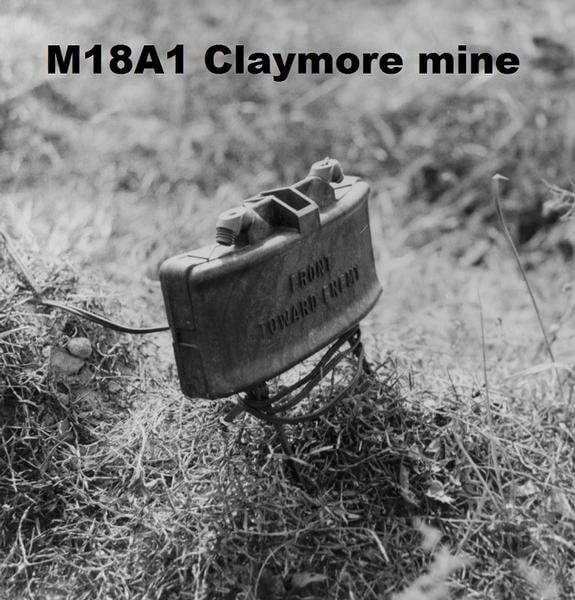
1971 | 06 | 22 | E-6 SSG | Madison A. | Strohlein | 11C4S | MIA-PFD | SVN; TF1AE, RT New Jersey, YC487502 5.8k SW of Ta Ko, on 3rd HALO operation |
22 Jun 71- Madison Alexander Strohlein, SGT E-5 of Philadelphia, PA, RT NEW JERSEY USASF TF1AE (CCN), Da Nang, Ops 35 MIA. Strohleim was inserted behind enemy lines via parachute (HALO) into the Ta Ko area during a night recon mission with SGM William "Billy" Waugh and SFC James O. Bath who was injured was on the jump. Five hours later he requested medical evacuation then after four more hours he reported enemy activity/movement all around him. A WACO City recovery team was inserted on 23 Jun could not locate SGT Strohlein, however, his weapon, radio, and map was found. Indications are Stroheim was captured, although the North Vietnamese denies any knowledge. see "SOG HALO EXTRACTION" in the Tales From SOG. NOTE: NEWS FLASH Vietnam admitted Strohlein was captured alive "Madison Strohlein – Vietnam has now acknowledged that Sergeant Strohlein was captured alive on June 22, 1971 in Quang Nam Province. His eventual fate has not yet been determined." Body not Recovered
 |
Additional Information: There was NO HATCHET force inserted on Strohlein unless they snuck in on some other form of transport. Over the years I have had three people tell me that they were the one who found Strohlein’s 203, yada yada yada. Horsepockey! RT habu and Dirty Dick Dougherty were the so called "hatchet force that went in after Strohlein. Lemuel McGlothren and Woody had rappelled into retrieve Tubby Bath, just before that. Dave dougherty and his team and the remainder of RT Habu were loaded up and we went in to try and get Strohlein before the weather closed in. Along with Dave was his 1-1 , and Guy Wagy, myself and the rest of RT habu. We inserted in the lower edge of the ridgeline that Tubby had been pulled out of. The ridge climbed steeply up to the South west and we started moving in a file looking in the trees and listening for any sign of Strohlein. The 1-1 from Dave 's team was a blond headed kid with a polish name and for the life of me I cant remember it. I found Strohlein’s Car15 with the 203 on the bottom. There was a 40mm He jammed in it and it had fallen from above in the trees, Dave and I had been doing little sweeps because Covey had been telling us that we were right on top of him. We found where they had drug the chute out of the trees and there were drag marks going up the ridge. I believe we also found a strobe and a map not sure on that. We started to move up in the direction of the signs when we could smell US heating tablets burning like someone was cooking. Ti Ti Loi and Thua came up to me, they had been up further and told me "Beucoup VC and pointed up the ridge. It was getting late and we decided to move back towards the area we had been inserted. Weather closed in and we were forced to stay in the area. We got down to where we were going to be extracted from we noted we had movement from the area that we had just come from. Lots of it with sticks banging and metal on metal. Dave and I moved our teams to the west and slightly up form the extraction LZ looking for better ground if we had to make a fight of it. We found bomb trenches on a little knoll and that is where we got into position. We put out claymores and waited it out. They did a line search across the ridge and passed just above and just below us. They must have figured we would never use their bomb trenches, or somebody just screwed up. I remember the trenches because they had Foxfire or illuminecence in the bottoms so you could find them in the dark. it was like sitting in a neon light after it got dark . We were extracted without further problems except as few shots going out. It was our opinion that they had drug Strohlein out of the trees. The tree where we found his Car and the Map and emergency radio was bullet scarred about fifteen feet up and there was brass at the bottom. It appeared from the signs that they had ripped a burst at him and forced him to drop his weapons, then pulled him and his chute out. The drag marks going uphill were what we were following when we ran into all the movement. We could never figure out why they left the other equipment. The Car was at the base of the hill, the map about twenty meters further up then the radio and strobe light, like they were laying a trail. We suspected an ambush and when Thua came back with tti ti Loi, and said there were lots of assholes above us that pretty much Confirmed it.
They knew we were still there after dark because they kept beating sticks and banging on metal as they swept that ridge we were on. They would do that to keep their alignment and sometimes to see if they could spook us. The yards were all freaked out about being in the trenches, because of the luminescence. Most of us lay beside them rather than actually getting in. Pretty smart of the bad guys though , there was a high speed trail about fifty meters north of those bunkers, if they got caught at night they could find shelter in the dark. There were more luminescence marking the trees about head height, like inverted V's. Guy Wagy was the 1-1 of Daugherty's team, The blonde kid that had a polish name,was a strap hanger. He was a friend of Strohlein. He became quite Ditzy after we found the gun. Not all that uncommon, sort of but for the grace of God that could be me...thinking I guess.
We figured out pretty quick that the equipment was left to draw us uphill into an ambush, it was laid out all too neat, pointing in one direction. Nick By: Nick Brokhausen
1971 | 06 | 26 | E-8 MSG | Sebastian E. | Deluca | 11F5S | DNH, intentional homicide | Laos; OPS 80 |
26 Jun 71- Sebastion E. Deluca, MSG E-8, SOG, CCS,1SG of 1st Exploitation CO; Ops 80, NCOIC-Officially Listed as a Death Non Hostile, There’s more to this incident, which indicates he was Killed in Action for his country and fellow Americans by a hostile force. Deluca’s knowledge regarding missing Americans combined with the bureaucracy decisions prevent effective recovery of the Americans, lead him to take a bold, heroic, but unwise initiative to act on his own that resulted in his death in Laos in an effort to secure the release of some Americansthe casualty is listed as a homicide. [Photo featured, page 104-105, Project Omega, Eye of The Beast, by James E. Acre]
 |
1971 | 07 | 6 | O-3 CPT | Donald G. | Carr | 31542 | MIA-PFD | Laos; TF1AE, MLT3, YB460352, aboard OV-10 # 67-14634, 15k west of Leghorn |
06 Jul 71- Daniel W. Thomas, 1LT 0-2, Pilot, Covey, 23rd Tactical Aerial Surveillance Squadron, tail # 634, USAF Ops 32/75 BNR and Donald Gene "Butch" Carr, CPT 0-3 of San Antonio, TX, USASF, Special Mission Advisory Op, Deputy Cmdr MLT-3 (CCN), NKP, MIA-Presumptive finding of death RR. While performing an orientation flight in an OV-10 aircraft over Laos (15 miles inside Laos west of Ben Het) for newly assigned Cpt Carr made a radio contact reporting they were over their target area but due to adverse weather conditions, could not observe the ground. That was the last radio transmission and have not been heard from since. Search and rescue efforts were made without success .also Laos; TF1AE, MLT3, YB460352, aboard OV-10 # 67-14634, 15k west of
 |  D |
FINAL MISSION OF CAPT DONALD G. CARR AND DANIEL W. THOMAS
11 Jul 71- Team Pike Hill, (names unknown), Monkey Mountain FOB, Camp Black Rock, Da Nang, Ops 36, MIA. An all Cambodian soldier team was inserted into "Zone Alpha" in Cambodia and after making a scheduled radio contact on Jul 2nd, the entire team was never heard from again-
11 Jul thru 24 Aug 71- Three Special Commando scouts KIA in the PHU DUNG operational area.
05 5 Aug 71- Cinkosky, David Edward, Cpt. 03, U.S. Army Aviation, O-1E pilot of the 219th Aviation Co. 4th Plt., CCS, MLS/N of Post Falls, The back seat was a Montanyard One Zero. (names unknown) TF3AE (CCS), Ban Me Thuot, flying visual Recon over Cambodia came under intense enemy fire and crashed. KIA-RR. (Added by: Dale Bennett-Snoopy - 3, . The crash site is shown in Plaster's Photo book Page 122. None of the NVA that fired on Dave survived that day. Four 20th SOS Guns expended all of their ordinance on the target ( 40,000 rounds of mini-gun and 56 X 2.75 rockets.) The MIKE FAC then put in 3 sets of Tac-Air. All structures were completely destroyed and the whole hill was lowered about 2 meters. Both bodies were recovered. I was the high bird on this mission- DALE R. BENNETT, Snoopy - 3 SOA 910GL)
 |
FINAL MISSION OF CAPT DAVID E. CINKOSKY
1971 | 08 | 7 | O-2 1LT | Loren D. | Hagen | 31542 | KIA Medal of Honor | SVN; TF1AE, RT Kansas, Quang Tri Prov., w/ Bingham & Berg, XD910563 17k NNE of old Lang Vei |
1971 | 08 | 7 | E-6 SSG | Oran L. | Bingham | 11B4S | KIA | SVN; TF1AE, RT Kansas, Quang Tri Prov., w/ Hagen & Berg, XD910563 17k NNE of old Lang Vei |
1971 | 08 | 7 | E-5 SGT | Bruce A. | Berg | 11C4S | KIA, BNR | SVN; TF1AE, RT Kansas, Quang Tri Prov., w/ Hagen & Bingham, XD910563 17k NNE of old Lang Vei |
07 Aug 71- Loren "Festus" D. Hagen, 1Lt 0-2, Medal of Honor Winner and Oran L. Bingham, SGT E-5 and Bruce A. Berg, SGT E5 TF1AE (CCN), RT Kansas performing Recon deep in enemy held territory KIA-RR In a battle with odds of 107 to 1, RT Kansas of 14 commandos (six Americans and eight SCU) faced a formidable foe of an entire regiment, supported by a second regiment. One NVA regiment was able to overrun the Special Forces’ Kham Duc camp in 1968 and it only took one third of a regiment to completely overrun the Special forces camp at Lang Vei in one night. Here RT Kansas equipped with only what they had on their backs, CAR 15's, grenade launchers and one M-60 machine gun faced an onslaught greater than the men at the Alamo. Clearly, RT Kansas was an unwanted guest and the NVA intended to remove the team without delay. The team had taken up a position on a small hill, spent the night, receiving probing activities during the night, as dawn approached, trucks began to arrive filled with NVA. The onslaught came with a single, well placed RPG round, which smashed into Berg’s bunker exploding, collapsing it. This was the signal for the assault. Lt Hagen went to check Berg but was cut down in the massive enemy fire and died. Bingham left his bunker to reposition the claymores and died within six feet of his position with a bullet striking him in the head. A SCU jumped up and was cut down immediately. SGT Bill Queen lay wounded, SGT Tony Anderson having sustained multiple wound, but fighting and commanding the situation, and SGT William Rimondi unwounded and fighting. The enemy came in great numbers, so close rolling over the hill, they were inches from the end of the CAR 15 muzzles. Then air support arrived with massive fire power which broke the enemy’s attack and the enemy fled for cover. By this time Rimondi, SSG was suffered multiple wounds. Hueys arrived and the remaining team members and some of the teams dead were recover. Three hours later, SGT Anderson, although wounded, returned with the bright light team and recovered the dead. Berg’s remains were not located. Three Americans and three SCU died in this action with a confirmed 185 NVA dead, a kill ratio of 31:1. Hagen and Bingham Remains Recovered. as of 2023 Berg's Remains not Recovered. Both SSG Rimondi and SGT Queen were med'evac'ed, seriously wounded and never returned to unit. According to Queen and Rimondi, see last stand of RT Kansas, SSG Rimondi had the M60 Machine gun until he was wounded.
SPECIAL NOTE: I became a friend of William "Bill" Queen who was on this mission, he had developed a very, very heavy drinking problem trying to mentally deal with this thematic event, to the point, in my opinion, the drinking killed him. I was able to drive to his home and pick him up to take him to a 1st SFGA Reunion in San Antonio. He had refused to associate with any military up to that point. His drinking was so heavy, he'd take his med's follow them with a 5th of Whiskey then vomit it all up. His demise was a direct result of this event!
 | 
|  |

Name: Bruce Allan Berg; Rank/Branch: E5/US Army; Unit: USARV Training Operational Group TF1AE TSH NHA; Date of Birth: 22 April 1950 Home City of Record: Olympia WA; Date of Loss: 07 August 1971 Country of Loss: South Vietnam; Loss Coordinates: 164700N 1064732E Status (in 1973): Killed/Body Not Recovered; Category: 2Aircraft/Vehicle/Ground: Ground; Other Personnel in Incident: (none missing)
Refno: 1765 REMARKS: Source: Compiled from one or more of the following: raw data from U.S. Government agency sources, correspondence with POW/MIA families, published sources, interviews. Updated by the P.O.W. NETWORK in 1998.
SYNOPSIS: On August 7, 1971, Sgt. Berg was serving in a reconnaissance unit in Quang Tri Province, South Vietnam. That morning, Sgt. Berg and an indigenous soldier left their night defensive position, a bunker, to recover a Claymore mine which had been positioned the night before. The indigenous soldier reported that Sgt. Berg was hit in the head by small arms fire about 6 feet from the bunker. No effort could be made by other U.S. members of the team to recover Sgt. Berg, as the team came under heavy enemy pressure. During the ensuing fire fight, a large amount of friendly infantry ordnance was fired into the vicinity of Sgt. Berg's last known position. The surviving members of the team were later forced to withdraw, leaving behind Sgt. Berg, one other U.S. soldier, and several indigenous soldiers. At an unspecified date, another team went to the location of the incident and recovered the bodies of the other U.S. soldier and the three indigenous bodies, but was not able to locate Sgt. Berg. Berg's condition at the time of withdrawal of the unit is unknown. The initial shot in his head may or may not have been mortal. The artillery fire may or may not have killed him, but if so, may or may not have obliterated any trace of his body. These details may never be known. It is noteworthy that although the recovery team located the bodies of the other dead personnel, they did not find any trace of Berg. It is possible, although remotely so, that he recovered from the shock of his initial wound, left his original position, and survived to be captured. Since the end of the war, several million documents have been reviewed by the U.S. Government and hundreds of thousands of interviews conducted on the subject of Americans missing in Southeast Asia. Many authorities are convinced that hundreds are still alive in captivity. If Sgt. Berg survived, perhaps he is one of them. It's time we brought these men home. NOTE: SEE THE BOOK An Enormous Crime "The Definitive Account of American POWs Abandoned in Southeast Asia by Former U.S. Rep Bill Hendon (R-N.C.) and Elizabeth A. Stewart.
Mon Oct 13 1997 Great work... I have additional information regarding Bruce Allen Berg. The combat action in which Berg was lost is described in the last chapter of John L. Plaster's new book SOG: The Secret Wars of America's Commandos in Vietnam (1997 Simon & Schuster). The day of Berg's loss I heard the story somewhat differently, and I told Plaster that by phone a couple of weeks ago. Surviving witnesses are Staff Sergeant Tony Andersen, USA (he was the one who told Plaster his version of the story), and Sergeant William Ramundi [Rimundi?] who told me his account immediately after returning from the battle in which Berg was lost. Ramundi has not yet been located for comment. On his previous mission Berg was second in command (One-One) on Recon Team Oklahoma, which I commanded (mixed USASF and Montagnard commandos). I was not on the mission in which he was lost the following week. Berg's unit TF1AE (Task Force One Advisory Element), was previously known as CCN (Command & Control North) [MACVSOG]. Berg's Aug. 7, 1971 loss was near Khe Sanh. Berg was a member of Command & Control North (CCN was renamed Task Force One Advisory Element "TF1AE", Training Advisory Group [TAG] in 1971), which was based on the North side of Marble Mountain in Da Nang. Berg had been second in command of Recon Team Oklahoma on his previous mission, and he was attached to RT Kansas at the time of his loss. Six US Army Special Forces and eight Montangnards made up RT Kansas for Sergeant Berg's last mission. Other than Berg, Rimumdi [Ramondi ?], and Anderson, the other USASF team members were Sergeant William (Bill) Queen, Staff Sergeant Oran Bringham, and Lieutenant Loren Hagen. I do not have the names of the Montangard commandos who survived that combat action. As described in Plaster's book (SOG), although they weren't aware of it at the time, RT Kansas had inadvertently set up their defensive perimeter almost within sight of the Hanoi High Command's most critical new venture, the first 6-inch fuel pipeline laid across the DMZ and down the Cam Lo River valley, absolutely essential in the next few months when entire tank battalions would roll through there for the war's largest offensive. The NVA 304th Division, plus a regiment of the 308th Division was already massing nearby, in preparation for the offensive. According to Chief SOG Colonel John Sadler, an entire NVA regiment, supported by a second regiment, stormed the hill top position of RT Kansas that day. At a mismatch seven times greater than the Alamo, it was the most one-sided battle of the war. A few hours after that action I was told by Ramondi that Berg was standing inside their perimeter when he was apparently hit in the shoulder, or head, by what he thought was a B-40 rocket or mortar round. According to Ramondi the blast knocked Berg outside of their perimeter. Hagan went after him, and never returned. In Anderson's account (as told by Plaster) he states that Berg was inside a bunker which was hit with an RPG, and that Hagan was killed while attempting to reach Berg's position. In your posted biographical sketch of Berg you describe how an "indigenous soldier reported that Sgt. Berg was hit in the head by small arms fire about six feet from the bunker." Immediately after Berg was hit by the initial volley (whether by an RPG, or mortar round, or whatever) of enemy fire on the teams position, Hagan apparently made a valiant attempt to reach Berg. Hagan received the CMH posthumously for his unsuccessful effort. Although Hagan's body was recovered later that day, Bruce Berg was never found. He was declared Killed/Body Not Recovered (in 1973 ?).
I think we've all noticed, through the years, that true heroes seldom speak of their gallantry. When they do it's usually with humble reluctance, and only then shared with those closest to them who care enough to listen and learn.
This is a recent photo of my friend Bill Rimondi. We went through SF training group together and were on the same team in commo field training. We got together again later in 1971 at CCN / TF1AE, when he was assigned to RT Oklahoma. After he completed recon team leader's school Rimondi ran his first combat mission in the A Shau with RT Kansas (Hagan, Berg, Bingham, Queen, [Anthony?], and Montangnard team members). Information by: Dr. Bruce Rusty Lang, Project 404, Laos, 1970, CCN, MACVSOG, 1971 - 2526 West Tenth Street, Dallas, Texas, USA 75211-1652; Tel: 214-467-5263; Email: rustylang@aol.com

Family information request re. Oran Bingham [CCN, RT Kansas KIA 8/7/71]
FM: Sean Williams <swilliams@slco.org>
I am looking for anyone with more information about SSG Oran L. Bingham, a member of RT Kansas, TF1AE (CCN), KIA 07Aug71. He along With 1LT Loren Hagen and SGT Bruce Berg were killed that day 17km NNE of old Lang Vei (coord. 164700N.1064732E) Surviving members of his team were SGT William (Bill) Queen, SGT Tony Anderson and SGT William Rimondi but I haven't been able to find any information about any of these men. If anyone out there knows how to contact or has any information on the whereabouts for these men please contact me. SSG Oran Bingham was my wife's father and she wants to know more about him. He was killed when she was 6 months old and he never knew that he was a father. Her mother refuses to give up any information about him so any info I could get from this forum would really be appreciated. Or if anyone out there knew him form other units (he was a 11B4S) or AT ALL please write. Thanks.
NOTE: A few years ago, I located William (Bill) Queen and visited him a few time in Houston. The effects of that battle still haunted him greatly. He had been somewhat reclusive and avoided other veterans, but I was able to drive down and pick him up to go to San Antonio for a 1st Special Forces Reunion. I think it did him some good as his attitude changed a bit during those few days being with other SF guys. One thing that Bill said over and over regarding the Anderson version of events was that he wondered if Anderson was actually there because his story did not line up with his experience of what occurred. In any experience of such events, there will be many different observation and experience by those going through such events so what one man experience, another might experience something completely different so who is to say who is right or wrong. Both may be right. rln .
1971 | 08 | 13 | E-5 SGT | Mark H. | Eaton | 11B4S | KIA | SVN; TF1AE, RT North Carolina, Quang Nam Prov., YC465505 7k WSW of Ta Ko |
13 Aug 71- Mark H. Eaton, SGT E-5, USASF, Recon, TFlAE (CCN)-KIA RR A Note from The Virtual Wall: Staff Sergeant Eaton was assigned to the Psychological Warfare Section, TF-1AE, Command & Control North, at the time of his death. By report, he was killed in action with Recon Team "North Carolina" about 7km west-southwest of Ta Ko.

|
SILVER STAR MEDAL AWARD
? Aug 71- ARVN Tm/Asst Tm Ldrs and Five Special Commando Scouts (Names and ranks unknown) MIA
? Aug 71 - Five Special Commando scouts KIA and one Scout MIA (names unknown) performing Spike Team duties in the Demilitarized Zone.
1971 | 09 | 14 | E-8 MSG | Don R. | Gilbreth | 11F5S | KIA | SVN; TF1AE, Quang Nam Prov., BT065697, 3.4k S of C-1, hit road mine, w/ CPT Roesch |
1971 | 09 | 14 | O-3 CPT | Heinz K. | Roesch | 31542 | KIA | SVN; TF2AE, Quang Nam Prov., BT065697, 3.4k S of C-1, hit road mine, w/ MSG Gilbreth |
14 Sep 71- Heinz K. Roesch, CPT 0-3 and Don R. Gilbreth, MSG E-8, TF1AE (CCN), Da Nang, Ops 35 Killed while riding a jeep which hit a mine outside the compound KIA-RR
 |  |
? Oct 71- Two Special Commando Scouts (Names unknown) KIA in base area 702
1971 | 10 | 11 | E-7 SFC | Audley D. | Mills | 11F4C | KIA | SVN; TF1AE, Quang Nam Prov., BT076712 1.5k SE of C-1; while disarming a booby trap |
11 Oct 71- Audley "Audie" D. Mills, SFC E-7, USASF, TFlAE (CCN), Da Nang, Ops 35 KIA-RR He was killed when his six man recon team made contact with an enemy force while performing Recon in South Vietnam. He called for assistance and a "Prairie Fire" emergency, but before being extracted, he was killed. SOG’s final death due to ground operations. SFC Mills was fatally injured and another soldier wounded in Quang Nam Province, RVN, when a booby-trap he was trying to disarm detonated (Note: I met Audie when he got in country and was in the TOC, I was put in the TOC Aug 70 pending a commission at the end of Aug 70, a very likeable guy and someone I considered a friend, he is missed-RL Noe)
 |
GROUND CASUALTY
? Oct 71- Two Special Commando Scouts (names unknown) MIA.
? Oct 71- Five Special Commando Scouts (names unknown) KIA
1971 | 10 | 29 | E-7 SFC | Gene W. | Stockman | 71L4S | DNH, accidental homicide | SVN; TF1AE, Quang Nam Prov., accidental shooting in the old CCN barracks |
29 29 Oct 71- Gene W. Stockman, SFC E-7, USASF, TF1AF (CCN), Died Non Hostile. Gene was not killed as a result of a vehicle accident, he was killed in an accidental shooting with my .25 cal browning pocket pistol. I was on leave at the time and Gene had asked me to let him keep my pistol safe while I was gone. He went drinking somewhere one night and was shot in the gut, right through the artery that splits and becomes the femoral arteries in the legs. I was a SSG at the time, working in the S4 shop and had the privilege of supporting these very brave soldiers. At the time, MG Bowra was a 2LT and MG Bargewell was a SSG, Recon Company with CPT Manes and the irrepressible SGM Billy Waugh. By: Richard Whitmanh
 |
 |  |
? Nov 71- Special Commando Scout (Name unknown) MIA after a fire fight with the enemy
? Nov 7- Earth Angel Team Members (Name and Number unknown) failed to return after being trapped in an enemy ambush MIA-Bodies not recovered
? Dec 71- Pilot, 0-1G aircraft and Photographer (Names unknown) MACSOG 20, Intel Div, Flying a photo recon mission the aircraft was shot down. KIA-RR. I know that this was a Marine Master Gunnery Sergeant (Photographer/Intelligence Specialist) and an Air Force Captain (pilot). The plane went down in Cambodia, when the pilot was killed at extremely low altitude and the aircraft could not recover. I knew the Master Gunnery Sergeant, he was with me at MACVSOG on Louis Pasteur Street in Saigon, but one of my Vietnam problems is the inability to remember many names. Don Williams, MACVSOG, SOA 2478
12 12 Dec 71- Benard J. Moran, Jr., MSG E-8, US Marine Corps, SOG, Ops 20, NCOIC-KIA. and CWO Lloyd S. Rainey of the 74th Aviation Company. At the time, the 74th Aviation Company had a detachment at Quan Loi,I served with BJ in OP-20 and had the pleasure of pinning his E-8 stripes on him. BJ was the only Marine serving specifically with SOG who was KIA’ed and we’re very proud of him. He would like to be remembered as the kind of Marine he was-Outstanding. The mission he was on was strictly volunteer basis and he wasn’t required to be where he was when KIA’ed. Major Ralph Sturgeon, USMC. ---
 |  CWO Lloyd S. Rainey |
FINAL MISSION OF MSGT BERNARD J. MORAN JR. AND LLOYD S. RAINEY
1972 | 01 | 21 | O-2 1LT | Joseph J. | Slifka, Jr. | 31542 | DNH, helicopter crash in river | SVN; TF1AE, Quang Nam Prov., YC974359, drowned after crash 28km N of Kham Duc |
21 Jan 72- Joseph J. Slifka, Jr. ILT 0-2, Recon USASF, TF1AE, OPS 35. NOTE: a correction to the cause of death of Lt Slifka is extracted from Chapter 38, SFA’s Newsletter, May-June 2004: The message below was originally printed in the November 1994 issue of The Green Beret:
The 5th Group Commander at that time was COL Ken Bowra KA “El Cid”, he had been a personal friend of 1Lt Jospeh J. Slifka. He knew I had worked the mission but had never been able to find out the true story of Lt Slifka’s death. I recently read a piece in the MACVSOG website with some assumptions from someone from CCS that were totally untrue. Hence this reported will set the record straight. Those involved from CCN were RT Connecticut lead by Kevin “Snake” Smith, RT Habu the Bright Light Team, lead by Lemuel McGlothern, and the air assets from MLT-1 located in Phu Bai, RVN. The actions of both recon teams, the Navy UDT divers, and the combined air assets were instrumental in the success of this mission Smurf Sends…..ATTENTION EL CID: MSG follows/Reference question you asked pertaining to 1LT Jospeh J. Slifka Jr., MIA 20 Jan 71, then listed from missing to dead non-hostile on 21 Jan 1972//I was the airborne controller (Covey Rider) flying out of MTL-1 at Phu Bai, and I worked the mission on both dates. I arrived on station to relieve another Covey, who had just extracted RT Connecticut from a hot LZ. I got a visual on the extraction package of slicks and guns. They were following the blue line east through a remote mountain pass near the Lao border. Knowing they were low on fuel, I instructed slick lead to follow us back to the launch site. After several moments I heard lead say, “Mayday! Mayday! Mayday, I’m going in!” We turned West just in time to see him crash land on a sandbar in the river. Aboard the aircraft was a crew of four, SSG Kevin “Snake” Smith, the One Zero, his One Two, Lt Slifka, and four CIDG team members. Snake radioed that all was okay, the bird was shut down and the guns removed. Swiss seats were tied together, then Snake swam to the North bank and began ferrying the rest across using the chopper as an anchor point. While this was taking place, I had to send the slicks and guns home because they were low on fuel. I ordered up TAC air, a set of Gunfighters (F-4s) that were scrambled from Da Nang with an ETA of ten. Also, two Navy fighters were diverted from the trail with residual 20mm. Our launch sergeant, MSG Chuck Dover, had been monitoring our situation and said help was on the way. Before the transfer to the North bank could be completed, the team began to take SAF from the wood-line and was returning fire. We could see the muzzle flashes so we laid down a mark and ran in the Navy jets expending their ordnance. Our Gunfighters arrived with a TIC lineup on board of napalm, CBU, and frag bomb with fuse extenders. The strike was laid in and suppressed the enemy fire. Snake called that he had an American missing and when last seen the American was covering the team from the sandbar. He team began ground search of the river bank, and we low-leveled to assist. The river had a sand bottom and was crystal clear. I spotted Lt Slifka’s body about two hundred meters downstream, in a deep pool at the edge of a waterfall. The extraction package arrived and the team was extracted with the aircrew. CPT Walter S. Mullen, our assistant launch officer, hovered above the pool in the chase bird and attempted to recover the body with a grappling hook. He was not successful, as the body was hopelessly snagged in the branches of a submerged tree. Our covering guns reported a village hidden under the jungle canopy, and the Cobras placed fire on it with rockets and 40mm. I received a call that Snake was inbound with swimming gear and ropes to attempt a recovery. This attempt also failed because the river was too swift; without scuba gear and weight belts it was an impossible task. By this time the crashed Huey had settled onto it’s right side of the sandbar, but was in no danger of being swept into the current. Snake requested and received permission to make a recovery attempt on the following day. Preplanned air was ordered and two Navy UDT divers were sent up from Da Nang. If the recovery went smoothly the RT would do a BDA of the village, which was to be hit with a devastating air strike. Also, the Brite-Lite team would be used to cover from the South bank. Additional slicks and guns would sit on strip alert with a round-robin turn around for constant air cover from insertion until extraction. Our intel sergeant, SFC Kenny Anderson, provided the intel pictures I had taken of the target. He suspected the hostiles in the target area to be part of one of the NVA Food Production and Transportation Battalions known to work the area. Chuck Dover briefed all concerned on how the operation would work. Timing and start-up time would begin when Covey reported the target clear of ground fog. We launched our 0-2 at about 0900 hours on 21 January and climbed to 12,000 feet. We began our normal sneak and peek through the clouds to observe the target which was socked in. We busied ourselves by checking known or suspected AAA and SAM sites on both sides of the fence; we also noted likely avenues of approach ot the tyarget area. B 1000 hrs the fog had dissipated, and I reported this to home plate. At that time Chuck gave the order to play ball. The teams launched and our first set of Gunfighters arrived above us. Our set of Sandys had just left NKP and were climbing to altitude. With all assets on station we went down to lay in the mark on the village. Our fast movers rolled in and each dropped a large WP bomb, creating a roaring inferno. Next they droped combination of delays and daisy cutters. Our capping A1Es requested to dump that nape to increase playtime, and we had them hit the eastern and western edges of the village. When they returned to cap they reported over four hours playtime left. At eight minutes out we released our second set of Gunfighters to prep both Las with napalm and 500 pound daisy cutters. Both teams hit their LZs at the same time and had them secured in short order. We put both sets of Cobras in a racetrack pattern to prevent any reinforcements from entering the area and to suppress any AA threat. I called ABCCC (Hillsboro) and reported the target box hot. Then Snake reported that he was on the sandbar and he had divers in the water. Using the Huey as as an anchor point, they belayed the divers down stream. My greatest worry at that time was that of the belaying team being hit without safety ropes the divers would be lost over the falls and onto the rocks below. After what seemed forever, the Snake reported that the Lieutenant’s body and divers were recovered. Both divers were completely exhausted, and we sent in the chasse bird to picked them up. With the recovery completed, we initiated the BDA when our fresh Cobras came on station. We sent both sets of guns to orbit on the flanks and sent in the Sandys to bomb and strafe the front of the RT. The team could not get into the village due to the fires and secondary explosions. They did get some good intel pictures and examined some fighting positions. In addition to some enemy equipment, they recovered quite a few farming implements. Both RTs were extracted without further incident and the target box was reported cold. My last act was to order the guns to destroy the drowned Huey, and we watched as some of the wreckage slipped over the falls. The post mortem examination revealed that Joe drowned; we understand his family had a hard time dealing with this because he was an Olympic class swimmer. We will never know exactly how this tragic accident happened, but Kevin and myself have tried to describe the incident as accurately as possible after 22 years//END MSG/Sluggo. Nothing Follows.
A Note from The Virtual Wall
1LT Joseph Slifka was the only American casualty resulting from a helicopter crash in a river some 28 kilometers north of Kham Duc. The only known US helo loss in the area was UH-1H tail number 69-15083 from the 116th AHC, but there is no confirming evidence that 1LT Slifka was aboard 69-15083 - he may have been aboard a Vietnamese helo.
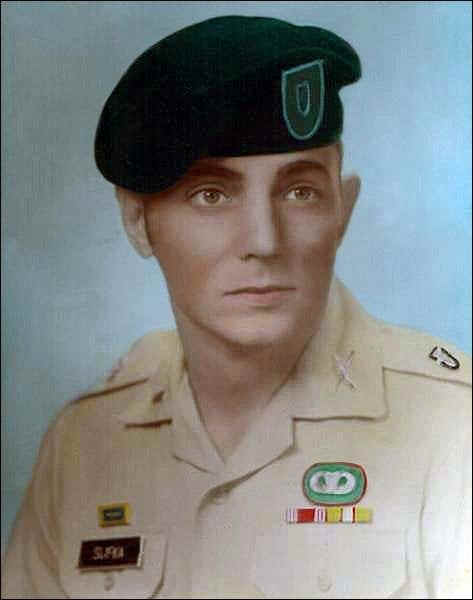 |
1972 | 01 | 28 | O-2 1LT | Lawrence M. | Oxx, Jr. | 31542 | DNH, vehicle crash | SVN; TF1AE, Thua Thien Prov., BT046762 4k NW of Marble Mountain |
1972 | 01 | 28 | O-2 1LT | Panormitis | Stavlas | 2120 | DNH, vehicle crash | SVN; TF1AE, Thua Thien Prov., BT046762 4k NW of Marble Mountain |
28 Jan 28 Jan 72 Panormitis Stavlas, 1LT 0-2, Club Officer, Lawrence McFie Oxx, 1Lt 0-2, USASF, TFIAE (CCN), Da Nang, Ops 35 TF1AE (CCN) died as a result of a vehicle accident. (See 21 JAN 71 regarding Stavlas).killed in vehicle crash (non hostile) 4k NW of Marble Mountain,Thua Thien Province,South Vietnam-RR. Lt Oxx is remembered by one fellow SOG member as being a large man, like an Ox, who snored loudly. On one mission, the team had him wear his gas mask at night to help keep him quite.
1972 | 02 | 13 | E-5 SGT | James W. | Kiehne III | 91B4S | DNH, accidental self destruction | SVN; TF1AE, Quang Nam Prov., BT075714, in the former CCN dispensary |
13 Feb 72- James W. Kiehne III, SGT, USASF, Medic, TF1AE-KIA. Virtual Wall has his cause of death as "Non-Hostile." killed in accident at former CCN dispensary "drug overdose" Quang Nam Province,South Vietnam
SGT James W. Kiehne was a medical Non-Commissioned Officer (NCO) assigned to an Army of the Republic of Vietnam (ARVN) Training Unit, Task Force-1 Advisory Element, Military Assistance Command, Vietnam Studies and Observation Group (MACV-SOG), 5th Special Forces Group. At 2:00 PM on February 13, 1972, Kiehne was found unconscious on the floor of the Command & Control North Base Camp Dispensary at the Marble Mountain Complex in Quang Nam Province, RVN, by an ARVN medic. The Vietnamese alerted a U.S. medic who immediately began administering medical help. Kiehne was put on a respirator but failed to respond. He was admitted to the 95th Evacuation Hospital in Da Nang at 3:25 PM where he expired an hour later. A casualty report dated June 23, 1972, attributed his death to cardiac arrest secondary to a drug overdose. Extracted from Wall of faces.
 |
GROUND CASUALTY
06 Apr 72- John Henry Call III, ILT 0-2 of Potomac, Md; Alen Jones Avery, TSGT E-6 of Auburn, WA, Roy Dewitt Prater, TSGT E-6 of Tiffin, OH; 37TH ARRS, CPT Peter H. Chapman OF Centerburg, Ohio 3RD AIR RESCUE GROUP, 7TH AF James Harold Alley, SGT E-4 601st Photo Flt, USAF of Plantation, FL; and William Roy Pearson, SGT E-4, USAF, , MACSOG 80 (Recovery Studies Division) Aircrew of a Jolly Green Giant on a search mission searching for missing air crew members, their helicopter was shot down All were KIA-Remains Identified September 25, 1997.
 |  | 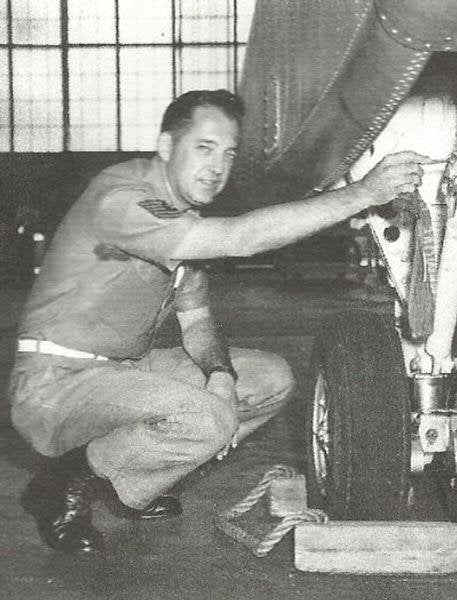 R | 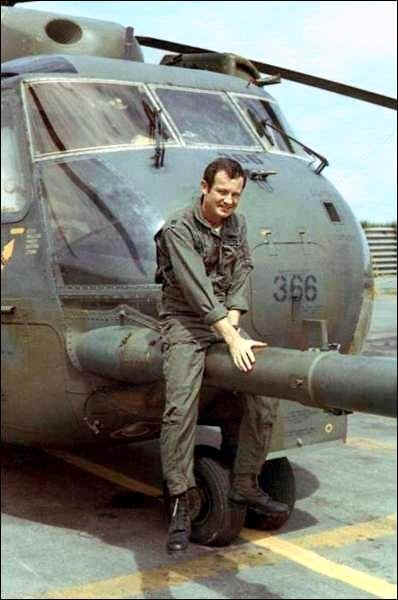 |
 | 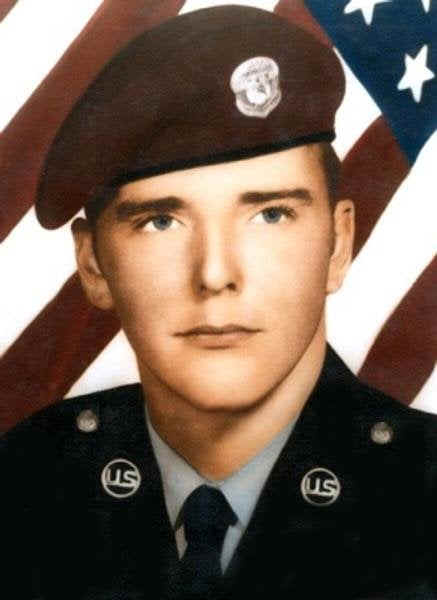 |
Two Thailand-based EB-66 aircraft (30th Air Division, call signs BAT 21 and 22) were providing pathfinder escort for a cell of B52s bombing near the DMZ. BAT 21 took a direct SAM hit and the plane went down. A single beeper signal was heard, that of navigator COL Iceal Hambleton. No contact was made with the other crewmen and it was assumed they (MAJ Wayne L. Bolte, pilot; 1LT Robin F. Gatwood; LTC Anthony R. Giannangeli; LTC Charles A. Levis; and MAJ Henry M. Serex) died in the crash. An Army SAR team consisting of two UH-1H "slicks" and two UH-1B Cobra gunships were dispatched at once. As they approached Hambleton's position just before dark two of the helicopters were shot down. One, a Cobra (Blue Ghost 28) reached safety and the crew was picked up. The other, a UH-1H from F Troop, 8th Cavalry, 196th Brigade, had just flown over some huts into a clearing when they encountered ground fire and the helicopter exploded. Jose Astorga, the gunner, was injured in the chest and knee by the gunfire. Astorga became unconscious, and when he recovered the helicopter was on the ground. He found the pilot, 1LT Byron K. Kulland, lying outside the helicopter. WO John W. Frink, the co-pilot, was strapped in his seat and conscious. The crew chief, SP5 Ronald P. Paschall, was alive but pinned by his leg in the helicopter. WO Franks urged Astorga to leave them, and Astorga was captured. He saw the UH-1H hit by automatic weapons fire, exploding with the rest of the crew inside. Astorga was released by the North Vietnamese in 1973. The following day (03 Apr 72), an OV-10A (NAIL 38) entered Hambleton's area and was shot down. The crew, William J. Henderson and Mark Clark, both exited the aircraft safely. Henderson was captured and released in 1973. Clark evaded capture for 12 days and was subsequently rescued. Later on 03 April, another Army UH-1H, not associated with the ongoing SAR effort, was shot down in the same area. This aircraft (from HHQ, 37th Signal Bn, 1st Signal Bde) was crewed by WO Douglas L. O'Neil, pilot; CW2 Larry A. Zich, co-pilot; SP5 Allen D. Christensen, crew chief; and SP4 Edward W. Williams, gunner. No contact was made with these men and they remain missing in action. On 06 Apr, a decision was made to attempt to pick up Hambleton and Clark using **HH-53 Jolly Green from the 37th ARRS - this was Avery's aircraft. According to the FAC who witnessed the crash, the Jolly came in low and fast, but over a heavy concentration of large weapons. The FAC tried to warn the Jolly off, but was too late - the Jolly was hit, caught fire, rolled on one side and crashed, killing the whole crew. On April 7 another Air Force OV-10A went down in the area with pilot USAF Captain Bruce C. Walker and observer Marine Captain Larry F. Potts aboard. Walker evaded capture for 11 days; his last radio transmission to SAR forces to not to make a rescue attempt as the enemy was closing in. It is reported that Potts was captured and died in Quang Binh prison. Both men remain unaccounted for. Hambleton and Clark were picked up, but the others were not - 5 men from BAT 21, 4 from the F Troop UH-1H, 1 from NAIL 38, 4 from the 37th Sigs UH-1H, 6 from the Jolly Green, and 2 from the second OV-10 ... 22 men in all. Of these 22, Astorga and Henderson were released in 1973; the remaining 20 continued as Missing in Action.
| **NOTE: This aircraft was from MACSOG 80, Joint Personnel Recovery Center (SOG-80), Studies and Observation Group (MACVSOG) POSTED ON 6.27.2011 CRASH INFORMATION ON U.S. AIR FORCE HELICOPTER HH-53C TAIL NUMBER 68-10365 |
In April 1972, Norris was one of few remaining SEALs in Vietnam serving with MACVSOG Danang Naval Advisory Detachment. When Lieutenant Colonel Iceal Hambleton was shot down behind enemy lines, aerial combat search and rescue operations failed, leading to the loss of five additional aircraft and the death of 11 or more airmen, two captured, and three more down and needing rescue. Norris was tasked with mounting a ground operation to recover Hambleton, Lieutenant Mark Clark, and Lieutenant Bruce Walker from behind enemy lines. Assisted by Vietnamese Sea Commando forces, he and Republic of Vietnam Navy Petty Officer Nguyen Van Kiet went more than 2 kilometers (1.2 mi) behind enemy lines and successfully rescued two of the downed American aviators. Walker was discovered and killed by the North Vietnamese Army. Though Norris at first rejected the honor, he was recognized with the Medal of Honor in 1975.
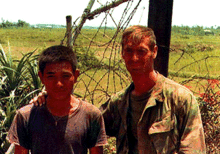 Tom Norris and Nyugen VanKiet | MEDAL OF HONOR CITATION Lt. Norris completed an unprecedented ground rescue of two downed pilots deep within heavily controlled enemy territory in Quang Tri Province. Lt. Norris, on the night of 10 April, led a five-man patrol through 2,000 meters of heavily controlled territory, located one of the downed pilots at daybreak, and returned to the Forward Operating Base (FOB). On 11 April, after a devastating mortar and rocket attack on the small FOB, Lt. Norris led a three-man team on two unsuccessful rescue attempts for the second pilot. On the afternoon of the 12th, a forward air controller located the pilot and notified Lt. Norris. Dressed in fishermen disguises and using a sampan, Lt. Norris and one Vietnamese traveled throughout the night and found the injured pilot at dawn. Covering the pilot with bamboo and vegetation, they began the return journey, successfully evading a North Vietnamese patrol. Approaching the FOB, they came under heavy machine-gun fire. Lt. Norris called in an air strike which provided suppression fire and a smoke screen, allowing the rescue party to reach the FOB. By his outstanding display of decisive leadership, undaunted courage, and selfless dedication in the face of extreme danger, Lt. Norris enhanced the finest traditions of the U.S. Naval service. |
A movie of these events are documented in the movie:
1972 | 05 | 26 | E-6 SSG | Charles D. | Gipson | 12B4S | KIA, DOW | SVN; D Co, 10th SFG (TDY), AR783883, in Kontum approx 500 meters south of the airfield |
26 May 72- Charles D. Gipson, SSG E-6, USASF, TFIAE (CCN)-KIA KIA approx. 500 metres from Kontum airfield,Kontum Province, South Vietnam (sniper) (The Virtual Wall has him being assigned to Co D, 10th SFGA as well). TF1AE roster sent to me by General Bargwell, he is listed as being in Recon company June 1971. A special note is noted by his name: "KIA Apr 72, Sent back from Ft Devens for 1 Special Mission"-Note by Major General Eldon Bargwell. Although he was assigned to Co D, 10th SFGA, he was KIA'ed out of TF1AE.
1972 | 06 | 5 | E-6 SSG | Thomas M. | Lejeunae | 97B40 | DNH, DWM, fixed wing crash | SVN; SOG-21 Security, Pleiku Prov., China Airlines C-46 crash, BR130480 37k east of Pleiku on Hill 5089 |
1972 | 06 | 5 | O-3 CPT | James F. | Hollis | 32162 | DNH, DWM, fixed wing crash | SVN; SOG-35 Tng Adv, Pleiku Prov., China Airlines C-46 crash, BR130480 37k east of Pleiku on Hill 5089 |
1972 | 06 | 5 | O-3 CPT | Walter S. | Mullen | G9668?? | DNH, DWM, fixed wing crash | SVN; TF1AE Ass't S-3, Pleiku Prov., China Airlines C-46 crash, BR130480 37k east of Pleiku on Hill 5089 |
1972 | 06 | 5 | O-4 MAJ | Calvin T. | Gore | 31542 | DNH, DWM, fixed wing crash | SVN; TF1AE, Pleiku Prov., China Airlines C-46 crash, BR130480 37k east of Pleiku on Hill 5089 |
1972 | 06 | 5 | O-5 LTC | Ronnie A. | Mendoza | 32126 | DNH, DWM, fixed wing crash | SVN; TF1AE, Pleiku Prov., China Airlines C-46 crash, BR130480 37k east of Pleiku on Hill 5089 |
1972 | 06 | 5 | O-4 MAJ | Nicholas | Quinones-Borras | 3315 | DNH, DWM, fixed wing crash | SVN; TF1AE, Pleiku Prov., China Airlines C-46 crash, BR130480 37k east of Pleiku on Hill 5089 |
1972 | 06 | 5 | O-5 LTC | Andrew F. | Underwood | 31542 | DNH, DWM, fixed wing crash | SVN; TF1AE, Pleiku Prov., China Airlines C-46 crash, BR130480 37k east of Pleiku on Hill 5089 |
1972 | 06 | 5 | E-5 SGT | Kenneth L | Barnett | 05B4S | DNH, DWM, fixed wing crash | SVN; TF2AE, Pleiku Prov., China Airlines C-46 crash, BR130480 37k east of Pleiku on Hill 5089 |
1972 | 06 | 5 | E-7 SFC | Andee, Jr. | Chapman | 05C4P | DNH, DWM, fixed wing crash | SVN; TF2AE, Pleiku Prov., China Airlines C-46 crash, BR130480 37k east of Pleiku on Hill 5089 |
1972 | 06 | 5 | O-3 CPT | Charles L. | Flott | 31542 | DNH, DWM, fixed wing crash | SVN; TF2AE, Pleiku Prov., China Airlines C-46 crash, BR130480 37k east of Pleiku on Hill 5089 |
1972 | 06 | 5 | E-5 SGT | Michael L. | Hutson | 05B4S | DNH, DWM, fixed wing crash | SVN; C-3??, Pleiku Prov., China Airlines C-46 crash, BR130480 37k east of Pleiku on Hill 5089 |
05 Jun 72-Ronnie A Mendoza, LTC 0-5, Andrew F. Underwood,, MAJ 04; Charles L. Flott, ILT 0-2, Amdee Chapman, Jr., SFC E7 Kenneth L. Barnett, SGT E-5, USASF, Task Group, Nicholas Quinones-Borras, Major, James F. Hollis, Cpt, Walter S. Mullen, CPT, Thomas M. Lejeune, SSG; Michael L. Hutson, Sgt; Strategic Technical Directorate Advisory Team-10 their aircraft was shot down after take off and died as a result of ongoing MAC SOG type missions after the official closure of SOG. All KIA.an Air America C-46A, registry EM-2, was conducting a round robin flight from Saigon with enroute stops at Ban Me Thuot, Hue/Phu Bai, Pleiku, and again at Ban Me Thuot before returning to Saigon. The C-46 departed Hue/Phu Bai for Pleiku with 32 people on board - 3 aircrew, 11 US military, 14 SVN military, 1 SVN civilian, and 3 Air America mechanics. The aircraft crashed on approach to Pleiku, killing all on board. The 11 US military members,.
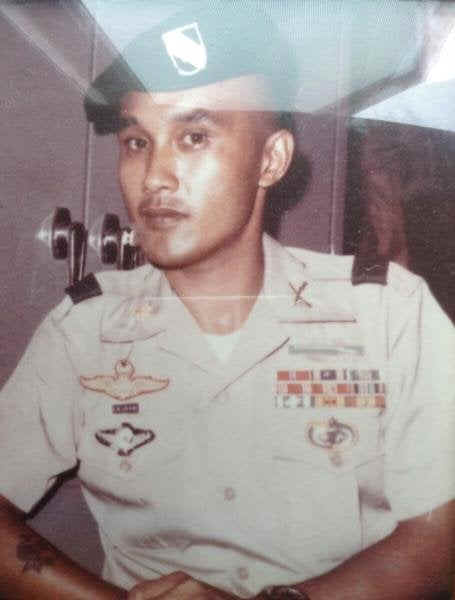 |
|
| 
|  |


 |  | 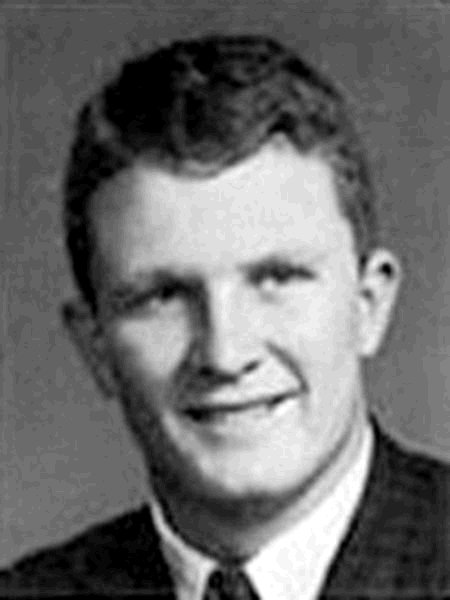 | 
|  |
Note:
This was a Sad Day for SOG. My Co and two Commo men from Special Mission Force Were On This Plane along with other great Americans. I was the Ground Commander of the Recovery Force. The Plane Went Down on June 5 Th. 1972. The weather was Socked in. It Took about six Days to find the Crash Site. We had to repeal in and lift the Bodies out on Strings. The Mountainous area and the Turbulence would not lets us Land. If any one knows any of these Men . Please let me Know . Especially if you Know where some of the Next of Kin Are.= bobbypruett@yahoo.com
POSTED ON 11.20.2015 POSTED BY: WKILLIAN@SMJUHSD.ORG FINAL MISSION OF SGT MICHAEL L. HUTSON
|
POSTED 2/19/07: Walter Steve Mullen was a very close friend. He grew up in Brownsville, TX, and played football at Texas AM, 1965-69, as an offensive guard; he was commissioned as a 2d LT in 1969. His first assignment was the 2/509th Airborne in Mainz, Germany. From there he went as a CPT to Special Forces School enroute to MACVSOG in Phu Bai in 08/71. He became a team leader for missions into Laos. On multiple occasions he visited me when he had free time (2/504th, 101st Airborne). After six months of insertions, he was asked if he would take a desk job in Saigon looking at recon photos of the areas he had covered. In the spring of 1972, Anloc became the heated area of NVA concentration. Steve was asked to go on recon missions over the area in a fixed wing plane. The plane was shot down on 06/05/72 in Laos, and Steve's body was not recovered. For multiple years Steve was listed as MIA. I never learned what information changed that status to KIA some time later. The nature of his death was revealed to me by the colonel in charge of his unit when I was waiting for my flight home at Tan Son Nhut Air Base. Submitted by: Ron Male USMA, 1969
17 Nov 1998
A letter from my Dad -Saigon, 18 October, 1971. In his own words. The words nor the man will ever be forgotten. I love you Dad.
Jeffery Robert Lejeune
October 18, 1971
Saigon, VietnamDearest Son,
I am writing this letter to you to let you know how much your daddy misses you. You are only three years old, but you seem so much wiser than your age demands you to be. Mommy, Jennifer, and I are relying on you, our "little man," to help us get through this year in which we are apart. It is very difficult, I know, to be away from those you love, but I am very thankful that you are with mommy, because by being the beautiful, sensitive person that you are, you are able to stem some of the gnawing loneliness which mommy feels.
Jennifer is very lucky, she is too young to know the sadness which the three of us "older folks" feel. But one of the aspects of growing up is the unfortunate need to lose the things which we love the most. If we are very lucky, we find a greater love than we have ever known before when what we have lost is finally returned. Some people say, "Live for today, for tomorrow may never come." We, a family, are in a situation where "To live for today" can lead only to despair. We must seek that elusive "Tomorrow," for our "Tomorrow" is the only hope that we as a family have. And when our "Tomorrow" comes, we will look back and realize that we have gone through a lot of lonely "Todays." My only hope is that "Todays" such as these never befall us again. If we are lucky, we will look back on all of this year's "Todays" as one whole family, realizing that the oneness that we feel is partly a result of the separation which we have been forced to endure.
When you grow older, you will find that our separation grows dimmer in your memory. When this happens, you will again be able to start living all of the "Todays" of your life. Look on this period of our lives as a valuable lesson. Remember how you felt when you realized that daddy wasn't coming home for a long time. Remember, and do everything in your power to keep from doing the same thing to your children, and your wife, or to anyone that you love.
Sometimes, we are forced to do things which cause so much pain in other people. I was forced to come to Vietnam, thereby hurting you. But remember this - many times we are "forced" of our own choosing. Nineteen days ago, I would have been out of the Army, but I chose to reenlist. I knew when I signed those papers a year ago that I would be coming to Vietnam. A year ago, we were all together. Jennifer was only a dream in our hearts, and the future was bright. We were all very practical then. We thought of traveling together and seeing the world. We planned on how we would build our "dream house" together. We could think these thoughts for one reason - because we were together.
I guess the point that I'm trying to make is that living for today has its time and its place. But it is up to you to make sure that you can live life to the fullest every day of your life. Love cannot be rationalized. You can't look at your Vietnams as a necessary evil. You have the power to keep a Vietnam from ever entering your life. And I hope that after you've taken care of your life, that you will have enough love and enough desire to try to keep these Vietnams out of the lives of all of the people in the world. The future of the world is in your hands, and in the hands of all of the beautiful people like you.
Just remember this - nothing is worth the loneliness that we feel today. Sure, there are benefits to be derived from this time of separation. The biggest gift is that I have the chance to sit back and look at my life as a whole. If it wasn't for Vietnam, I would probably never write a letter like this to you. Someday, when you are older, I hope that you read these words and are able to understand how I feel now - without being forced to feel it yourself.
Your life is your own, Jeff, to do with as you see fit. Control your own destiny, and let no one stop you from doing what you believe is right. Let your heart - not just your mind - do your thinking for you. And if you follow these thoughts, you may be able to love someone as much as I love you.
Take heed to what mommy tells you, Jeff. Listen to her philosophy of love, because she is right. The world has lived a philosophy of hate for too long. It is time for a change.
Mommy has given me three reasons to have hope for the future - you, Jennifer and her self. If you can live life as your mother hopes that you will, and as I do too, this old world will have another chance. I only hope that you have someone in your life who means as much to you as mommy does to me. If you ever find this someone, and you are sure that she is the real truth in your existence, the only all-encompassing thought in your life, you will be ready to lead the greatest life that any man has ever lived. And, as the song goes, "once you have found her, never let her go."
To let her go means to feel as I do now - one letter from your mother in the past eight days, one letter to give me some tangible contact with home. If I wasn't here, I wouldn't need a letter. I would have my life around me all the time. But now, I feel worried, I feel lost, but most importantly, I feel so very, very alone, and loneliness is something which only you can prevent. My life, at this time, is built around two parts of the day called "mail call." May you never know what it is like to wait for one, only to find that there is nothing there for you. It's up to you Jeff.
So now I will close this letter to you. Remember that I love you all more that these few words can say. I only hope that someday, this love will be in your heart too. If it is, your life will have been a benefit to at least your own small part of a planet called earth, and your life will generate the greatest life you can give to another - a life of love.
Always,
Daddy
1973 4 10 Rees, Richard SOG's Joint Casualty Resolution Center (JCRC)


No comments:
Post a Comment